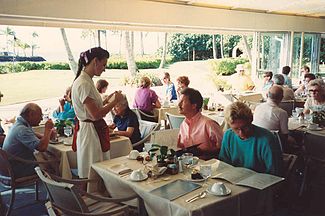
It's been said that she was a "Mouseketeer's Mouseketeer." She was America's quintessential "girl next door." She described herself as "the queen of teen".
Yes, Annette Funicello was all that.
Then again, it was a different time in America, when you could, in fact, be all that.
Her sweet, innocent face, deep-brown doe-eyes and soft voice captured something about pre-adolescence in the 50s and adolescence in the 60s that spoke to a generation of young people who watched her grow up as one of Walt Disney's Mouseketeers.
Actually, she was the last of the 24 original Mouseketeers
chosen for “The Mickey Mouse Club,” the immensely popular children’s
television show that began in 1955, when fewer than two-thirds of
households had television sets.
Before long, she was getting more than 6,000 fan letters a week, and was
known by just her first name in a manner that later defined celebrities
like Cher, Madonna and Prince.
She is also known for the "Beach Blanket Bingo" movie series with Frankie Avalon.
It was "good clean fun," said producer Walt Disney - who begged Annette to call him "Uncle Walt" but she insisted on "Mr. Disney" - with a little dash of spice.
Bikinis were worn - well, okay, a two piece bathing suit - but no exposed navels. And, certainly no 'thigh high' cuts to the leg. Not even any real cleavage - except around the toes.
It was a different time.
It was a time when "fairness" was still something that was a goal in life - from relationships to negotiation.
We had no idea that "fairness" was also part of the Disney fantasy. That, in fact, life wasn't fair.
I sent her a letter once. Really. She had that kind of personality with whom a young girl like me felt an easy rapport. As I recall, I asked her advice concerning one of my younger sisters who, quite simply, hated me.
No, really. Far as I know, she still does.
She stole my clothing and jewelry - not to wear for herself but to destroy it just so I wouldn't have it. She would order things in my name out of catalogs - like books or purses or trinkets - and giggled wickedly as I argued with my mother that I didn't - honest to God! - order that item and pleaded with her to help me to return it.
Finally, my mother caught on but for a couple of months, it was pretty awful. I was the oldest and had no one to whom to turn for advice. Annette was as close to an older sister as I was going to get.
So, I wrote to her and asked her advice.
I wish I had kept my letter to her and hers to me. I don't remember the exact content of either letter. What I do remember is my letter being distraught and desperate and, no doubt, dramatic. I remember her letter being kind and gentle and filled with practical advice and encouragement.
And, I remember it was hand-written. Honest!
What I remember most is that Annette advised that I not be "mean back" to my sister. She said something like, "You are older than her and it wouldn't be fair. She'll eventually grow up and be as mature as you. You just keep your head high and set a good example for her."
Well, she was wrong, but it was absolutely what I needed her to say.
Well, at the time. She called me to all the ideals embodied in being a Mouseketeer: Fair. Mature. Holding your head high. Setting a good example for others.
Annette has suffered for the past 25 years with multiple sclerosis, a cruel, debilitating disease that robbed her of simple dignities like the ability to feed or dress herself, or talk.
All that sweetness and innocence and talent.
It just wasn't fair.
Then again, as we later learned, life isn't fair.
"Fair" was only life on television for 30 or 60 minutes at a time on programs like "The Mickey Mouse Club" - or for a little more time in movies like "Beach Blanket Bingo".
Where fairness was part of the fantasy.
And, it was a different time in America.
I sure do miss Annette and all she represented.
I think I have - and will - for a very long time.
"Finally, I suspect that it is by entering that deep place inside us where our secrets are kept that we come perhaps closer than we do anywhere else to the One who, whether we realize it or not, is of all our secrets the most telling and the most precious we have to tell." Frederick Buechner
Come in! Come in!
"If you are a dreamer, come in. If you are a dreamer, a wisher, a liar, a Hope-er, a Pray-er, a Magic Bean buyer; if you're a pretender, come sit by my fire. For we have some flax-golden tales to spin. Come in! Come in!" -- Shel Silverstein
Tuesday, April 09, 2013
Saturday, April 06, 2013
Plan A: Pay Attention
Headlines of news on the Reproductive Justice front screamed across two continents yesterday, which was enough to rouse my brain to full attention, foggy as it was with medications helping me recover from this bout of bronchial pneumonia.
There are actually three bits of news I've been considering.
The first news item is that the Bill & Melinda Gates Foundation is putting up $100,000 to the best proposal for a more fun and pleasurable condom. The competition is part of its Grand Exploration Challenges, which has already doled out nearly $50 million for quirky but effective solutions to global health problems, like microwaves to treat malaria and an electronic nose to detect tuberculosis.
Okay, before you dismiss this as very rich people having way too much fun with money, let me rush to point out one thing about about condoms: They're cheap, discreet and can actually help prevent sexually transmitted diseases, including HIV, as well as pregnancy.
They've been used effectively for centuries. The problem is that they are not used consistently because men say they interrupt the pleasure of sex. ("Like taking a shower with your clothes on." Or, so I've heard.). So the Gates Foundation is calling for new shapes, materials and packaging that "significantly preserve or enhance pleasure, in order to improve uptake and regular use."
I'm actually quite taken by the Origami Condom. Shaped like miniature accordions, the company's website claims that "these silicone rubbers fit loosely and aim to simulate the feeling of sex without a condom".
They also boast a 2.8 seconds "application time," says the website, which presumably means they go on easily.
Yes, well, right. Of course. That would be important. Of course.
Moving on in the news.......
In France, women are now entitled to a full reimbursement for the cost of their abortion and girls aged 15-18 are also guaranteed free birth control (both for the contraceptive pill and the implant).
This is major news - on both sides of the issue.
For those on the Religious Right, this is not an issue of public health, it is a major issue of morality and ethics. These Good Christian Folk bemoan that the government is not only playing "executioner" to the "unborn," but now also allowing their daughters to have sex whenever they wish, without having to consider the consequences and be the "moral barometers" of society to hold young men under some "restraint".
I am not making that up. That's the argument. Really.
For feminists and liberals, this is a major victory, giving women of childbearing age control of her own reproductive health. This is important on many, many levels, but especially because of the socio-political recognition that women still struggle to attain financial equality with men. As long as that playing field is not level, all others - including the freedom to have access to contraception and abortion - are not equal. When you live in a country like France where there is Socialized Medicine, allowing reimbursement for abortion care makes sense.
Since increasing access to birth control has consistently been shown to reduce abortion rates, French authorities are expecting to see a drop in the amount of women requiring abortions now that the law is effective.
Of course, others are predicting that, now that abortions are "free", everyone will want them - even those who hadn't considered it before. Or, if you've had one before, you'll want another.
You know, like free refills for your coffee or soda at fast food restaurants. You can hardly finish the cup you're drinking, just thinking about the fact that that next cup will be FREE!
Which is no doubt why, when the bill passed in October, the Minister of Health, Marisol Touraine, explained that it was a "public health choice" and she took the opportunity to remind people that abortion is "never a trivial act" for women.
Because, apparently, some people do need to be reminded of that.
Finally came the news on Friday that a US Federal Judge from the Eastern District of New York ordered that the most common morning-after pill be made available over the counter for all ages, instead of requiring a prescription for girls 16 and younger.
Not only that, Judge Edward R. Korman poked his finger right into the middle of the hornet's nest and accused the Obama administration of putting politics ahead of science. He concluded that the administration had not made its decisions based on scientific guidelines, and that its refusal to lift restrictions on access to the pill, Plan B One-Step, was “arbitrary, capricious and unreasonable.”
He is right, of course. It was politics, unpure and complicated as politics always is. Or, in the judge's words, "arbitrary, capricious and unreasonable."
At the time of the decision, Mr. Obama was campaigning for reelection. Health and Human Services Secretary Kathleen Sebelius said that the manufacturer had failed to provide clinical evidence that the drug was safe for children under age 11, about 10% of whom are physically able to bear children.
A weak argument, to be sure, which might have been convincing if she and the FDA had not approved the large scale administration of the HPV vaccine to 10-11 year old girls, even though the vaccine manufacturer conducted exactly ZERO studies on the negative effects of the HPV vaccine on that young age group.
The folks from the Religious Right are predictably hysterical. You may remember Michele Bachmann's breathless report of the story told to her by the mother of "the poor little girl" who "felt forced" to allow her child to have the HPV vaccine and "now she has mental retardation".
These folks will stop at absolutely nothing. Not perpetuating ignorance. Not pandering to pseudoscience. Not fanning the flames of anxiety and fear.
Nothing.
The folks on the Religious Right have always called "Plan B" the "abortion pill". It is not.
RU-486, sold as Mifeprex, is a prescription drug for medical abortion. Mifeprex is used after a woman is already pregnant. Plan B is an emergency contraceptive. It is used to prevent pregnancy.
It does not "abort" a fetus because, 72 hours after unprotected, unplanned sexual intercourse, there is yet no fetus to abort. Plan B prevents pregnancy from happening in much the same way that other oral contraceptives do.
Plan B acts primarily by stopping the release of an egg from the ovary. It may prevent a sperm from fertilizing the egg. If fertilization does occur, Plan B may prevent a fertilized egg from attaching to the womb. If a fertilized egg is implanted prior to taking Plan B, Plan B will not work and pregnancy proceeds normally.
It's not rocket science. It's biology. It's the way the reproductive system has worked since the beginning. Nothing has changed except we now have a deeper understanding of how the human body works - including our ability to reproduce.
Again, the issues surrounding this decision are fraught with overlays of religion and morality and conversations about parental control and responsibility.
Which brings me to a point I want to make about all of this.
None of these things - Condoms, Government subsidized abortion and contraception, and emergency Plan B contraception available without prescription to anyone young woman who needs it - will ever replace Plan A: Education and Awareness. For parents and their children.
Yes, "boys will be boys" - and "girls will be girls". Adolescence will always be a dangerous time of pushing and testing boundaries and exploring identity and experimentation. Even parents and kids with the best, open relationship will have difficulty discussing issues of human sexuality in general and sex in particular.
Here's the thing: The best parental responsibility is to teach our children responsibility by modeling that behavior. And, that includes allowing them a "Plan B" to which they have free access when they make a mistake - just as adults sometimes do.
Boys and men must take responsibility for their own behavior, just as girls and women. But, it's not women who are responsible for the morality of men, much less the whole of society. We all are. That includes providing medical prophylactic alternatives for reproductive choices for women and men - including condoms which men might actually use consistently as well as a medicine like Plan B which women can use when that is deemed necessary or imperative.
I'm sure of one thing: The personal will always be political, and there ain't nothing more personal than a woman's reproductive system. Which is why it will always be political.
And, it's why news like this will always catch my attention, no matter where I am or how good or bad I'm feeling. The progress in Reproductive Rights has always been the most difficult to achieve and the most tenuous to maintain.
Vigilance and persistence are key to preventing further erosion of the progress we've been able to make over the last 50 years since the Birth Control Pill was made widely available.
Which is why my personal "Plan A" is to pay attention. Always. And, everywhere.
There are actually three bits of news I've been considering.
The first news item is that the Bill & Melinda Gates Foundation is putting up $100,000 to the best proposal for a more fun and pleasurable condom. The competition is part of its Grand Exploration Challenges, which has already doled out nearly $50 million for quirky but effective solutions to global health problems, like microwaves to treat malaria and an electronic nose to detect tuberculosis.
Okay, before you dismiss this as very rich people having way too much fun with money, let me rush to point out one thing about about condoms: They're cheap, discreet and can actually help prevent sexually transmitted diseases, including HIV, as well as pregnancy.
They've been used effectively for centuries. The problem is that they are not used consistently because men say they interrupt the pleasure of sex. ("Like taking a shower with your clothes on." Or, so I've heard.). So the Gates Foundation is calling for new shapes, materials and packaging that "significantly preserve or enhance pleasure, in order to improve uptake and regular use."
I'm actually quite taken by the Origami Condom. Shaped like miniature accordions, the company's website claims that "these silicone rubbers fit loosely and aim to simulate the feeling of sex without a condom".
They also boast a 2.8 seconds "application time," says the website, which presumably means they go on easily.
Yes, well, right. Of course. That would be important. Of course.
Moving on in the news.......
In France, women are now entitled to a full reimbursement for the cost of their abortion and girls aged 15-18 are also guaranteed free birth control (both for the contraceptive pill and the implant).
This is major news - on both sides of the issue.
For those on the Religious Right, this is not an issue of public health, it is a major issue of morality and ethics. These Good Christian Folk bemoan that the government is not only playing "executioner" to the "unborn," but now also allowing their daughters to have sex whenever they wish, without having to consider the consequences and be the "moral barometers" of society to hold young men under some "restraint".
I am not making that up. That's the argument. Really.
For feminists and liberals, this is a major victory, giving women of childbearing age control of her own reproductive health. This is important on many, many levels, but especially because of the socio-political recognition that women still struggle to attain financial equality with men. As long as that playing field is not level, all others - including the freedom to have access to contraception and abortion - are not equal. When you live in a country like France where there is Socialized Medicine, allowing reimbursement for abortion care makes sense.
Since increasing access to birth control has consistently been shown to reduce abortion rates, French authorities are expecting to see a drop in the amount of women requiring abortions now that the law is effective.
Of course, others are predicting that, now that abortions are "free", everyone will want them - even those who hadn't considered it before. Or, if you've had one before, you'll want another.
You know, like free refills for your coffee or soda at fast food restaurants. You can hardly finish the cup you're drinking, just thinking about the fact that that next cup will be FREE!
Which is no doubt why, when the bill passed in October, the Minister of Health, Marisol Touraine, explained that it was a "public health choice" and she took the opportunity to remind people that abortion is "never a trivial act" for women.
Because, apparently, some people do need to be reminded of that.
Finally came the news on Friday that a US Federal Judge from the Eastern District of New York ordered that the most common morning-after pill be made available over the counter for all ages, instead of requiring a prescription for girls 16 and younger.
Not only that, Judge Edward R. Korman poked his finger right into the middle of the hornet's nest and accused the Obama administration of putting politics ahead of science. He concluded that the administration had not made its decisions based on scientific guidelines, and that its refusal to lift restrictions on access to the pill, Plan B One-Step, was “arbitrary, capricious and unreasonable.”
He is right, of course. It was politics, unpure and complicated as politics always is. Or, in the judge's words, "arbitrary, capricious and unreasonable."
At the time of the decision, Mr. Obama was campaigning for reelection. Health and Human Services Secretary Kathleen Sebelius said that the manufacturer had failed to provide clinical evidence that the drug was safe for children under age 11, about 10% of whom are physically able to bear children.
A weak argument, to be sure, which might have been convincing if she and the FDA had not approved the large scale administration of the HPV vaccine to 10-11 year old girls, even though the vaccine manufacturer conducted exactly ZERO studies on the negative effects of the HPV vaccine on that young age group.
The folks from the Religious Right are predictably hysterical. You may remember Michele Bachmann's breathless report of the story told to her by the mother of "the poor little girl" who "felt forced" to allow her child to have the HPV vaccine and "now she has mental retardation".
These folks will stop at absolutely nothing. Not perpetuating ignorance. Not pandering to pseudoscience. Not fanning the flames of anxiety and fear.
Nothing.
The folks on the Religious Right have always called "Plan B" the "abortion pill". It is not.
RU-486, sold as Mifeprex, is a prescription drug for medical abortion. Mifeprex is used after a woman is already pregnant. Plan B is an emergency contraceptive. It is used to prevent pregnancy.
It does not "abort" a fetus because, 72 hours after unprotected, unplanned sexual intercourse, there is yet no fetus to abort. Plan B prevents pregnancy from happening in much the same way that other oral contraceptives do.
Plan B acts primarily by stopping the release of an egg from the ovary. It may prevent a sperm from fertilizing the egg. If fertilization does occur, Plan B may prevent a fertilized egg from attaching to the womb. If a fertilized egg is implanted prior to taking Plan B, Plan B will not work and pregnancy proceeds normally.
It's not rocket science. It's biology. It's the way the reproductive system has worked since the beginning. Nothing has changed except we now have a deeper understanding of how the human body works - including our ability to reproduce.
Again, the issues surrounding this decision are fraught with overlays of religion and morality and conversations about parental control and responsibility.
Which brings me to a point I want to make about all of this.
None of these things - Condoms, Government subsidized abortion and contraception, and emergency Plan B contraception available without prescription to anyone young woman who needs it - will ever replace Plan A: Education and Awareness. For parents and their children.
Yes, "boys will be boys" - and "girls will be girls". Adolescence will always be a dangerous time of pushing and testing boundaries and exploring identity and experimentation. Even parents and kids with the best, open relationship will have difficulty discussing issues of human sexuality in general and sex in particular.
Here's the thing: The best parental responsibility is to teach our children responsibility by modeling that behavior. And, that includes allowing them a "Plan B" to which they have free access when they make a mistake - just as adults sometimes do.
Boys and men must take responsibility for their own behavior, just as girls and women. But, it's not women who are responsible for the morality of men, much less the whole of society. We all are. That includes providing medical prophylactic alternatives for reproductive choices for women and men - including condoms which men might actually use consistently as well as a medicine like Plan B which women can use when that is deemed necessary or imperative.
I'm sure of one thing: The personal will always be political, and there ain't nothing more personal than a woman's reproductive system. Which is why it will always be political.
And, it's why news like this will always catch my attention, no matter where I am or how good or bad I'm feeling. The progress in Reproductive Rights has always been the most difficult to achieve and the most tenuous to maintain.
Vigilance and persistence are key to preventing further erosion of the progress we've been able to make over the last 50 years since the Birth Control Pill was made widely available.
Which is why my personal "Plan A" is to pay attention. Always. And, everywhere.
Thursday, April 04, 2013
Random acts of illness
Yes. I have pneumonia. Recovering, actually. Enough to have the strength to sit up and write this.
Oh, I've been sick before. Back stuff, mostly. And, some very bad colds - maybe even the flu, once - where you just feel more miserable than actually sick-unto-death.
I have never had pneumonia. I wouldn't recommend it. Ever.
See that symptom chart above? I had every single one of those symptoms.
Every. Single. One.
The high temps are the worst. 102.2. Feeling so cold on the inside and yet burning up on the outside causing your whole body to have a bad case of the shivery-shakes. And then, in the middle of the night, when the fever breaks, you wake up in a cold pool of your own sweat.
Lovely. Um, not.
It's the worst - exceeded only by the fear that, as you listen to yourself wheeze and feel like an elephant is sitting on your chest, you are going to die. And then, you're afraid you won't die.
No, no. Wait. The worst is feeling like your arms have turned to stuffed sausage and every joint in your body - from your jaw to your elbows to your knees and feet - hurt. Which makes you nauseous.
No, no. Wait. The worst is feeling all of this and hearing your doctor say, "You have to drink 8 glasses of water a day. You can't let the mucous get caught in your lungs or it will turn to cement."
And so, sick as you are, and as difficult as it is to breathe, as difficult as it is to remember the count (Was that the fourth or fifth?), you "push fluids". And, run to the bathroom every 20 minutes.
Despite my allergies, I have a pretty strong immune system. I take a daily multi-vitamin, plus supplemental Vitamin B, C and D as well as Calcium. I get regular exercise, good amounts of sleep and I eat quite well, thank you very much.
My doc says that I probably picked something up on the non-stop airplane trip I made to LA to see one of our daughters a week ago. That clearly wasn't helped by my allergies which went into overdrive with all the Easter lilies on the altar last Sunday.
So, here's the thing - the point of this blog post: I know people who have had pneumonia. I know it used to kill people. Still does, in some places in the world. Today? In this country? Why, all you need is a good antibiotic, maybe some steroids, an inhaler, and, oh, yeah, lots of fluid.
I've been pretty blase about pneumonia. I mean, it's a very treatable illness with an extraordinarily high recovery rate. I am so sorry if I have been dismissive of those of you who have suffered with pneumonia in the passt.
I never knew that even the relatively short time from diagnosis to treatment to recovery could be so miserable. And, sometimes the parts of the treatment seem worse than the disease.
Oh, you probably never felt dismissed. At least, I hope not. I know how to be empathic. I've discovered that sympathy is better than empathy. Much better. I mean, empathy is a good thing, truly, but there's nothing like someone who has gone through what you're going through to really hear you and understand and communicate that understanding.
And, now, I can be even more authentic as I sit with you when have pneumonia. Which I hope never happens, but if it does, I'm your girl.
Maybe that's the point of this whole episode in my life. And, it must have a point. I mean, it couldn't just be a random thing, right? Like, I just happened to be sitting on a plane in the very seat where the person before me was harboring pneumonia, or breathing in the recycled air where someone on the plane was coughing and sneezing and I just happened to get it for absolutely no reason at all.
Look, I "do" randomness. I love randomness. I think randomness enhances life, if we are open to it and let it in. Yes, even the bad stuff.
I just don't believe randomness doesn't have a point or a lesson. That, in fact, is the best thing about randomness. It's like a pop quiz the universe hands you - except when the universe gives you a pop quiz, the only "right answer" is the lesson you learn from the experience.
So, that's why I wrote this post.
Oh, and because I got to complain and whine for a few minutes.
It's annoying, I know, but I'll tell you what: It's just as effective but feels much better than having to drink 8 glasses of water a day.
Random acts of illness. Just one of the universe's 'pop quizzes' where the only way to fail is to not learn the lesson it brought you.
I thought that up all by myself.
Which just goes to show what weird thoughts can flow through a water-logged brain after drinking 8 glasses of water a day.
Oh, and insufferable boredom.
Oh, I've been sick before. Back stuff, mostly. And, some very bad colds - maybe even the flu, once - where you just feel more miserable than actually sick-unto-death.
I have never had pneumonia. I wouldn't recommend it. Ever.
See that symptom chart above? I had every single one of those symptoms.
Every. Single. One.
The high temps are the worst. 102.2. Feeling so cold on the inside and yet burning up on the outside causing your whole body to have a bad case of the shivery-shakes. And then, in the middle of the night, when the fever breaks, you wake up in a cold pool of your own sweat.
Lovely. Um, not.
It's the worst - exceeded only by the fear that, as you listen to yourself wheeze and feel like an elephant is sitting on your chest, you are going to die. And then, you're afraid you won't die.
No, no. Wait. The worst is feeling like your arms have turned to stuffed sausage and every joint in your body - from your jaw to your elbows to your knees and feet - hurt. Which makes you nauseous.
No, no. Wait. The worst is feeling all of this and hearing your doctor say, "You have to drink 8 glasses of water a day. You can't let the mucous get caught in your lungs or it will turn to cement."
And so, sick as you are, and as difficult as it is to breathe, as difficult as it is to remember the count (Was that the fourth or fifth?), you "push fluids". And, run to the bathroom every 20 minutes.
Despite my allergies, I have a pretty strong immune system. I take a daily multi-vitamin, plus supplemental Vitamin B, C and D as well as Calcium. I get regular exercise, good amounts of sleep and I eat quite well, thank you very much.
My doc says that I probably picked something up on the non-stop airplane trip I made to LA to see one of our daughters a week ago. That clearly wasn't helped by my allergies which went into overdrive with all the Easter lilies on the altar last Sunday.
So, here's the thing - the point of this blog post: I know people who have had pneumonia. I know it used to kill people. Still does, in some places in the world. Today? In this country? Why, all you need is a good antibiotic, maybe some steroids, an inhaler, and, oh, yeah, lots of fluid.
I've been pretty blase about pneumonia. I mean, it's a very treatable illness with an extraordinarily high recovery rate. I am so sorry if I have been dismissive of those of you who have suffered with pneumonia in the passt.
I never knew that even the relatively short time from diagnosis to treatment to recovery could be so miserable. And, sometimes the parts of the treatment seem worse than the disease.
Oh, you probably never felt dismissed. At least, I hope not. I know how to be empathic. I've discovered that sympathy is better than empathy. Much better. I mean, empathy is a good thing, truly, but there's nothing like someone who has gone through what you're going through to really hear you and understand and communicate that understanding.
And, now, I can be even more authentic as I sit with you when have pneumonia. Which I hope never happens, but if it does, I'm your girl.
Maybe that's the point of this whole episode in my life. And, it must have a point. I mean, it couldn't just be a random thing, right? Like, I just happened to be sitting on a plane in the very seat where the person before me was harboring pneumonia, or breathing in the recycled air where someone on the plane was coughing and sneezing and I just happened to get it for absolutely no reason at all.
Look, I "do" randomness. I love randomness. I think randomness enhances life, if we are open to it and let it in. Yes, even the bad stuff.
I just don't believe randomness doesn't have a point or a lesson. That, in fact, is the best thing about randomness. It's like a pop quiz the universe hands you - except when the universe gives you a pop quiz, the only "right answer" is the lesson you learn from the experience.
So, that's why I wrote this post.
Oh, and because I got to complain and whine for a few minutes.
It's annoying, I know, but I'll tell you what: It's just as effective but feels much better than having to drink 8 glasses of water a day.
Random acts of illness. Just one of the universe's 'pop quizzes' where the only way to fail is to not learn the lesson it brought you.
I thought that up all by myself.
Which just goes to show what weird thoughts can flow through a water-logged brain after drinking 8 glasses of water a day.
Oh, and insufferable boredom.
Sunday, March 31, 2013
Long live God!
![]() |
| The processional cross - Easter Day - ASRB |
Easter Day - March 31, 2013
All Saints Episcopal Church, Rehoboth Beach, DE
(the Rev'd Dr.) Elizabeth Kaeton
(sung) Long live
God! Long live God! Long live God! Long live God!
+In the name of
God, who is Beloved, who is Love and who Loves us unconditionally.
This morning, this Easter Day, we find ourselves caught
somewhere between our cultural celebration of Easter eggs and baby bunnies and
precious little chicks and Easter candy and beautiful flowers – and the ancient
texts of Isaiah, John’s Gospel and the report in the Book of Acts as the early
church grapples with what to make of the Resurrection – and what we, thoroughly
modern American people, are supposed to believe.
It’s not an easy place for the most devout, practicing
Christian. I can only imagine how difficult it must be for those of you who are
among the fastest rising demographic in America - the “Spiritual but not
Religious” or “the Nones”– to make any sense of it all.
I’ve read the statistics, and I’m willing to bet that there
are more of you who would describe yourself as “The Nones” or – “Spiritual but
not Religious” here this morning than there are traditional Episcopalians.
I understand. You’re here out of a
sense of duty or obligation – or because mom or dad or perhaps even your Nana
and Pop-Pop gave you “the look” which told you that you had better just put on
your dress or that suit and tie and get your sassy self to church, or no Easter
chocolate for you!
It’s okay. I understand. That’s why I’m talking directly to you this morning – the
“Nones”. And, I want to talk to what I like to call the “Somes” because I know that some of you
here today are faithful Christians who simply don’t understand the
Resurrection. You want to but for the life of you, it just doesn’t make sense.
You want to believe, but you doubt – and you secretly feel bad about that
doubt.
Here’s a message in which I hope you will find some comfort
and solace. If you’re looking for the celebration of the Resurrection to make
sense, take heart! Let me assure you that it doesn’t. Make sense, that is. It
just doesn’t.
In fact, it’s downright absurd!
Informed as we are by scientific and technological advances,
what is the modern, logical mind to make of the ancient vision of Isaiah of “a
new heaven and a new earth” and the reports of those who were witnesses to the
empty tomb where Jesus had been buried?
If we are to use the metric of Isaiah’s prophecy of the
Peaceful Kingdom – where “the wolf and the lamb will feed together and the lion
will eat straw like the ox” – if that’s what Jesus was supposed to accomplish,
then, by any standard – ancient or modern – Jesus seems an abysmal failure. He seems to have suffered and died for
nothing. I mean, what’s the point of the crucifixion, anyway?
In this morning’s lesson from ACTS, we hear Peter say, “I
now realize how true it is that God does not show favoritism but accepts from
every nation the one who fears him and does what is right.”
We long to realize the truth Peter speaks, but we only need
listen to the debates about violence and gun control and Marriage Equality and
Reproductive Justice and look at the nuclear threat of North Korea and the wall
separating Israel from Palestine and the wars in Iraq and Afghanistan to know
that we are no closer to achieving the dream of God in Christ than the early
church was more than 2,000 years ago.
It seems a bit of a conundrum, then, to continue to celebrate the
resurrection of God in Christ for which there is little, if any, historical
evidence, much less scientific basis, and the effects of which simply failed to
achieve its intended goal.
As one person said to me, just this week, “Well, what do you
expect if you believe that God allowed a hideously violent death of His Son? Do you really expect the Peaceful Kingdom to emerge from
abandonment and betrayal and violence?”
Well, call me crazy, but yes. Yes, in fact, I do.
That’s because I believe in mystery. I believe in the
mystery of the Trinity. I believe that there is a Sacred Unity to God in Three
Persons – the One who Creates, the One who is Christ and the One who is Holy
Spirit. I believe in this mystery because I believe that we are all connected,
one to the other, and with all of the rest of creation.
The truth about being in relationship is that, in order for
any relationship – friendship, marriage, community – to work, something inside
each one of us needs to die in service to the other – or, another, greater
good.
Yes, the commercial jingle about hair products is right: You
ARE worth it. But, it’s not all about “you.” It’s not all about “me”. It’s about “us”. The “Sacred We”.
Or, as Desmond Tutu’s Unbuntu theology teaches: “I am because you are.” This is
true because of the sacred mystery of The Trinity.
God is ‘The Great I Am’ because Jesus is the Christ. And,
the Holy Spirit who swirled over the chaos in the beginning and brought
creation into being is ‘The Great I Am’ who also breathed life into the dead
human body of Jesus and brought us the gift of new life.
The amazing mystery and truth of the Resurrection is that
God allowed a part of Godself – which we call ‘the Son’ – to die so that we
might more fully live into the gift of our creation. And, that gift is this:
Free will.
It is autonomy with responsibility. We are free to make
choices about how we live our lives in community. And, about the deaths we
choose to die. And, good choices or bad choices, God loves us still.
Unconditionally. Or, as we hear
St. Peter say in the Book of Acts, “all those who believe in God are forgiven.”
So, if you sacrificed your sense of fashion or decency or
doubt to be here this morning, whether you know it or not, you are participating
in the mystery and the miracle of the Resurrection. You have allowed something
in you to die in service of someone you love.
Just imagine – try to imagine for one red hot New York
minute – how great a love God has for us to allow a piece of Godself to suffer
and die in service of people like you and me, those who had not yet been born
at the time, but God knew were to come.
The Nigerian writer, Chinua Achebe, once wrote of an old
African proverb: “Until the lions have their own historians, the history of the
hunt will always glorify the hunter.”
I believe that the reason the story of the Resurrection
continues to have such power is because it is the story of the hunted – not the
hunters. It is the story of those who were hunted and still triumphed. It is
the story of how sacrifice of the self in service of a greater good will always
triumph over prejudice and oppression and violence.
I am talking to you this morning because I believe you –
“The Nones”, the “Somes” and the “Spiritual but not Religious” – are God’s best
hope for attaining The Peaceable Kingdom.
I believe that while the institutional church, more often
than not, tangles itself up in the powers and principalities of the world,
those who concern themselves with bringing beauty and justice and compassion
and peace into the world – whether or not they are members of the institutional
church – will have the greatest impact on ushering the Dream of God into the
world.
You keep us honest. You confront the institution with our own arrogance and
pride in thinking we’ve got it all figured out.
So, if you don’t understand the Resurrection, perhaps you’ll
understand something about the Easter Egg and why it is such a powerful
cultural icon of the Resurrection.
I was recently told by a chicken farmer I care for as a
Hospice Chaplain that, when a chick is about to hatch, if you try to help it by
cracking the egg, it will not live long. It may hatch, but it will, in fact,
die.
There’s something about the struggle to have life that makes us strong. There’s something about embracing the
struggle to live that gives us the strength to live life more fully. The Easter
Egg is about that struggle, that potential for new life that is within us all. And, because of the life and death and resurrection of Jesus, we know that God is with us in the struggle.
And, Easter Bunnies? Well, they are a cultural icon of the
abundance of life that God offers us all.
Bunnies are the gift that keeps on giving.
And, Easter flowers? Well, you only have to watch a daffodil
push its head up against the hard, cold earth to understand the power of new
life.
And, Easter chocolates? Ah, that is the sweetness of God’s
unconditional love.
And, Easter bonnets? Well, they are a cultural icon of the
beauty of that new life we are promised in the Resurrection. That’s why I wore mine this morning.
My Holy Week meditation includes listening to the cultural
interpretations of the life of Jesus in the musicals ‘Jesus Christ
Superstar’ and ‘Godspell.’
There’s a song in Godspell that I especially love because it is a modern way of understanding the
ancient power of Resurrection. The church often misses communicating that
because, I think, we make it too complicated.
That’s why I think we – the church – need “the Nones” and
the “Somes” and the “Spiritual but not Religious.” To remind us of the essence
of the message of the story.
After Jesus has died, the women – like Mary Magdalene in
this morning’s Gospel – begin to sing, “Long live God! Long live God! Long live
God! Long live God!” And then the
men – like Peter and Andrew and John – begin to sing, “Prepare ye the way of
the Lord!”
It’s the message of the Resurrection. The lion of truth has
triumphed over the hunters. They can kill the messenger but they can’t kill the
message – the dream – of peace and justice and hope and self-sacrificing love.
That message of the hunted lions is why The Episcopal Church
has taken sometimes unpopular, counter-cultural stands on the rights of workers
to a living wage – not just a minimum wage – and Immigration Reform, and
Marriage Equality, and Reproductive Justice and Gun Control.
When we are at our best as a church – as Christians who
proclaim to be the Body of Christ – we are the hunted lions of God’s truth who
are going to write history by creating a new heaven and a new earth.
We will turn the empty tombs into wombs of creativity and imagination
and possibility and hope for those who have lost all hope of liberation.
Long live God! Prepare ye the way of the Lord! It’s
happening again and will happen again, as sure as Spring will – finally! –
arrive, bringing with it new life.
If you can’t remember anything about the details of the
Resurrection, I hope you remember the essence of the message of the
Resurrection this Easter Day.
Just to prove to you how crazy I really am, and how I
believe in mystery and miracles, I’m going to ask you to sing it with me. Yes,
sing. And clap your hands. Yes, in
church. If you know nothing else about the Resurrection, you’ll know this song
and it’s message.
And, tomorrow, when you’re back to work or school, and
someone asks if you went to church on Easter Day, and you say yes and they roll
their eyes like you are an idiot, you’ll smile and sing:
Long live God!
Long live God! Long live God! Long live God
Prepare ye the way
of the Lord! Prepare ye the way of the Lord!
Amen!
Saturday, March 16, 2013
Internalized pink collar oppression
One of the few print magazines I still order and read...faithfully... is Christian Century.
I found the following in the "Century Marks" section, summarized from an article in the February 1 issue of Christian Science Monitor:
Clearly, both women were wrong: The pastor for being understandably outraged but expressing it in way that, ultimately, embarrassed the restaurant. And, of course, the waitress was wrong for being understandably frustrated but expressing it in a public forum, without disguising the identity of the customer, clearly intending to embarrass her.
Applebee's - like many restaurants - charges an 18% gratuity for large groups because, as I understand it, it's more work for the kitchen, wait and bus staff to serve more than six or eight people at a time and get the various meals served all together and on time. So, the waitress does benefit - I'm using the term generously here - from that company policy.
What I'm wondering is why Applebee's thought to fire the employee. I mean, I certainly don't know all the details, but it seems to me that there might have been a few things Applebee's might have done before firing the employee.
Of course, they "want to send a message" - to their employees as well as the public that they will not tolerate public embarrassment of their customers.
And, you know, waitresses are a dime a dozen. Haven't you heard? Unemployment is sky high. Lots of people are standing in line for the chance to have a job as a waitress.
Except, did you read what the waitress wrote. You know, the stuff about "exhausted, sore, burnt, dirty, and blistered" - and that's on a good day. Most wait staff make less than minimum wage and increase that meager sum by the tips they make.
I'm not certain - and, I'm sure some reader out there will correct me - but I'm betting 18% of my next paycheck that the waitress didn't get 18% of that gratuity - and I'm not talking about what she has to share with the kitchen staff and the guys who buss the tables. I'm thinking that Applebee's is making a cut of that gratuity, too.
As I said, I'm not sure of the moral of this story but I think there's a message. It's not about the abuse of public media. And, it's not about a pastor's outrage at the 18% gratuity.
It's about the way these two women were set up by corporate greed.
In firing the waitress, Applebee's - or any company in that situation - looks positively virtuous and the two women look foolish.
And, they were, for targeting their outrage at each other.
It was misdirected.
The problem is that many of us don't know - or, once knew but have forgotten - about "pink collar oppression". We don't know - or, once knew but have forgotten - how hard it is to be part of the wait staff in a restaurant - especially in a chain restaurant.
It's been a long time for me, but I remember. And, I remember when our kids were working as part of the wait staff to help pay for their college education.
Sometimes, tips are good. Sometimes, not so much. But the salary is always the same: below minimum wage. And, health insurance? Don't make me laugh. Or, cry. There is none, along with no pension. No vacation days. No sick days.
The underlying assumption is that no one would ever be choose to be a waitress. It's just something you do until you find something "better". A "career". You know. With a decent salary. And, benefits. Like vacation and sick time and health insurance and pension.
Or, a husband. Who can "provide" for you.
Otherwise, well, you "deserve" your lot in life. Tough luck. Destiny and all that.
Like so many in the service industry, wait staff are pretty much invisible. Which is why I always go out of my way to remember the waitresses name and address her by it. And, I always leave 20%. Breakfast or Lunch. Depending on the restaurant, I'll leave 25% for dinner.
Obviously, I don't go out to eat often. My big splurge is going out for a late breakfast at a local diner after church on Sunday. My bill is usually $12. I always leave a $5 tip.
That's my protest against the Sequester.
My plea in this post is to take your gaze away from the two women. And, please, don't get caught up in the the whole "insult the server on religious grounds" argument.
Besides, most people don't give God 10%. Well, not in my experience with most people in The Episcopal Church, anyway. They may "pledge" to the Church, but certainly not 10% of their income. If anything, wait staff get better "tips" than God. Indeed, I'm willing to bet that more Christians spend more money in restaurants than they spend in a "pledge" to the church.
That's not the point.
Instead of getting caught up in this "cat fight", keep your focus on the corporation and the "industry standards" that keep women at the lower end of the pay scale.
It's a set up for misdirected anger - mainly, at each other.
It's an old trick. Don't fall for it. It's called "bartering". It's a strategy to have the oppressed argue over crumbs of 1% while the corporation keeps 99% of the pie.
That's really the strategy of the Sequester. Budget for Meals On Wheels vs. Food Stamps and WIC (Women, Infants and Children). Budget for Head Start vs. Budget for Medicare. All over and against the Budget for Defense vs. Homeland Security. Tax cuts vs. closing tax loop holes for the wealthy.
Bartering also leads to internalized oppression - which is exactly what we're seeing in this situation as described in the Christian Science Monitor.
I hope Applebee's will be convinced to rehire the waitress. Indeed, I'm hoping that Pastor Bell will advocate for that action.
It's the only way to reverse the effects of bartering and internalized oppression.
The other, of course, is to be as generous as you can be with wait - and hotel - staff.
And, advocate with your local businesses and local, state and federal government officials for a living wage vs a minimum wage.
Or, as Mother Jones said, "Pray for the dead and fight like hell for the living."
It's really the only way out of oppression - internalized or imposed.
I found the following in the "Century Marks" section, summarized from an article in the February 1 issue of Christian Science Monitor:
When Pastor Alois Bell's group was hit with a mandatory 18 percent service charge in an Applebee's restaurant in St. Louis, she wrote a biting note on the receipt: "I give God 10%. Why do you get 18%?"I'm not sure of the moral of this story.
When the waitress posted the receipt online it went viral. Bell later said that writing the note showed a lapse in judgment, but she complained to the restaurant about the unwanted publicity given to her and her church. Applebee's fired the waitress. Shocked by her dismissal, the waitress said, 'I come home exhausted, sore, burnt, dirty, and blistered on a good day. And after all that, I can be fired for 'embarrassing' someone who directly insults their server on religious grounds."
Clearly, both women were wrong: The pastor for being understandably outraged but expressing it in way that, ultimately, embarrassed the restaurant. And, of course, the waitress was wrong for being understandably frustrated but expressing it in a public forum, without disguising the identity of the customer, clearly intending to embarrass her.
Applebee's - like many restaurants - charges an 18% gratuity for large groups because, as I understand it, it's more work for the kitchen, wait and bus staff to serve more than six or eight people at a time and get the various meals served all together and on time. So, the waitress does benefit - I'm using the term generously here - from that company policy.
What I'm wondering is why Applebee's thought to fire the employee. I mean, I certainly don't know all the details, but it seems to me that there might have been a few things Applebee's might have done before firing the employee.
Of course, they "want to send a message" - to their employees as well as the public that they will not tolerate public embarrassment of their customers.
And, you know, waitresses are a dime a dozen. Haven't you heard? Unemployment is sky high. Lots of people are standing in line for the chance to have a job as a waitress.
Except, did you read what the waitress wrote. You know, the stuff about "exhausted, sore, burnt, dirty, and blistered" - and that's on a good day. Most wait staff make less than minimum wage and increase that meager sum by the tips they make.
I'm not certain - and, I'm sure some reader out there will correct me - but I'm betting 18% of my next paycheck that the waitress didn't get 18% of that gratuity - and I'm not talking about what she has to share with the kitchen staff and the guys who buss the tables. I'm thinking that Applebee's is making a cut of that gratuity, too.
As I said, I'm not sure of the moral of this story but I think there's a message. It's not about the abuse of public media. And, it's not about a pastor's outrage at the 18% gratuity.
It's about the way these two women were set up by corporate greed.
In firing the waitress, Applebee's - or any company in that situation - looks positively virtuous and the two women look foolish.
And, they were, for targeting their outrage at each other.
It was misdirected.
The problem is that many of us don't know - or, once knew but have forgotten - about "pink collar oppression". We don't know - or, once knew but have forgotten - how hard it is to be part of the wait staff in a restaurant - especially in a chain restaurant.
It's been a long time for me, but I remember. And, I remember when our kids were working as part of the wait staff to help pay for their college education.
Sometimes, tips are good. Sometimes, not so much. But the salary is always the same: below minimum wage. And, health insurance? Don't make me laugh. Or, cry. There is none, along with no pension. No vacation days. No sick days.
The underlying assumption is that no one would ever be choose to be a waitress. It's just something you do until you find something "better". A "career". You know. With a decent salary. And, benefits. Like vacation and sick time and health insurance and pension.
Or, a husband. Who can "provide" for you.
Otherwise, well, you "deserve" your lot in life. Tough luck. Destiny and all that.
Like so many in the service industry, wait staff are pretty much invisible. Which is why I always go out of my way to remember the waitresses name and address her by it. And, I always leave 20%. Breakfast or Lunch. Depending on the restaurant, I'll leave 25% for dinner.
Obviously, I don't go out to eat often. My big splurge is going out for a late breakfast at a local diner after church on Sunday. My bill is usually $12. I always leave a $5 tip.
That's my protest against the Sequester.
My plea in this post is to take your gaze away from the two women. And, please, don't get caught up in the the whole "insult the server on religious grounds" argument.
Besides, most people don't give God 10%. Well, not in my experience with most people in The Episcopal Church, anyway. They may "pledge" to the Church, but certainly not 10% of their income. If anything, wait staff get better "tips" than God. Indeed, I'm willing to bet that more Christians spend more money in restaurants than they spend in a "pledge" to the church.
That's not the point.
Instead of getting caught up in this "cat fight", keep your focus on the corporation and the "industry standards" that keep women at the lower end of the pay scale.
It's a set up for misdirected anger - mainly, at each other.
It's an old trick. Don't fall for it. It's called "bartering". It's a strategy to have the oppressed argue over crumbs of 1% while the corporation keeps 99% of the pie.
That's really the strategy of the Sequester. Budget for Meals On Wheels vs. Food Stamps and WIC (Women, Infants and Children). Budget for Head Start vs. Budget for Medicare. All over and against the Budget for Defense vs. Homeland Security. Tax cuts vs. closing tax loop holes for the wealthy.
Bartering also leads to internalized oppression - which is exactly what we're seeing in this situation as described in the Christian Science Monitor.
I hope Applebee's will be convinced to rehire the waitress. Indeed, I'm hoping that Pastor Bell will advocate for that action.
It's the only way to reverse the effects of bartering and internalized oppression.
The other, of course, is to be as generous as you can be with wait - and hotel - staff.
And, advocate with your local businesses and local, state and federal government officials for a living wage vs a minimum wage.
Or, as Mother Jones said, "Pray for the dead and fight like hell for the living."
It's really the only way out of oppression - internalized or imposed.
Friday, March 15, 2013
Habent papa
Yes, indeed, they do.
Habent papa. They have a Pope.
Just in case you haven't been paying attention - and, how could you escape, really? - his name is Jorge Mario Bergoglio, and he is the seventy-six-year-old Archbishop of Buenos Aires.
But, you can just call him Pope Francis. Not "the first" - even though he is. You can't call him that, apparently, until the second pope takes the name "Francis".
He's a "new pope" in more ways than the first to be called "Francis". He's the first non-European pope in centuries - underlying the assumption that the church's center of gravity has shifted to the poorer, so-called "Third World" countries of Africa, Asia and Latin America. He's the first Jesuit - formerly known as the "enemy of orthodoxy". He's the first to bow and ask for prayers from the crowd before pronouncing his first Papal Blessing. And, he's the first to give a one-handed wave to the crowds, rather than the both-arms-up gesture which always seemed to me to be asking for more applause.
He's known as a "reformer" but you have to understand what that means around the Vatican. It’s important to remember that all of the 114 electing cardinals - the "young ones", meaning, under age 80 - were appointed by the last two Popes, and that, when it comes to any interest in loosening the doctrinal strictures that most lay Catholics would call “reform,” they were appointed mainly for their intransigence in the face of change.
That means that you will not see women in the priesthood anytime soon; or married clergy; or an end to the bans on divorce, abortion, and contraception; or a reprieve for the nuns in trousers (aka "The Sisterhood of the Traveling Pants") who go forth to give food, music, and solace to the poor (despite the fact that this pope apparently has a preferential option for the poor); or even an acknowledgement that “unrepentant” gay and lesbian Catholic men and women might, conceivably, get to heaven.
Nope. There'll be none of that from habent papa.
In fact, then-Cardinal Jose Bergoglio was a major force against the 2010 move to legalize same-sex marriage in his native Argentina. Though he ultimately failed, Bergoglio used the full weight of the church to crush the measure.
From a letter to the Carmelite Sisters of Buenos Aires on the perils of marriage equality:
And then, there's the unholy mess around the accusations that the hierarchy of Argentina’s Catholic Church was complicit with the military genocide.
Some researchers have linked Cardinal Bergoglio with the “desaparición” - the disappearance, in May 1976 - of two Jesuit priests who worked in the slums of Buenos Aires. Both were kidnapped and tortured.
The cardinal has always denied involvement, but many Argentines (including one dear friend) remain convinced that he “withdrew protection” from the priests, allowing the military to prey on them.
No, let's be very clear: the "reform", most clerics are hoping that their new pope will begin to remove the taint of scandal that hangs like black smoke over the Vatican - the scandal of widespread pedophilia, of Vatican banking fraud, and of money-laundering schemes we know about from the famous two-volume papal commission report on “Vatileaks”—said by sources quoted in La Repubblica to include claims of blackmail paid out of Vatican funds to keep the secrets of an alleged gay cabal in the Holy See.
These reports now resides in a for-your-eyes-only safe in the papal suite, waiting to be opened by the new Pope Francis. The hope is that habent papa will actually open it, read it, and begin to do something about it. Like, say, firing a few people and putting into place new policies of transparency to replace the entrenched Vatican theology of ....um... "forgiveness" which has allowed the ...um..."traditions" of the past to remain in place - along with pedophile priests and corrupt, money-laundering clerics.
Hey, it could happen. As St. Paul writes, "I am a prisoner of hope." I just don't place it in the hierarchy of the church. Did once. Not any more.
I'm pretty much with Sr. Joan Chittister on this one. I'm weary of it all. She writes in Who are the People who were waiting for Pope Francis?:
Habent papa. They have a Pope.
Just in case you haven't been paying attention - and, how could you escape, really? - his name is Jorge Mario Bergoglio, and he is the seventy-six-year-old Archbishop of Buenos Aires.
But, you can just call him Pope Francis. Not "the first" - even though he is. You can't call him that, apparently, until the second pope takes the name "Francis".
He's a "new pope" in more ways than the first to be called "Francis". He's the first non-European pope in centuries - underlying the assumption that the church's center of gravity has shifted to the poorer, so-called "Third World" countries of Africa, Asia and Latin America. He's the first Jesuit - formerly known as the "enemy of orthodoxy". He's the first to bow and ask for prayers from the crowd before pronouncing his first Papal Blessing. And, he's the first to give a one-handed wave to the crowds, rather than the both-arms-up gesture which always seemed to me to be asking for more applause.
He's known as a "reformer" but you have to understand what that means around the Vatican. It’s important to remember that all of the 114 electing cardinals - the "young ones", meaning, under age 80 - were appointed by the last two Popes, and that, when it comes to any interest in loosening the doctrinal strictures that most lay Catholics would call “reform,” they were appointed mainly for their intransigence in the face of change.
That means that you will not see women in the priesthood anytime soon; or married clergy; or an end to the bans on divorce, abortion, and contraception; or a reprieve for the nuns in trousers (aka "The Sisterhood of the Traveling Pants") who go forth to give food, music, and solace to the poor (despite the fact that this pope apparently has a preferential option for the poor); or even an acknowledgement that “unrepentant” gay and lesbian Catholic men and women might, conceivably, get to heaven.
Nope. There'll be none of that from habent papa.
In fact, then-Cardinal Jose Bergoglio was a major force against the 2010 move to legalize same-sex marriage in his native Argentina. Though he ultimately failed, Bergoglio used the full weight of the church to crush the measure.
From a letter to the Carmelite Sisters of Buenos Aires on the perils of marriage equality:
“Let’s not be naïve, we’re not talking about a simple political battle; it is a destructive pretension against the plan of God. We are not talking about a mere bill, but rather a machination of the Father of Lies that seeks to confuse and deceive the children of God.”Le sigh!
And then, there's the unholy mess around the accusations that the hierarchy of Argentina’s Catholic Church was complicit with the military genocide.
Some researchers have linked Cardinal Bergoglio with the “desaparición” - the disappearance, in May 1976 - of two Jesuit priests who worked in the slums of Buenos Aires. Both were kidnapped and tortured.
The cardinal has always denied involvement, but many Argentines (including one dear friend) remain convinced that he “withdrew protection” from the priests, allowing the military to prey on them.
No, let's be very clear: the "reform", most clerics are hoping that their new pope will begin to remove the taint of scandal that hangs like black smoke over the Vatican - the scandal of widespread pedophilia, of Vatican banking fraud, and of money-laundering schemes we know about from the famous two-volume papal commission report on “Vatileaks”—said by sources quoted in La Repubblica to include claims of blackmail paid out of Vatican funds to keep the secrets of an alleged gay cabal in the Holy See.
These reports now resides in a for-your-eyes-only safe in the papal suite, waiting to be opened by the new Pope Francis. The hope is that habent papa will actually open it, read it, and begin to do something about it. Like, say, firing a few people and putting into place new policies of transparency to replace the entrenched Vatican theology of ....um... "forgiveness" which has allowed the ...um..."traditions" of the past to remain in place - along with pedophile priests and corrupt, money-laundering clerics.
Hey, it could happen. As St. Paul writes, "I am a prisoner of hope." I just don't place it in the hierarchy of the church. Did once. Not any more.
I'm pretty much with Sr. Joan Chittister on this one. I'm weary of it all. She writes in Who are the People who were waiting for Pope Francis?:
It gets spiritually exhausting to go on waiting for a pastor again and instead getting a scolding, reactionary church whose idea of perfection is the century before the last one rather than the century after this one.
They're weary of seeing contraception being treated as more sinful than the sexual abuse of children.All in all, they're weary of being told, "Don't even think about it." They're weary of being treated as if they are bodies and souls without a brain.It's weariness, weariness, weariness. It's not an angry, violent, revolutionary response. It's much worse than that. It's a weary one, and weariness is a very dangerous thing.
When people are weary, they cease to care; they cease to listen; they cease to wait.These are the kind of people who waited for a new pope, whatever kind of man he might be.
To be perfectly honest, I've got 99 problems on my plate, and the new pope ain't one of them.
I think the Anglican Communion has enough on its hands with Justin Welby, the new Archbishop of Canterbury. Then, there's the legal mess over the property disputes in the Episcopal Church in Texas and South Carolina. And, don't even get me started on necessary Title IV revision.
I'm genuinely happy for my Roman Catholic friends who are happy and excited about the possibility their new pope brings to their beleaguered church. I wish them well.
I hope Pope Francis at least "reforms" the Vatican and gets that house in order. Then, perhaps, with a new transparency in all things financial and ecclesiastic, the Roman Catholic Church will be as humble as the new pope is reported to be and, with an emphasis on ministry with the poor and oppressed, more minds will be opened to see spiritual poverty and ecclesiastical oppression in the Household of God.
That's my hope and prayer for my sister and brother Roman Catholics who are trying Very Hard to convince me that their hopes and prayers are well placed.
They could be very wrong.
Then again, if you want infallibility, you're going to have to talk to habent papa, Pope Francis.
Friday, March 08, 2013
Take a breath!
The Republican led legislature in Arkansas overrode a veto by the Democratic Governor to pass the most restrictive law in the country: Abortion after 12 weeks is now banned in that state.
This was a "compromise". The original proposal was to ban abortion after 6 weeks. Wary of the national firestorm that erupted last year after Virginia tried to require an intrusive transvaginal procedure, proponents revised the bill to specify that a fetal heartbeat should be detected by abdominal ultrasound or other external methods, which are not feasible at six weeks.
The earliest a fetal heartbeat can typically be heard / seen by abdominal ultrasound is 12 weeks.
The law contradicts the limit established by Supreme Court decisions, which give women a right to an abortion until the fetus is viable outside the womb, usually around 24 weeks into pregnancy.
Even some anti-abortion leaders called the measure a futile gesture.
Here's what's caught me up short in the new Arkansas law: The philosophical / medical / legal / theological basis of the law is a 12-week old beating heart.
Most of the right-wing Republicans are ..... (ahem) "informed"..... by an Evangelical or Roman Catholic theological interpretation of scripture.
So, when did the heartbeat become the scriptural basis for determining life?
Everything I read in scripture about life is about breath. God's breath. Ruach. The Spirit of life.
From both stories of Creation in Genesis - God's breath swirled over chaos and brought it into order AND God's breath animated the life of Adam and Eve - to the story of the Valley of the Dry Bones - Ezekiel 37:1-14 - to Jesus dying on the cross and "giving up his last breath", to the gift of the Resurrection at Pentecost - everything involves breath.
When a baby is born, the required APGAR score includes pulse rate AND breathing.
When a person is found unconscious, first-responders are trained to check for a pulse AND breath sounds. When efforts begin to save the life, cardiac compression AND mouth-to-mouth resuscitation are required.
When a person is "pronounced" dead, the legal document filled out by the doctor or nurse requires documentation of the absence of a pulse/heart beat AND breath sounds.
I suppose the 'heartbeat' argument has its own logic - if you buy into the idea that "life begins at conception".
NEWSFLASH: There is to heart to beat at conception. At that point it's just a collection of cells.
The language of Roe v. Wade, allowing abortion before 24 weeks gestation, is predicated on the understanding that, at that point, life is sustainable outside the womb. That is, the heart may be developed but the lungs have not yet developed enough for the fetus to breathe on its own.
Or, at least, the fetus would have enough lung development to be able to receive medical assistance to support life - i.e, BREATH - in order to have some kind of QUALITY OF LIFE after birth.
Why? Because we need heart and lungs - pulse and breath - to have life.
So, why the focus on the heartbeat?
Despite the obvious emotional appeal, it is no doubt because a heartbeat is an easy enough measurement to discern in utero - after approximately 12 weeks. However, it's only one of two measurements of "life". It's the heart AND the lungs. A pulse AND breath sounds.
The complexity of this issue was brought into focus by the case of Tamara Mann, a Jewish woman living in Ohio and the case of an "optional" vs "voluntary" abortion. The 13 week fetus she was carrying had been determined, on routine sonogram, to be seriously deformed:
Here's a simplistic response to the simplistic idea of a heartbeat defining life: Don't want an abortion? Don't have one. But, please don't hold a woman's life captive to the "tyranny of a metaphor" and embrace the complexity of everything that makes up life.
Here's a more complex response to those who oppose abortion: Don't want an abortion? Work to eradicate the reasons many women have an abortion: Poverty. Lack of quality education. Lack of access to quality medical care. Domestic violence.
In the midst of the current high-testosterone debate about reproductive rights - everything from contraception to third-trimester abortions - I wish we would all take a breath and reframe the debate to talk about what it would mean to honor the sanctity of life - from womb to tomb.
Given the fact that so much about the debate over reproductive rights - like the sequester and the filibuster on cabinet nominations - is based less on getting to a workable solution and more on proving which side can "win", taking a breath and reframing the debate may prove to be as "futile a gesture" as the Arkansas law to prohibit abortion after 12 weeks.
I don't know what gesture wouldn't be futile when defending against the tyranny of a metaphor.
At this point, however, I think there's ample and sound biblical foundation for it - allowing the breath of God to breathe over the chaos of this time and bring us some inspiration to honor and respect all life.
That's a choice we all have.
And, it's one we can all make.
This was a "compromise". The original proposal was to ban abortion after 6 weeks. Wary of the national firestorm that erupted last year after Virginia tried to require an intrusive transvaginal procedure, proponents revised the bill to specify that a fetal heartbeat should be detected by abdominal ultrasound or other external methods, which are not feasible at six weeks.
The earliest a fetal heartbeat can typically be heard / seen by abdominal ultrasound is 12 weeks.
The law contradicts the limit established by Supreme Court decisions, which give women a right to an abortion until the fetus is viable outside the womb, usually around 24 weeks into pregnancy.
Even some anti-abortion leaders called the measure a futile gesture.
Unfortunately, the Arkansas Legislature is hardly alone in its devotion
to turning out new abortion restrictions. Last year, 19 states enacted
43 new provisions seeking to curb access to abortion services, according
to a report from the Guttmacher Institute.
In 2011, 92 such measures were passed. So far this year, 278 such
provisions have been introduced in state legislatures that would narrow
abortion rights in a host of ways. Another 18 measures would limit
access to contraception.
Not all of these will get enacted, of course, but undoubtedly some of
them will. At this point, three states are down to just a single
abortion provider, including Mississippi, where a medically unnecessary
rule requiring that doctors have visiting privileges at local hospitals
is threatening to close down the state’s last clinic.
The Republican right-wing hysteria over reproductive rights rights continues unabated and apparently unchastened by their party’s lagging support among women as well as the Republican rebranding efforts to soften the Tea Party's line-in-the-sand approach to all things political.
Excuse the metaphor, but the underlying motto seems to be "damn the torpedoes, full speed ahead" for some Republicans who want to reassert the primacy of the penis.
Here's what's caught me up short in the new Arkansas law: The philosophical / medical / legal / theological basis of the law is a 12-week old beating heart.
Most of the right-wing Republicans are ..... (ahem) "informed"..... by an Evangelical or Roman Catholic theological interpretation of scripture.
So, when did the heartbeat become the scriptural basis for determining life?
Everything I read in scripture about life is about breath. God's breath. Ruach. The Spirit of life.
From both stories of Creation in Genesis - God's breath swirled over chaos and brought it into order AND God's breath animated the life of Adam and Eve - to the story of the Valley of the Dry Bones - Ezekiel 37:1-14 - to Jesus dying on the cross and "giving up his last breath", to the gift of the Resurrection at Pentecost - everything involves breath.
When a baby is born, the required APGAR score includes pulse rate AND breathing.
When a person is found unconscious, first-responders are trained to check for a pulse AND breath sounds. When efforts begin to save the life, cardiac compression AND mouth-to-mouth resuscitation are required.
When a person is "pronounced" dead, the legal document filled out by the doctor or nurse requires documentation of the absence of a pulse/heart beat AND breath sounds.
I suppose the 'heartbeat' argument has its own logic - if you buy into the idea that "life begins at conception".
NEWSFLASH: There is to heart to beat at conception. At that point it's just a collection of cells.
The language of Roe v. Wade, allowing abortion before 24 weeks gestation, is predicated on the understanding that, at that point, life is sustainable outside the womb. That is, the heart may be developed but the lungs have not yet developed enough for the fetus to breathe on its own.
Or, at least, the fetus would have enough lung development to be able to receive medical assistance to support life - i.e, BREATH - in order to have some kind of QUALITY OF LIFE after birth.
Why? Because we need heart and lungs - pulse and breath - to have life.
So, why the focus on the heartbeat?
Despite the obvious emotional appeal, it is no doubt because a heartbeat is an easy enough measurement to discern in utero - after approximately 12 weeks. However, it's only one of two measurements of "life". It's the heart AND the lungs. A pulse AND breath sounds.
The complexity of this issue was brought into focus by the case of Tamara Mann, a Jewish woman living in Ohio and the case of an "optional" vs "voluntary" abortion. The 13 week fetus she was carrying had been determined, on routine sonogram, to be seriously deformed:
He (the doctor) saw me, gestured for me to come to his office, and referred to the ailing life in my belly as a baby. "This isn't good," he whispered. "It's really not. Let me show you." He was kind but clear. "The organs are not inside the baby's body. The hands and feet are curled, actually one limb seems to be stunted or missing. The neck isn't right. This really doesn't look good."A week later, her own doctor called her with the news:
"Tamara, I have looked at the scans and I have shown the scans to doctors in my office. I want to tell you that we all agree that this fetus is not compatible with life. It will not survive the pregnancy. You should get it removed immediately. The longer you wait the more risks are involved."She was, of course, devastated, and sought the advice of her Rabbi:
The idea of "removing" my baby, my fetus, while its heart was still beating was simply unbearable. Was it living? Was it still growing? Would I be stopping the heartbeat, cutting short its life? And what do I do after the operation? Do I bury it? I didn't understand what I had inside of me and I didn't understand what I should do. I called a dear friend, an Orthodox rabbi, who I knew would be both compassionate and firm. After consulting with his rabbi, he said the case was clear. In situations where the mother's health is at risk and the fetus (he explicitly said fetus) is not viable, Jewish law errs on the side of the mother's health. I should have the operation and I should not bury the fetus -- it is not a life.The situation was far from over, however. The hospital called the next morning:
"Because your fetus still has a heartbeat, it has been our experience that insurance companies in Ohio will not cover the costs of the operation. They consider it an optional abortion. Our office suggests that you go to Planned Parenthood, which will only run you $800. If you go to the hospital it will be over $10,000."You can read the rest of this heart-wrenching story here. The author, Tamara Mann, asks: "What is going on here? Why have so many people settled on the heartbeat as the best marker of life in-utero? This is not science. It is the tyranny of a metaphor." She says:
Life is not instantaneous. It is an arduous, miraculous, process. So many steps have to align -- so much has to go exactly right for a baby to take its first breath. When we start to think of life this way, the pro-choice/pro-life debates seem to me almost cruel. Neither accurately explains the moral nuance of each individual's situation or honors the complexity of creation. I wish we could reframe the debate and talk more about what it would mean to honor the sanctity of life. To honor the actual lives of pregnant women and the potential lives they hold within them.I share Tamara's wish.
Here's a simplistic response to the simplistic idea of a heartbeat defining life: Don't want an abortion? Don't have one. But, please don't hold a woman's life captive to the "tyranny of a metaphor" and embrace the complexity of everything that makes up life.
Here's a more complex response to those who oppose abortion: Don't want an abortion? Work to eradicate the reasons many women have an abortion: Poverty. Lack of quality education. Lack of access to quality medical care. Domestic violence.
In the midst of the current high-testosterone debate about reproductive rights - everything from contraception to third-trimester abortions - I wish we would all take a breath and reframe the debate to talk about what it would mean to honor the sanctity of life - from womb to tomb.
Given the fact that so much about the debate over reproductive rights - like the sequester and the filibuster on cabinet nominations - is based less on getting to a workable solution and more on proving which side can "win", taking a breath and reframing the debate may prove to be as "futile a gesture" as the Arkansas law to prohibit abortion after 12 weeks.
I don't know what gesture wouldn't be futile when defending against the tyranny of a metaphor.
At this point, however, I think there's ample and sound biblical foundation for it - allowing the breath of God to breathe over the chaos of this time and bring us some inspiration to honor and respect all life.
That's a choice we all have.
And, it's one we can all make.
Friday, March 01, 2013
Peach Sandwiches and Sweet Tea
![]() |
| Jacques Linard |
I used to wear essence of Patchouli - a "busty herb of the mint family". I'd get a bottle at the health food store and put just a few drops behind the ears and on my wrists. After a while, my entire closet and all my bureau draws reeked of the stuff. More than one of my friends would remark "I smelled you before you walked into the room".
I loved the earthy fragrance of it - mostly because it reminded me of my late teens - early twenties, when, it seemed, every friend's apartment I walked into was burning a stick of Patchouli incense. The prevailing ....um... "wisdom" at the time was that Patchouli would mask the smell of pot, but even if you didn't actually .... um ... "imbibe", it was a signal that you were "cool" enough to know that it did and some might infer that you, in fact, had had a bit of a "toke" before your guests arrived, so you were cool no matter what.
And, at that time, being "cool" - or even just the illusion of being "cool" - was very, very important. I suspect it still is. It's definition is just different for each generation.
Besides, Patchouli was very inexpensive. A small bottle used to cost a few bucks and last forever. As an added bonus, you seemed very "cool" to anyone who had ever "grooved" to the music of Buffalo Springfield or the Doobie Brothers or The Guess Who or Bob Dylan or Joan Baez or ....
Well, now I'm calling up other memories, right? Okay, for a certain generation of people.
Just the other day, I walked into a health food store and someone was burning a stick of Patchouli incense and my mind was instantly transported to another time and place. That one fragrance brought a rush of memories - I could hear the music of "House of the Rising Sun", feel my colorful macrame bag hanging off my shoulder, and even taste pizza - that staple of youth - in my mouth.
No, I've never "dropped acid" or other hallucinatory drugs. Yes, I have tried pot. Many, many years ago. It just made me very hungry for Oreo cookies and I just figured, what was the point of that?
I think the senses are a very powerful link to memories.
One of the real enjoyments of eating fresh peaches in the summertime involves not just the taste of those particular fruits, but the memories they stir. I can take a bite of a fresh, warm peach and as the sticky-sweet nectar is dripping down my face and arms, I'm instantly transported to the picnic table at my grandparent's house - the one under the grape vine which my grandfather used to make his own wine and my grandmother used to make the best grape jelly I've ever had.
Suddenly, I'm six years old and my grandmother has brought a bowl of peaches to the table on a beautiful early summer afternoon. I can feel the warm sunshine on my face and hear the wind rustling through the trees and the vines which filled their backyard. I can hear my sisters and brothers and cousins laughing and the intense debates we'd have about the peach pit.
If you put the pit in a cup of water, would it sprout? Should we bury it and see if we could grow our own peach tree? If we cut open the peach pit, what would we find in there? Would there be "baby peaches" inside? Might it bleed? Would it hurt the pit?
One of my older cousins would say, under his breath and in Portuguese, that it looked more like "a woman's bottom".
Wherever you sat at the picnic table, you were never too far for my grandmother to give you a mighty whack on the back of your head, which sent the rest of us into gales of giggles, even if we hadn't heard, much less understood, the naughty thing that had been said.
She had magically appeared at the picnic table from the back door of the kitchen carrying a large tray and asserted that the cut open peach with the pit in the center and the red pulp surrounding it look like the Sacred Heart of Jesus, and we should think about that and give thanks for the sacrifices He made for us so we could enjoy our lunch.
Grandmothers can be weird like that.
Whatever sting my cousin felt in the back of his head dissolved into the place where our laughter fell suddenly silent as all eyes were focused on a glimpse of the heavenly banquet in which we were about to partake and which we were absolutely certain awaited us all.
On the tray was a gloriously golden round loaf of freshly baked bread - still warm from my grandmother's oven, all crusty on the outside and melt-in-your-mouth soft on the inside - a large slab of pale yellow butter on one of her delicate blue print china plates, a huge matching blue print pot of tea, and a matching print bowl of sugar and a pitcher of milk.
From the back of the tie in her apron, a large knife would magically appear and we would watch - wide-eyed and mouths gaping - as she would expertly slice the bread and give us each a generous piece to slather with butter. I can still see and smell and taste the pale yellow butter melting on the warm, soft, white bread.
Then, she would take some of the peaches out of the basket and slice them to perfection. How was it that they were warm and fuzzy on the outside and yet cool and juicy on the inside? One of the manifestations of God's amazing miracles, no doubt.
She'd hand the slices, one by one, to us, right off the knife - which drove my mother NUTZ! Oh, the dangers to which little minds were completely oblivious. We'd wait like hungry little birds in a nest, taking the slippery slice of peach, patiently building our peach sandwich.
Wait. Wait. Wait. Don't take a bite just yet! The finishing touches needed to be applied. My grandmother would dry her hands on the end of her apron before reaching into the sugar bowl to get a handful of sugar to sprinkle on top of the peaches. If you were really lucky, some of the sugar would fall onto the butter on the bread, giving it just the right "crunch".
Oh. My. Soul.
Wait. Wait. Wait. Not just yet. We all wiggled in our seats in anticipation, but how could you even think of taking a bite before offering a prayer of thanksgiving to God who had provided this amazing bounty for us, imprinted as it was with the Sacred Heart of Jesus? So, we'd close our eyes, secretly wiping the drool off the corners of our mouth, waiting for the loud AMEN.
As far as we kids were concerned, 'Amen' was 'Latin' for "Okay, kids, dig in!"
And, we did. We'd let our lips touch the warm buttered bread and the cool of the peach slice before taking a huge bite. We'd all sit there, perfectly behaved little lambs sighing in pure delight, while my grandmother fixed our cups of tea. Lots of sugar, of course, and about half tea and half milk.
There ain't nothing better than peach sandwiches and sweet tea with milk!
Well, there wasn't when I was a kid.
I confess that I haven't had a peach sandwich with sweet tea with milk in years. I think I tried it once as an adult, but store bought peaches that had been sprayed to a fairtheewell with pesticides and mass-produced bread from a factory bakery just didn't taste the same. And, nothing tastes quite like my grandmother's butter.
Of course, not all memories are as sweet. Those same peaches were also used to make peach liqueur which my father and uncles drank late into the night - after also drinking lots of homemade beer and wine and something they called "boiler makers" which was an evil concoction of beer with a shot glass of whiskey at the bottom - playing cards and getting drunk and into fights over some foolish argument about something someone said or did that everyone thought was forgotten.
To this day, I can't stand the smell or taste of beer, and as much as I love peaches, I can't go near peach liqueur, even if it's used with a dessert.
Too many painful memories to even go there. They are best left like footprints on the sand waiting for a wave to wash them away and take them to "The Deep".
Ah, but the good memories that are stirred by a sight or sound or smell are the best. Sometimes, I think these memories are perhaps even better than the actual, lived event.
I'm sure many scientific studies have been made on the sense-memory connection, and there's probably lots to be said about what it all means.
For me, they are little, unexpected gifts. Some I open. Others, I don't.
Some are like old friends. Some I invite in and we have a grand old time. Others, I simply stand at the door and make polite conversation until they get the hint and go away. Still others, well, I don't even answer the knock at the door when I hear it.
One thing I know for certain, invited or not, memories will come, often triggered by one of my senses. What I do with them is my choice. My decision.
And, when a good memory comes along - like peach sandwiches and sweet tea on a beautiful day in early summer - I am the richer for entertaining it.
Tuesday, February 26, 2013
The Lord's Creed
I must say The Lord's Prayer at least seven or eight times a day.
I say it in the morning when I do Morning Prayer. If I see five or six Hospice patients during the day, I usually end our prayer time by saying it with them. I say it at night again when I say Compline.
I confess that I am not always fully present to the prayer when I say it. Many times I say it by rote, repeating the words the way I sometimes say the Pledge of Allegiance at a large gathering. Or, the Confession of Sin in community during Mass.
Or, the Nicene Creed. Except, I change so many of the words in that Statement of Faith ("God" for "He"; "She" for the Holy Spirit) that I'm sometimes certain I just might be brought up on charges of heresy if someone siting next to me might tape record me while I'm saying it.
I like the New Zealand Prayer Book form of The Lord's Prayer. I think it expands on the ideas and teachings of Jesus in a deeply meaningful way. Problem is, it doesn't trip off the tongue very easily and you can't really say it privately with too many people because it's not as well known.
As much as I like that version, I confess that I have not committed to memory. Which, I think, says something important.
I've said The Lord's Prayer holding the ancient hand of a person who, just minutes before, couldn't put six words together to make a coherent thought and yet, there s/he is, reciting every word. Eyes closed. Head bowed reverently. Really. Praying.
I've said The Lord's Prayer at the bedside of a dying person, surrounded by family and friends who gulp out the words between sobs and dabs of tears.
I've said The Lord's Prayer with people who have told me that have no faith, or have lost their faith, or confess that they haven't been to church in years and don't know what they believe anymore.
I realized, just the other day, that even more than any of the Creeds, The Lord's Prayer has become a Creed. Interestingly enough, unlike the Nicene Creed, I don't change any of the word. Well, not when I'm praying with a Hospice patient or family. When I say it to myself, I find that I say, "Our Father and Mother, who art in heaven......"
Yes, I use the "traditional" vs. the "contemporary" version of The Lord's Prayer. I don't know why, really, except that while it may be true that familiarity breeds contempt, it also breeds comfort. Solace. A sense of connection with a great cloud of witnesses that have come before and gone on to be in 'heaven' - that eternal dwelling place of God and all of God's creatures.
I have some Jewish friends who tell me that The Lord's Prayer is all the evidence they need to know that Jesus was a good Rabbi. It's a solid Jewish prayer, they tell me, reflecting all of the values that Jews cherish.
Hallowing the name of the one G_d.
Praying for the realm and the will of G_d to come on earth as we imagine it is in heaven, where we will be restored to the perfection intended by God in creation.
Asking only for that which we need to sustain life - daily bread - and to be forgiven the trespasses we commit as well as forgiveness for those who have trespassed against us.
Praying that we may not be tempted to fall short and miss the mark set for us by the One who perfectly created us and even more perfectly redeemed us. And, to be delivered from the evil we know exists in the world because the spark of the potential to do good and evil resides in us all.
Because G_d's realm and power and glory are more important and eternal than our own.
I don't have to cross my fingers behind my back when saying this prayer.
I believe what I pray. Unequivocally.
I don't know that my prayer - this prayer - is always answered. I only know that the answer to the problem of poverty and hunger and injustice and forgiveness come in being cognizant of the existence of these wages of sin by being mindful enough of them to pray about them. And, in trying to live out the words of this prayer.
Yes, yes, I know. Jesus probably never actually prayed this prayer. I remember looking at a Jesus Seminar version of The Lord's Prayer, with the words that Jesus almost certainly said or did highlighted in red; and in pink, words that he "probably" said.
The words in red were: "Our Father......"
That may well be true. It doesn't really matter to me the way it once did, for a few fleeting months whilst in seminary. Then again, the job of a seminarian is to question and challenge and deconstruct everything before putting it back together again for yourself so your theology has integrity.
Been there, done that. Got the T-shirt to cover all the scars.
The Lord's Prayer is what I believe about God and Jesus, the good Rabbi.
This is my Creed. I don't really need the others. I pray it in the power of the Spirit, which I believe is the first gift of the Resurrection.
This is the belief and the faith I am unashamed to express to people who are staring into The Abyss, getting ready to meet the One who created them and is now calling them back "home".
Everything else?
The Virgin Birth? The Crucifixion? The Atonement? The Trinity? The Church?
They're all fine. They're just details.
Which may or may not be important to one's personal salvation. That's not for me to determine. Especially as the time of death grows nearer and nearer.
What is essential, as the fox once said to The Little Prince, is invisible to the eye.
All I can do is hold someone's hand and give them the reassurance of our ancient faith in God and Jesus and forgiveness and reconciliation and justice and peace.
Indeed, I think the prayer Jesus reportedly asked us to pray may not have been so much our prayer to Him, but His prayer for us.
It's The Lord's Creed.
I say it in the morning when I do Morning Prayer. If I see five or six Hospice patients during the day, I usually end our prayer time by saying it with them. I say it at night again when I say Compline.
I confess that I am not always fully present to the prayer when I say it. Many times I say it by rote, repeating the words the way I sometimes say the Pledge of Allegiance at a large gathering. Or, the Confession of Sin in community during Mass.
Or, the Nicene Creed. Except, I change so many of the words in that Statement of Faith ("God" for "He"; "She" for the Holy Spirit) that I'm sometimes certain I just might be brought up on charges of heresy if someone siting next to me might tape record me while I'm saying it.
I like the New Zealand Prayer Book form of The Lord's Prayer. I think it expands on the ideas and teachings of Jesus in a deeply meaningful way. Problem is, it doesn't trip off the tongue very easily and you can't really say it privately with too many people because it's not as well known.
As much as I like that version, I confess that I have not committed to memory. Which, I think, says something important.
I've said The Lord's Prayer holding the ancient hand of a person who, just minutes before, couldn't put six words together to make a coherent thought and yet, there s/he is, reciting every word. Eyes closed. Head bowed reverently. Really. Praying.
I've said The Lord's Prayer at the bedside of a dying person, surrounded by family and friends who gulp out the words between sobs and dabs of tears.
I've said The Lord's Prayer with people who have told me that have no faith, or have lost their faith, or confess that they haven't been to church in years and don't know what they believe anymore.
I realized, just the other day, that even more than any of the Creeds, The Lord's Prayer has become a Creed. Interestingly enough, unlike the Nicene Creed, I don't change any of the word. Well, not when I'm praying with a Hospice patient or family. When I say it to myself, I find that I say, "Our Father and Mother, who art in heaven......"
Yes, I use the "traditional" vs. the "contemporary" version of The Lord's Prayer. I don't know why, really, except that while it may be true that familiarity breeds contempt, it also breeds comfort. Solace. A sense of connection with a great cloud of witnesses that have come before and gone on to be in 'heaven' - that eternal dwelling place of God and all of God's creatures.
I have some Jewish friends who tell me that The Lord's Prayer is all the evidence they need to know that Jesus was a good Rabbi. It's a solid Jewish prayer, they tell me, reflecting all of the values that Jews cherish.
Hallowing the name of the one G_d.
Praying for the realm and the will of G_d to come on earth as we imagine it is in heaven, where we will be restored to the perfection intended by God in creation.
Asking only for that which we need to sustain life - daily bread - and to be forgiven the trespasses we commit as well as forgiveness for those who have trespassed against us.
Praying that we may not be tempted to fall short and miss the mark set for us by the One who perfectly created us and even more perfectly redeemed us. And, to be delivered from the evil we know exists in the world because the spark of the potential to do good and evil resides in us all.
Because G_d's realm and power and glory are more important and eternal than our own.
I don't have to cross my fingers behind my back when saying this prayer.
I believe what I pray. Unequivocally.
I don't know that my prayer - this prayer - is always answered. I only know that the answer to the problem of poverty and hunger and injustice and forgiveness come in being cognizant of the existence of these wages of sin by being mindful enough of them to pray about them. And, in trying to live out the words of this prayer.
Yes, yes, I know. Jesus probably never actually prayed this prayer. I remember looking at a Jesus Seminar version of The Lord's Prayer, with the words that Jesus almost certainly said or did highlighted in red; and in pink, words that he "probably" said.
The words in red were: "Our Father......"
That may well be true. It doesn't really matter to me the way it once did, for a few fleeting months whilst in seminary. Then again, the job of a seminarian is to question and challenge and deconstruct everything before putting it back together again for yourself so your theology has integrity.
Been there, done that. Got the T-shirt to cover all the scars.
The Lord's Prayer is what I believe about God and Jesus, the good Rabbi.
This is my Creed. I don't really need the others. I pray it in the power of the Spirit, which I believe is the first gift of the Resurrection.
This is the belief and the faith I am unashamed to express to people who are staring into The Abyss, getting ready to meet the One who created them and is now calling them back "home".
Everything else?
The Virgin Birth? The Crucifixion? The Atonement? The Trinity? The Church?
They're all fine. They're just details.
Which may or may not be important to one's personal salvation. That's not for me to determine. Especially as the time of death grows nearer and nearer.
What is essential, as the fox once said to The Little Prince, is invisible to the eye.
All I can do is hold someone's hand and give them the reassurance of our ancient faith in God and Jesus and forgiveness and reconciliation and justice and peace.
Indeed, I think the prayer Jesus reportedly asked us to pray may not have been so much our prayer to Him, but His prayer for us.
It's The Lord's Creed.
Saturday, February 23, 2013
Maybe tomorrow?
Our beloved Havanese, Ms. CoCo Chanel, the Harbor Master of Mariner's Cove, died last night.
She had been diagnosed with a frontal lobe tumor about two years ago, after a major seizure left her back legs weakened for a few hours and her behavior changed.
Ms. Conroy immediately left work and took her to the Vet where she underwent a complete blood panel to check the functioning of her heart, lungs, pancreas, liver, metabolism and other functions. Everything came back perfectly fine.
The Vet said that he was quite certain she had a brain tumor. He said this is growing more and more common in little dogs who have been over bred in puppy mills. (She was a rescue pup).
He guessed the tumor was in the frontal lobe because her eyesight and hearing were fine, as was her balance, but she seemed to be even less tolerant of human behavior which did not meet her Upper East Side sensibilities. And, she had very high standards.
At the time, the Vest said that he could take an MRI and confirm the diagnosis, but, with no health insurance for pets, the fees would run into the thousands of dollars. Surgery, he said, would be very difficult and no real promise of success. And, very costly.
"Take her home and love her and enjoy her," he said. "You can give her some Pet Tylenol if she seems uncomfortable and some Phenobarbital if she has more seizures."
I think she had a very good past two years.
There were occasional episodes of very mild seizure activity which only once required Phenobarbital. Sometimes, she rubbed her ears and seemed uncomfortable. When we could convince her to take a Pet Tylenol, it seemed to work well.
Mostly, though, she was one tough little cookie and worked it out on her own. We tried putting her medicine in Peanut Butter, Cheese, even Ice Cream. No way. She figured it out immediately. She would put up her nose and walk away. It almost seemed that she was disappointed in us - that we couldn't have been more clever or creative.
In the past year, she developed "Sundowners Syndrome". Somewhere between 5-6:30 PM, she'd get confused and that made her upset and anxious and angry. At any sound or sudden movement, she'd fly off the couch and bark furiously and continually. Nothing seemed to console her. She just had to work it out until she calmed herself down and then she'd curl up in a ball and go back to sleep.
Her favorite spot was on the cushion behind Ms. Conroy. Every now and again, Ms. Conroy would lean back and softly say to Ms. CoCo, "Can I have some kisses?"
She'd ask once. No response.
Twice. No response.
Third time. The response would come in a low, soft, annoyed, "Grrrrrrrrrrrrrrr."
Ms. Conroy would say, "Not today? Maybe tomorrow?"
Ms. CoCo would huff and curl herself more tightly into a ball on the pillow.
Last night, as Ms. CoCo had her last, major seizure - which was so difficult to watch - we sat on either side of her, stroking her body and saying soft, loving things to her.
Our two other pups, Lenny and Theo, sat outside the bedroom door, clearly aware that something was going on but not wanting to come in. Suddenly, Theo let out a yelp - just a short, quick yelp, like someone stepped on his toe. We looked over at Theo and, when we looked back at CoCo, it was clear she had stopped breathing.
"She's gone," said Ms. Conroy.
And, it was so.
We both sobbed and sobbed and sobbed.
Ms. Conroy took a snip of her hair and put it in a tissue to save. We took off all her tags and wrapped her carefully in her favorite green shirt.
We will bury her in the front yard, where she can be near the boats and ducks and geese that go by, which earned her the name "Harbor Master of Mariner's Cove" from our neighbors.
As we tucked her into her little coffin, Ms. Conroy wept and bent over to give her a kiss. She gulped and said through her tears, "Maybe tomorrow?"
Maybe. Maybe not. I expect, when we see her again in heaven, she'll do what she always did: Run to us, dancing her little dance on her back paws, her front paws pumping up and down.
The house is very quiet without her. We're all pretty numb from the loss. Theo and Lenny are sticking pretty close to either one of us.
Our hearts are broken.
Oh, we'll heal. We'll move on. Ms. CoCo wouldn't have it any other way.
It's just not that way today.
Maybe tomorrow.
Subscribe to:
Posts (Atom)