When I came to St. Paul's eight and a half years ago, the Memorial Garden which had been started in the 80's was in very sad repair.
One of the major projects I have been working on is to make this place a sanctuary for those who are interred here and all those who grieve their loss and come to meditate and pray.
If you look at the far wall, you'll see a gas light - our own "eternal flame" - which was added when we "renovated" the Memorial Garden.
The columbarium, which is located across the way from what you see on your left, was, well, in a word, distasteful. There was nothing to indicate that it was a columbarium. It looked rather like a very stark brick bureau.
No names anywhere. Just a brick structure with "niches" for ashes above and a large repository for urns below.
We put new doors on the repository. Those interred in the niches had their names placed on a plaque which we installed on the shelf in the columbarium.
There was a garden trellis on the wall you see in the picture on your left which had rotted and covered with overgrown vines.
We took down the garden trellis, which was above a grate which had shelves on which to place flowers, and covered it with stones. The garden benches you see were donated by a family whose son, who was delivered stillborn, has his ashes interred in an urn in the repository. Until they moved away last year, we used to take it out on the anniversary of his death and have a little service of remembrance.
We erected a plaque on the wall with names of those interred in the repository which you can see on the wall to in the picture above and to your left.
This is the latest addition to our memorial garden. The picture doesn't do it justice, but it is a lovely water fountain. It was given in memory of a woman who died last year after an eleven year battle with ovarian cancer. She was one of the bravest woman I've even known.
Since we've renovated the Memorial Garden, I often go out there to say one of the Daily Offices. There's such a sense of peace there. It is even more so now with the water fountain.
One of the things I love about this space is that the room behind the wall you see above is the "nap room" for the Day Care that was started over 25 years ago by one of my predecessors.
There is a play room perpendicular to this room where the sound of children's laughter often floats and swirls over the garden. Something tells me that the residents of the Memorial Garden do not mind having their eternal rest "disturbed" by their delightful expressions of childhood happiness.
Ah, but the sound of water is the sound of life. The sound of that which flows through all of life. The sound of that which sustains life. The sound of our baptism.
I will be dedicating and blessing it on Sunday, right after I preside at my 75th baptism in eight and a half years at St. Paul's.
I can't imagine a more appropriate time for a tribute to a woman who fully lived her baptismal vows while she was alive.
Sometimes, the joys of being a priest far outweigh the costs of this impossible vocation.
This is one of those times.
"Finally, I suspect that it is by entering that deep place inside us where our secrets are kept that we come perhaps closer than we do anywhere else to the One who, whether we realize it or not, is of all our secrets the most telling and the most precious we have to tell." Frederick Buechner
Come in! Come in!
"If you are a dreamer, come in. If you are a dreamer, a wisher, a liar, a Hope-er, a Pray-er, a Magic Bean buyer; if you're a pretender, come sit by my fire. For we have some flax-golden tales to spin. Come in! Come in!" -- Shel Silverstein
Wednesday, July 28, 2010
Tuesday, July 27, 2010
Hate is, well, hate.
My apologies. Today has been a bit of a whirl.
Tonight promises to be a veritable tornado. I'm scurrying as I write this.
What I did have time to write today, was this post on HOB/D - that's House of Bishops/Deputies listserv - an internet communication tool of bishops and deputies elected to General Convention.
A wee bit of context: We've been having a discussion - believe it or not - on the scintillating topic of "Hate the sin, love the sinner."
No, I'm not kidding.
One of the more air headed of the conservative members of the list started us off. He annoyed me by referring to HOB/D as a "chat room."
No, I'm not kidding.
Another of the 'good ole boys' chimed in with quotes from CS Lewis on the matter.
We were then treated to guesses about possible scriptural source until we learned that the source of this quote came from the root of all thoughts about (sexual) evil, St. Augustine.
About 35 or 40 posts into this "chat", my last, poor tired nerve got pulled.
Here's what I wrote.
The airhead conservative and his cohort who originally started the "chat" have stopped chatting. Well, they've at least stopped posting.
Sometimes, I despair for the state of the church.
Other times, I think there's no greater time to be a Christian, or an Episcopalian.
If 'the glory of God is (hu)mankind, fully alive", then God is surely glorified by these times "fully alive" times.
Off I go then. Talk amongst yourselves.
I'd love to know your thoughts.
Tonight promises to be a veritable tornado. I'm scurrying as I write this.
What I did have time to write today, was this post on HOB/D - that's House of Bishops/Deputies listserv - an internet communication tool of bishops and deputies elected to General Convention.
A wee bit of context: We've been having a discussion - believe it or not - on the scintillating topic of "Hate the sin, love the sinner."
No, I'm not kidding.
One of the more air headed of the conservative members of the list started us off. He annoyed me by referring to HOB/D as a "chat room."
No, I'm not kidding.
Another of the 'good ole boys' chimed in with quotes from CS Lewis on the matter.
We were then treated to guesses about possible scriptural source until we learned that the source of this quote came from the root of all thoughts about (sexual) evil, St. Augustine.
His letter 211 (c. 424) contains the phrase "Cum dilectione hominum et odio vitiorum," which translates roughly as "With love for mankind and hatred of sins."There followed other posts by otherwise intelligent people citing how it was, actually, possible to "hate the sin" but "love the sinner".
The phrase has become more famous expressed as "Love the sinner but hate the sin" or "Hate the sin and not the sinner" (the latter form appearing in Mohandas Gandhi's 1929
About 35 or 40 posts into this "chat", my last, poor tired nerve got pulled.
Here's what I wrote.
Oh, for Pete's sake!All these many hours later, I still feel good about what I wrote.
It's summer, people. Can we give it a rest?
First of all HOB/D is not a "chat room". Oh, I suppose, in the strict definition of the ever-evolving language of the Internet, this is a place to have "light conversation". But, this topic - as are many of the topics on this listserv - is not "chat" - light, polite, fairly meaningless social banter.
There are people's lives involved here. Human lives. Human lives with hearts and minds and souls.
Mine. Yours.
Yes, yes. "Hate the sin, love the sinner," is solid Augustinian theology.
Yes, yes. It has many applications which ring true for many of us on this listserv.
I would bet my favorite fiercely guarded recipe for freshly brewed Summer Ice Tea (given to me years ago by a Southern woman and everyone knows that every Southern woman has her own brewed Ice Tea recipe), that those who might embrace this particular modern version of his ancient aphorism would leave his theology of sexuality in the dusty annals where it belongs.
Those of us who are LGBT know from our own lives that "Hate the sin, love the sinner" has been used as a club to beat us down and keep us "other". Less than fully human. More sinful than the rest. Even if that's not "really" what you mean.
It's the difference between "intent" and "impact."
Now that you know that, why do some of you persist on using it in the strict application?
Women have said, "When you call me, 'baby' or 'tootsie' or 'girlie' and you don't know me (especially if you are in a position of authority over me), it hurts because it makes me feel less that a adult human being. Please stop." And, we have.
People of color have said, "When you call me the n-word, it hurts because it is a word that has a painful history and makes me feel less than an adult human being. Please stop." And, we have.
Why is it that when LGBT people say, "When you call me 'faggot' or 'dyke' or use the words 'Hate the sin, love the sinner', it hurts because it has a long history of hurtful discrimination and makes me feel less than an adult human being. Please stop.", some people feel they can continue to say these things with impunity?
Why can't some on this list hear that? And, stop?
Maybe you don't have anything better to do? Perhaps staying inside, "chatting" on the internet while the AC is on is a good way for you to avoid the summer heat? So, you crank up the heat on the "chat", target a group of people, and make it uncomfortable and unbearable for them.
Are we not Christians on this listserv?
So, if you are feeling the urge to engage in idle chat, why not call a friend? Brew up some of your own special blend of Ice Tea, and sit on the deck or porch or stoop or lawn chair in the back yard where you can catch a breeze and "chat" to your hearts content?
Or, what if you went to where other people have no AC and "chat" with them about their lives - bring something cold with you to drink and share it with them as you "chat"?
Here's a great summer time activity, especially suited for the apparent maturity level of some on this list: Set up a lemonade stand and sit under the shade on your front lawn and invite some of your friends to "chat" with you while you await your next sale.
Could we just stop this? Now? Please?
It hurts.
Now you know. Now you have a choice.
No matter what you choose to do, even if someone deems it 'sinful', we'll still love you.
How does that sound?
The airhead conservative and his cohort who originally started the "chat" have stopped chatting. Well, they've at least stopped posting.
Sometimes, I despair for the state of the church.
Other times, I think there's no greater time to be a Christian, or an Episcopalian.
If 'the glory of God is (hu)mankind, fully alive", then God is surely glorified by these times "fully alive" times.
Off I go then. Talk amongst yourselves.
I'd love to know your thoughts.
Monday, July 26, 2010
The delicious nap
When I was a kid, my mother always made us take an afternoon nap.
I hated it. Really, really HATED it. It seemed like such a gross waste of time.
When I became a mother, I began to understand wisdom inherent in a nap.
In recent years, I don't consider that I've really had a day off unless I've had an afternoon nap.
Sunday afternoons - after church and pastoral calls - there's nothing like falling asleep with a cooking show on the television, with the volume set to low, and the New York Times magazine section opened on my lap, while I drift off into a short, delicious sojourn into the Land of Nod.
Delicious is the key word here.
There's a certain ritual to the afternoon nap - certain criteria that must be followed - that make it 'delicious'.
First, the things that aren't allowed:
It can't be in the afternoon, after a long night in the emergency room or at a hospice bedside and before an evening meeting. That's not a nap. That's survival.
Every now and again, on a day off, I finish my second cup of coffee and feel a cosmic punch to my sleep center and crawl my way back into bed for a coupl more hours of sleep. I know scientists say that you can't 'make up lost sleep'. My grandmother would say, "You must have needed the sleep." I think my grandmother was right. That is not a nap. That's exhaustion.
It can't be in the afternoon in my PJs with all the blinds and curtains shut tight. That's not a nap. That's a migraine.
On my day off, it must be in the late morning or toward the end of the afternoon. The curtains must be open. I must be fully dressed. I must "look" like I'm doing something else (I don't know or really care who might be watching, but it's an important part of the ritual) - reading, watching TV, writing, doing my needlework.
And then, "Oops!" It's all of a sudden forty-five or sixty minutes later when I open my eyes and always, always, always (this is an important part), I feel surprised that I've napped off.
I sometimes apologize to Ms. Conroy, although she and I know I don't really mean it. Indeed, we both giggle wickedly when that happens, especially if she's joined me in the snooze.
On Sunday afternoon, if there's been a diocesan something scheduled in the afternoon - after two services, an adult forum, coffee hour (wherein someone from the Vestry and/or church committee snags me to do business and then later complains that I never talk to the visitors during Coffee Hour), and pastoral calls/hospital visits - that I've elected not to attend (I mean, really? What are they thinking?), the nap feels even more delicious.
Not only have I "stolen time" for myself, I also have the deep satisfaction of a sense of the minor rebellion I remember from my adolescence.
You wouldn't know it to see me on Sundays or in most social situations, but I really am an introvert. The last time I took one of those Myers-Briggs thingies, I was an I/E NF P/J - with a stronger tendency toward the "I" and "P". I am clearly a strong NF, and I can "pull" from the shadow of my "E" self, but it takes more energy.
I need a nap, see?
If given the choice of going to a dinner party or staying home to work on my sermon, I'm home. No question. Depending, of course, on who's at the party and why. If it's a 'church' occasion, to me, it's all work anyway, and I'd rather spend that time in the company of the Holy Spirit and Jesus, with God looking over my shoulder. That's about as much company as I can stand, anyway, after a full day's work.
Actually, there's lots of research that indicates that more of us take naps than one would think or even imagine.
According to the PEW Research Center, which was reported in July, 2009,
You can find the full report at pewsocialtrends.org.
It's important to note that the question did not specify what is meant by a nap. Presumably for some respondents it might mean dozing off for just a few minutes while for others it might mean a more prolonged sleep.
To each his own, but I find anything less than 45 minutes not satisfying. And, anything that comes close to two hours - except is very rare circumstances - is just an overindulgence.
Or, a warning sign.
Turns out, we all benefit from a short nap in the middle of the day. Science Daily reports that,
I don't nap every day. Couldn't, I don't think. That feels way too self-indulgent. A "delicious" nap has to feel different. Stolen. A special treat.
Otherwise, it's just survival.
How boring! Just thinking about it makes me sleepy.
It's probably just a wee bit of rebellion left over from the days of my mother's "enforced" naps.
Oh, I no longer speak disparagingly of the taking of naps. Indeed, I sing its praises. It's just that, for me, it must be something one does while otherwise looking like one is doing something . . . important. . . .
. . . productive. . . . . . . .
. . . . . . . .busyyyyy . . . .
. . . .ZZZZZZZZ . . . . ..
Oh, I'm sorry.
Must have nodded off there for just a wee bit.
(Giggles wickedly and clicks on "publish post")
I hated it. Really, really HATED it. It seemed like such a gross waste of time.
When I became a mother, I began to understand wisdom inherent in a nap.
In recent years, I don't consider that I've really had a day off unless I've had an afternoon nap.
Sunday afternoons - after church and pastoral calls - there's nothing like falling asleep with a cooking show on the television, with the volume set to low, and the New York Times magazine section opened on my lap, while I drift off into a short, delicious sojourn into the Land of Nod.
Delicious is the key word here.
There's a certain ritual to the afternoon nap - certain criteria that must be followed - that make it 'delicious'.
First, the things that aren't allowed:
It can't be in the afternoon, after a long night in the emergency room or at a hospice bedside and before an evening meeting. That's not a nap. That's survival.
Every now and again, on a day off, I finish my second cup of coffee and feel a cosmic punch to my sleep center and crawl my way back into bed for a coupl more hours of sleep. I know scientists say that you can't 'make up lost sleep'. My grandmother would say, "You must have needed the sleep." I think my grandmother was right. That is not a nap. That's exhaustion.
It can't be in the afternoon in my PJs with all the blinds and curtains shut tight. That's not a nap. That's a migraine.
On my day off, it must be in the late morning or toward the end of the afternoon. The curtains must be open. I must be fully dressed. I must "look" like I'm doing something else (I don't know or really care who might be watching, but it's an important part of the ritual) - reading, watching TV, writing, doing my needlework.
And then, "Oops!" It's all of a sudden forty-five or sixty minutes later when I open my eyes and always, always, always (this is an important part), I feel surprised that I've napped off.
I sometimes apologize to Ms. Conroy, although she and I know I don't really mean it. Indeed, we both giggle wickedly when that happens, especially if she's joined me in the snooze.
On Sunday afternoon, if there's been a diocesan something scheduled in the afternoon - after two services, an adult forum, coffee hour (wherein someone from the Vestry and/or church committee snags me to do business and then later complains that I never talk to the visitors during Coffee Hour), and pastoral calls/hospital visits - that I've elected not to attend (I mean, really? What are they thinking?), the nap feels even more delicious.
Not only have I "stolen time" for myself, I also have the deep satisfaction of a sense of the minor rebellion I remember from my adolescence.
You wouldn't know it to see me on Sundays or in most social situations, but I really am an introvert. The last time I took one of those Myers-Briggs thingies, I was an I/E NF P/J - with a stronger tendency toward the "I" and "P". I am clearly a strong NF, and I can "pull" from the shadow of my "E" self, but it takes more energy.
I need a nap, see?
If given the choice of going to a dinner party or staying home to work on my sermon, I'm home. No question. Depending, of course, on who's at the party and why. If it's a 'church' occasion, to me, it's all work anyway, and I'd rather spend that time in the company of the Holy Spirit and Jesus, with God looking over my shoulder. That's about as much company as I can stand, anyway, after a full day's work.
Actually, there's lots of research that indicates that more of us take naps than one would think or even imagine.
According to the PEW Research Center, which was reported in July, 2009,
"Napping thrives among all demographic groups, but it's more widespread among some than others, according to a Pew Research Center Social & Demographic Trends survey of a nationally representative sample of 1,488 adults."They also note:
"More men than women report that they caught a little snooze in the past 24 hours -- 38% vs. 31%. This gender gap occurs almost entirely among older adults. More than four-in-ten ( 41%) men ages 50 and older say they napped in the past day, compared with just 28% of women of the same age. Below the age of 50 men and women are about equally likely to say they napped in the past day (35% vs. 34%)."The survey also asked respondents if they had trouble sleeping in the past 24 hours -- and, not surprisingly, it finds a correlation between nap-taking and trouble sleeping.
You can find the full report at pewsocialtrends.org.
It's important to note that the question did not specify what is meant by a nap. Presumably for some respondents it might mean dozing off for just a few minutes while for others it might mean a more prolonged sleep.
To each his own, but I find anything less than 45 minutes not satisfying. And, anything that comes close to two hours - except is very rare circumstances - is just an overindulgence.
Or, a warning sign.
Turns out, we all benefit from a short nap in the middle of the day. Science Daily reports that,
"A ninety minute daytime nap helps speed up the process of long term memory consolidation, a recent study conducted by Prof. Avi Karni and Dr. Maria Korman of the Center for Brain and Behavior Research at the University of Haifa found. "We still don't know the exact mechanism of the memory process that occurs during sleep, but the results of this research suggest the possibility that it is possible to speed up memory consolidation, and in the future, we may be able to do it artificially," said Prof. Karni."The Boston Globe recently reported that midday naps can also save your life.
In a study released yesterday, researchers at the Harvard School of Public Health and in Athens reported that Greeks who took regular 30-minute siestas were 37 percent less likely to die of heart disease over a six-year period than those who never napped. The scientists tracked more than 23,000 adults, finding that the benefits of napping were most pronounced for working men.Not only that, a recent study by The National Institute of Mental Health indicates that we should all stop feeling guilty about that "power nap" some of us take at the office during the day, as it prevents burnout and perfects our skill sets.
Evidence is mounting that sleep—even a nap—appears to enhance information processing and learning. New experiments by NIMH grantee Alan Hobson, M.D., Robert Stickgold, Ph.D., and colleagues at Harvard University show that a midday snooze reverses information overload and that a 20 percent overnight improvement in learning a motor skill is largely traceable to a late stage of sleep that some early risers might be missing. Overall, their studies suggest that the brain uses a night's sleep to consolidate the memories of habits, actions and skills learned during the day.Well, that's all well and good but, for me, a wee bit of guilt is what makes a nap so delicious.
I don't nap every day. Couldn't, I don't think. That feels way too self-indulgent. A "delicious" nap has to feel different. Stolen. A special treat.
Otherwise, it's just survival.
How boring! Just thinking about it makes me sleepy.
It's probably just a wee bit of rebellion left over from the days of my mother's "enforced" naps.
Oh, I no longer speak disparagingly of the taking of naps. Indeed, I sing its praises. It's just that, for me, it must be something one does while otherwise looking like one is doing something . . . important. . . .
. . . productive. . . . . . . .
. . . . . . . .busyyyyy . . . .
. . . .ZZZZZZZZ . . . . ..
Oh, I'm sorry.
Must have nodded off there for just a wee bit.
(Giggles wickedly and clicks on "publish post")
Sunday, July 25, 2010
"I See The Moon."
Jon Richardson always preaches well.
He knocked it out of the park this morning. Actually even sang!
G'wan over and give it a read. You can find it here.
You won't be disappointed. Promise.
He knocked it out of the park this morning. Actually even sang!
G'wan over and give it a read. You can find it here.
You won't be disappointed. Promise.
Living the Lord's Prayer
The gospel appointed for today is Luke 11:1-13 in which Jesus teaches his disciples to pray.
Much has been said about the authenticity of this prayer - whether Jesus really prayed it. Indeed, it is such a controversial topic with such convincing arguments that I can no longer say the words of preface in the BCP Eucharistic Prayer, "And now, as our Savior Jesus Christ has taught us, we are bold to say . . ."
What I can say, with integrity is, "In the Spirit of the teachings of Jesus, we are bold to say . . ."
I've been using this introduction for about four years now. No one has even raised an eyebrow, much less a question or objection. I think everyone "gets it."
The real point of the Lord's Prayer, at least as I have heard it, is not the words themselves, but what the words call us to do and be.
It acknowledges God's holiness and the work of bringing about God's Realm.
It asks for nothing more than what we really need: "our daily bread."
The heart of the prayer, for me, is about being forgiven and forgiving others. I don't know anything else that captures the heart of the life, ministry, death and resurrection of Jesus than forgiveness and reconciliation.
I really don't care whether or not you use 'your' or 'thy/thine'.
'Trespasses' or 'sins'
'Temptation' or 'time of trial'.
I care about what you do about all those words.
What difference do they make in your life?
How do you live them out?
How do they inform or inspire your faith?
Your life?
Your work?
Your relationship with God and Jesus and others?
If you want to understand a bit of what that looks like, I encourage you to read this essay over at 'Stone of Witness'.
The Rev'd Lauren Gough has recently retired to her "home diocese" of Ft. Worth, TX. This week, instead of preaching, she's visiting yet another of the churches in the 'remaining diocese' of Ft. Worth.
I don't think I've heard a better description of what it means to live out the Lord's Prayer.
You'll get yet another image over at "Leave it Lay Where Jesus Flang It." Margaret's husband, Joel, is in the ICU in guarded condition. She's got a very modern, cultural, musical version of this prayer.
G'wan over there and pray with her. She needs it.
One more request: Sometime today, just sit with this prayer. Read it, say it in your own language, in whatever version pleases you.
As you sit with it, try to take it in. Breathe in the words and the intent. Let it metabolize in your body. Follow the ancient practice of letting your body find a posture that expresses the words.
It may not be exactly as Jesus spoke the words. That's not what's important.
The important thing is that you live these words "in the spirit of the teaching of Jesus."
Today. Every day.
So that, the Realm of God will come, the will of God be done, on earth as it is in heaven."
Amen.
Much has been said about the authenticity of this prayer - whether Jesus really prayed it. Indeed, it is such a controversial topic with such convincing arguments that I can no longer say the words of preface in the BCP Eucharistic Prayer, "And now, as our Savior Jesus Christ has taught us, we are bold to say . . ."
What I can say, with integrity is, "In the Spirit of the teachings of Jesus, we are bold to say . . ."
I've been using this introduction for about four years now. No one has even raised an eyebrow, much less a question or objection. I think everyone "gets it."
The real point of the Lord's Prayer, at least as I have heard it, is not the words themselves, but what the words call us to do and be.
It acknowledges God's holiness and the work of bringing about God's Realm.
It asks for nothing more than what we really need: "our daily bread."
The heart of the prayer, for me, is about being forgiven and forgiving others. I don't know anything else that captures the heart of the life, ministry, death and resurrection of Jesus than forgiveness and reconciliation.
I really don't care whether or not you use 'your' or 'thy/thine'.
'Trespasses' or 'sins'
'Temptation' or 'time of trial'.
I care about what you do about all those words.
What difference do they make in your life?
How do you live them out?
How do they inform or inspire your faith?
Your life?
Your work?
Your relationship with God and Jesus and others?
If you want to understand a bit of what that looks like, I encourage you to read this essay over at 'Stone of Witness'.
The Rev'd Lauren Gough has recently retired to her "home diocese" of Ft. Worth, TX. This week, instead of preaching, she's visiting yet another of the churches in the 'remaining diocese' of Ft. Worth.
I don't think I've heard a better description of what it means to live out the Lord's Prayer.
You'll get yet another image over at "Leave it Lay Where Jesus Flang It." Margaret's husband, Joel, is in the ICU in guarded condition. She's got a very modern, cultural, musical version of this prayer.
G'wan over there and pray with her. She needs it.
One more request: Sometime today, just sit with this prayer. Read it, say it in your own language, in whatever version pleases you.
As you sit with it, try to take it in. Breathe in the words and the intent. Let it metabolize in your body. Follow the ancient practice of letting your body find a posture that expresses the words.
It may not be exactly as Jesus spoke the words. That's not what's important.
The important thing is that you live these words "in the spirit of the teaching of Jesus."
Today. Every day.
So that, the Realm of God will come, the will of God be done, on earth as it is in heaven."
Amen.
Saturday, July 24, 2010
It's Elementary, my dears
I've got a thousand things on my plate this morning - more than I can say grace over - and a thousand more things in my head which have not yet come together to make a coherent thought for a blog post.
So, I'm keeping it light and fun today. Sorta. Kinda. Maybe.
Well, I'm going to try, anyway.
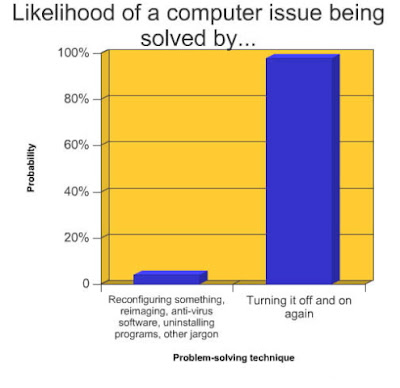
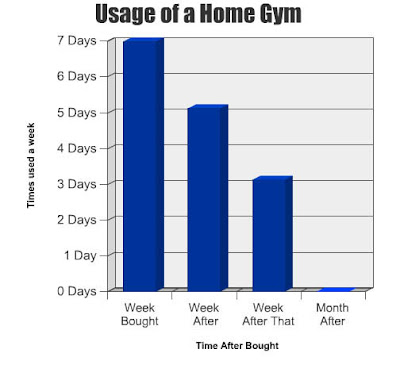
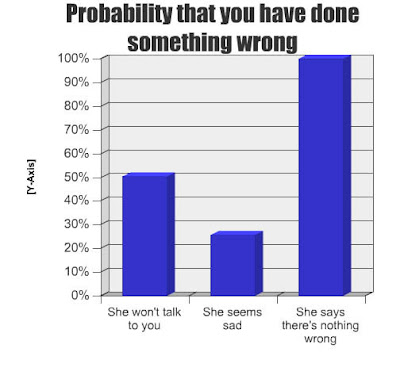
I love these graphs (thank you, Doug). I swear to God, we're becoming a nation of idiots. Everything is "dummied down," it seems to me, and there is nothing - not even the simplest thought - that can't be reduced to a spread sheet or graph form so we can "better understand".
It's like we're all back in Elementary School. "See Spot run."
Someone obviously shares my perspective and put these graphs together.
I hope you enjoy them as much as I have.
Oh, and if you've got a minute, would you feed the fish? Scroll down a bit and look to the right side of the screen. If you "click" on the water, little pink dots will appear and the fish will go into a feeding frenzy. I usually feed them several times a day, but I fear I won't have a chance today. ;`)
Off I go, then, into the fray. We'll talk tomorrow. Promise.
So, I'm keeping it light and fun today. Sorta. Kinda. Maybe.
Well, I'm going to try, anyway.
I love these graphs (thank you, Doug). I swear to God, we're becoming a nation of idiots. Everything is "dummied down," it seems to me, and there is nothing - not even the simplest thought - that can't be reduced to a spread sheet or graph form so we can "better understand".
It's like we're all back in Elementary School. "See Spot run."
Someone obviously shares my perspective and put these graphs together.
I hope you enjoy them as much as I have.
Oh, and if you've got a minute, would you feed the fish? Scroll down a bit and look to the right side of the screen. If you "click" on the water, little pink dots will appear and the fish will go into a feeding frenzy. I usually feed them several times a day, but I fear I won't have a chance today. ;`)
Off I go, then, into the fray. We'll talk tomorrow. Promise.
Friday, July 23, 2010
Prejudice Destroys Brain Cells
I'm remembering a line from the recent movie version of the John Water's play "Hairspray".
The character Motormouth Maybelle, played by Queen Latifah, says to an interracial couple,
You know what I'm talking about, right?
Over the past few days and with breathtaking swiftness, Shirley Sherrod, age 62, who is Georgia director of rural development for the U.S. Department of Agriculture, was smeared by right-wing media, condemned by the NAACP, and canned by the Obama administration.
Why? Well, she spoke at an NAACP meeting in Coffee County, Ga. You can watch her entire presentation and read the transcript here, but this is essentially what she said, as reported in a marvelous essay by none other than conservative star journalist, Peggy Noonan.
Enter one Andrew Breitbart, conservative blogger, who took a two-minute soundbite from her 45 minute speech as prima facia evidence of her "racism".
He has staunchly defended his actions and his position, pointing to the fact that folks in the audience applauded the part where she explained her decision, 45 years ago after the murder of her father, to only help black people.
Breitbart is not the only member in the seemingly never-ending parade of stupid. The NAACP condemned her speech and the U.S. Agricultural Department panicked and fired her.
And then the Spooners stepped in. This time they saved her. Is Ms. Sherrod a racist, they were asked. "No way in the world," said Roger Spooner. "She stuck with us." Eloise: "She helped us, so we're helping her."
All of a sudden, people started to listen to her entire speech. Apologies began to flow - from the NAACP, the U.S. Agricultural Department and the Obama Administration. She was reportedly even offered another position in the U.S. Agricultural Department.
I hope she gets a promotion and a raise.
Not Mr. Breitbart, however. Of course. What is it that Forrest Gump's momma taught him? Oh, yes: "Stupid is as stupid does."
Rosetta E. Ross, associate professor of religious studies at Spelman College in Atlanta, writing in Religion Dispatches, says this is evidence of "Christianization."
All of these are, at least to me, part of the desperate, death-grasp of patriarchy as it makes its way to the grave. The social paradigm has shifted. Some would say it is being turned upside down.
As a result, there is a pervasive mood of anxiety and fear in this country that is as poisonous and toxic as the oil that has been gushing into the Gulf Coast.
Indeed, the Catastrophe in the Gulf (we have to stop saying 'Oil Spill') has become, for me, a metaphor for the toxicity that has been gushing into our culture, killing the delicate balance of the ecosystem of our societal environment.
Civility has been placed on the 'Endangered Species' list.
Common courtesy has gone the way of the Dodo Bird.
A way of life that was indigenous to these United States - the hallmark values of which include "liberty and justice for all" - is almost a fond memory.
It's times like these when some of what the Calvinist evangelicals have to say begins to make some sense and I worry that they may be right: Humans are wretched creatures. We are all slimy worms. Corruption is everywhere in the human enterprise.
We will never be fully forgiven for sins of Adam. But, they don't deny that Jesus came to save us "once, for all." The world is still all doom and gloom, sin and perdition - which they love to point out every chance they get - this being one of them.
It's moments like these when I want to holler at the top of my voice, "Yo! The gospel is not called 'good news' for nothing."
There is still time to save ourselves from ourselves. We know The Way. Our God is an abundant God and there is salvation and redemption aplenty if we begin to take a long, hard look at ourselves and commit ourselves to change and transformation.
As Ms. Motormouth Maybelle says, "Well, love is a gift, a lot of people don't remember that."
Jesus is Love Incarnate, Love Divine. I think some 'good Christian folk" have forgotten that.
To quote Ms. Sherrod's experience of transformation, "As my mother has said to so many, 'If we had tried to live with hate in my heart, we probably be dead now.'"
When we forget, the result is that we see "a whole lotta ugly comin' at you from a neverending parade of stupid."
Ms. Sherrod ended her speech to the NAACP with a quote: "Life is a grindstone, but whether it grinds us down or polishes us up depends on us.”
That's an important piece of wisdom for us to understand and embrace at this moment in our collective history to help us get to the point where we learn that "race exists, but it doesn't matter."
The character Motormouth Maybelle, played by Queen Latifah, says to an interracial couple,
"Well, love is a gift, a lot of people don't remember that. So, you two better brace yourselves for a whole lotta ugly comin' at you from a neverending parade of stupid."Seems we've been witnessing that parade this week. And, it's been pretty ugly.
You know what I'm talking about, right?
Over the past few days and with breathtaking swiftness, Shirley Sherrod, age 62, who is Georgia director of rural development for the U.S. Department of Agriculture, was smeared by right-wing media, condemned by the NAACP, and canned by the Obama administration.
Why? Well, she spoke at an NAACP meeting in Coffee County, Ga. You can watch her entire presentation and read the transcript here, but this is essentially what she said, as reported in a marvelous essay by none other than conservative star journalist, Peggy Noonan.
"Forty-five years before, to the day, her father's funeral was held. He had been murdered by a white man in Baker County, Ga. These were still the bad old days; lynchings had taken place in her lifetime. The man who murdered her father "was never punished," even though there were three eyewitnesses. The grand jury refused to indict.Some folk, however, some good, red-blooded (and white skinned) Americans seem to work very hard keep racism alive.
All this was told not in a tone of rage or self-pity but of simple remembered sadness: "My father was a farmer, and growing up on the farm my dream was to get as far away from the farm and Baker County as I could get." She worked "picking cotton, picking cucumbers, shaking peanuts. . . . Doing all that work on the farm, it will make you get an education." She wanted to escape. "The older folks know what I'm talking about."
Go North, she thought. She'd seen black people return from vacations up North: "You know how they came back talking, and came back looking." The audience laughed. "I learned later some of those cars they drove home were rented." The audience laughed louder.
She was 17 when her father was killed, in 1965. After that, one night, a cross was burned on their lawn. Her mother had a gun, and black men from throughout the county came and surrounded the white men who surrounded the house. Shirley was terrified and hid in a back room, praying. That night something changed. "I made the decision that I would stay and work."
She wouldn't leave the South but change it. Here she addressed the youthful members of her audience: "Young people, I want you to know when you are true to what God wants you to do, the path just opens up, and things just come to you. God is good, I can tell you that."
But when she made her decision, "I was making that commitment to black people only." She didn't care about whites.
Almost a quarter-century ago, she was working for a farmers aid group when she was asked to help a couple named Roger and Eloise Spooner. They were losing their farm, and they were white.
Mr. Spooner made a poor impression. He "took a long time talking." She thought he was trying to establish a superior intelligence. "What he didn't know while he was talking all that time . . . was I was trying to decide just how much help I was gonna give him. I was struggling with the fact that so many black people had lost their farmland." So she did enough to meet her responsibilities, but no more. She took him to "a white lawyer," figuring "that his own kind will take care of him."
The lawyer took the farmer's money and, she said, did little else. She assumed things had been taken care of. But in May, 1987, Mr. Spooner received a foreclosure notice and he called her, frantic. His house was to be sold a week later on the courthouse steps, and no motion had been filed to stpo it.
They all met. The lawyer suggested the farmer retire. "I said, 'I can't believe you said that.'"
Indignant, she set herself to save the Spooners' farm. "That's when it was revealed to me that it's about poor versus those who have," not white versus black. "It opened my eyes." She worked the phones, reached out to those who could help, talked to more lawyers, called officials.
And she saved that farm.
"Working with him," said Ms. Sherrod, "made me see . . . that it's really about those who have versus those who don't." It's helping the frightened and powerless. "And they could be black, they could be white, they could be Hispanic."
She said that 45 years ago she couldn't say what she will say tonight: "I've come a long way. I knew that I couldn't live with hate, you know. As my mother has said to so many, 'If we had tried to live with hate in my heart, we probably be dead now.'" She said it was "sad" that the room was not "full of whites and blacks." She quoted Toni Morrison: We have to get to a point where "race exists but it doesn't matter."
Enter one Andrew Breitbart, conservative blogger, who took a two-minute soundbite from her 45 minute speech as prima facia evidence of her "racism".
He has staunchly defended his actions and his position, pointing to the fact that folks in the audience applauded the part where she explained her decision, 45 years ago after the murder of her father, to only help black people.
Breitbart is not the only member in the seemingly never-ending parade of stupid. The NAACP condemned her speech and the U.S. Agricultural Department panicked and fired her.
And then the Spooners stepped in. This time they saved her. Is Ms. Sherrod a racist, they were asked. "No way in the world," said Roger Spooner. "She stuck with us." Eloise: "She helped us, so we're helping her."
All of a sudden, people started to listen to her entire speech. Apologies began to flow - from the NAACP, the U.S. Agricultural Department and the Obama Administration. She was reportedly even offered another position in the U.S. Agricultural Department.
I hope she gets a promotion and a raise.
Not Mr. Breitbart, however. Of course. What is it that Forrest Gump's momma taught him? Oh, yes: "Stupid is as stupid does."
Rosetta E. Ross, associate professor of religious studies at Spelman College in Atlanta, writing in Religion Dispatches, says this is evidence of "Christianization."
Colonial use of Christianity—or “Christianization”—is the employment of “Christian” rhetoric and identification to construct meaning in social and political life. This has included establishing specific conceptions of citizenship, structures of education, social roles and behaviors that simultaneously develop and inscribe hetero-patriarchy, white supremacy, and racial subjugation in policies, practices, and the imagination.She writes, "The current cultural offensive launched through poisonous sound bites and blogs includes a subtext advocating a constricted, “Christianized” social morality that excludes racial, sexual, class, language, and even certain gender diversity."
Examining Christianization during the US antebellum era, religious historian Albert Raboteau says Christianity initially had a slow start among enslaved Africans in the United States because, among other reasons, enslavers feared a common baptism would signal social equality. To resolve the dilemma Christian missionaries declared that Christianity would help better fit black persons to enslavement.
Crafting a “Christian” argument that enabled the participation of enslaved Africans continued even after Emancipation as some black racial uplift workers, and white evangelical home missionaries, argued that Christianizing formerly enslaved persons was necessary in order to make them acceptable and respectable participants in civil society. Christianity (rather, Christianization) functioned in both instances as a mechanism to define or justify black humanity and participation within white civil society.
All of these are, at least to me, part of the desperate, death-grasp of patriarchy as it makes its way to the grave. The social paradigm has shifted. Some would say it is being turned upside down.
As a result, there is a pervasive mood of anxiety and fear in this country that is as poisonous and toxic as the oil that has been gushing into the Gulf Coast.
Indeed, the Catastrophe in the Gulf (we have to stop saying 'Oil Spill') has become, for me, a metaphor for the toxicity that has been gushing into our culture, killing the delicate balance of the ecosystem of our societal environment.
Civility has been placed on the 'Endangered Species' list.
Common courtesy has gone the way of the Dodo Bird.
A way of life that was indigenous to these United States - the hallmark values of which include "liberty and justice for all" - is almost a fond memory.
It's times like these when some of what the Calvinist evangelicals have to say begins to make some sense and I worry that they may be right: Humans are wretched creatures. We are all slimy worms. Corruption is everywhere in the human enterprise.
We will never be fully forgiven for sins of Adam. But, they don't deny that Jesus came to save us "once, for all." The world is still all doom and gloom, sin and perdition - which they love to point out every chance they get - this being one of them.
It's moments like these when I want to holler at the top of my voice, "Yo! The gospel is not called 'good news' for nothing."
There is still time to save ourselves from ourselves. We know The Way. Our God is an abundant God and there is salvation and redemption aplenty if we begin to take a long, hard look at ourselves and commit ourselves to change and transformation.
As Ms. Motormouth Maybelle says, "Well, love is a gift, a lot of people don't remember that."
Jesus is Love Incarnate, Love Divine. I think some 'good Christian folk" have forgotten that.
To quote Ms. Sherrod's experience of transformation, "As my mother has said to so many, 'If we had tried to live with hate in my heart, we probably be dead now.'"
When we forget, the result is that we see "a whole lotta ugly comin' at you from a neverending parade of stupid."
Ms. Sherrod ended her speech to the NAACP with a quote: "Life is a grindstone, but whether it grinds us down or polishes us up depends on us.”
That's an important piece of wisdom for us to understand and embrace at this moment in our collective history to help us get to the point where we learn that "race exists, but it doesn't matter."
Wednesday, July 21, 2010
Lora and Pam's Cancer Brawl
My friend Lora was just diagnosed with breast cancer.
She found the lump during her monthly breast-self exam.
That was four days before her regularly scheduled mammography.
She writes:
Yes. You read that right.
She's almost through the last of the "slash, burn and poison" method of treatment.
She's had a mastectomy with reconstructive surgery (slash), radiation (burn) and is just finishing up her last round of chemo (poison). Actually, she'll get her last dose of non-chemo IV treatment in early September.
Because Lora has a history of breast cancer in her family, she's having a bilateral mastectomy with reconstruction surgery at the end of the month. Depending on the genetic studies, she may also have a hysterectomy.
Then, depending on the path reports after surgery, she may have radiation and chemo.
Oh, I didn't tell you?
They have twins. A boy and a girl. Six years old.
I was there hours after their premature birth. Did "emergency baptisms" in their incubators, and was later privileged to formally baptize them in church .
They are both truly amazing kids.
Then again, what would we expect? Their parents are truly amazing women.
They have chosen "Rosie the Riveter" as the logo for their FaceBook Page where they will keep family and friends up to date on the progress of their "Cancer Brawl."
I can't think of a better image.
Rosie the Riveter is an iconic figure who represents the American women who worked in factories during World War II, many of whom worked in the manufacturing plants that produced munitions and war supplies.
These women sometimes took entirely new jobs replacing the male workers who were in the military.
In 1942, there was a hit song entitled "Rosie the Riveter". The lyrics include the words:
I like that Lora and Pam use the word, "brawl." It's street. It's down and dirty. It's doin' what you need to do to fight cancer.
Oh, and there's something else. I'll let Lora tell it in her own words:
Do it right now.
And, if you haven't had a mammo lately, please pick up the phone and call your doctor and make an appointment.
Yeah, you guys too. What? You think guys don't get breast cancer? Think again.
The American Cancer Society estimates that in 2008, about 1,990 new cases of breast cancer in men will be diagnosed, and that breast cancer will cause approximately 480 deaths in men (in comparison, over 40,000 women die of breast cancer each year).
Don't know how to do a BSE (Breast Self Exam)?
You can learn all about it from the American Cancer Society.
You can get step-by-step illustrated instructions here.
And, please, of your mercy and kindness, remember Lora and Pam in your prayers. And, their two kids who are amazingly brave. They are also kind and thoughtful, generous and smart. They also actually ask for fruits and vegetables. Every day.
That's because they have two incredible parents.
Who need our prayers as they brawl cancer. Again.
Thank you.
She found the lump during her monthly breast-self exam.
That was four days before her regularly scheduled mammography.
She writes:
I went in & told them about the lump. Because of my recent experience though, I did NOT wait for the result; instead went directly into see a specialist who quickly diagnosed my cancer. On the same day that my breast surgeon ...provided the diagnosis, I received a call from the regularly scheduled mammo people giving me all-clear. Per the report, my mammo “shows no evidence of breast cancer”; I should “continue with periodic examinations.” I’m really glad that I did not wait; went immediately into the doctor.The "recent experience" of which she speaks is that, about a year ago, her partner, Pam, was diagnosed with breast cancer.
Yes. You read that right.
She's almost through the last of the "slash, burn and poison" method of treatment.
She's had a mastectomy with reconstructive surgery (slash), radiation (burn) and is just finishing up her last round of chemo (poison). Actually, she'll get her last dose of non-chemo IV treatment in early September.
Because Lora has a history of breast cancer in her family, she's having a bilateral mastectomy with reconstruction surgery at the end of the month. Depending on the genetic studies, she may also have a hysterectomy.
Then, depending on the path reports after surgery, she may have radiation and chemo.
Oh, I didn't tell you?
They have twins. A boy and a girl. Six years old.
I was there hours after their premature birth. Did "emergency baptisms" in their incubators, and was later privileged to formally baptize them in church .
They are both truly amazing kids.
Then again, what would we expect? Their parents are truly amazing women.
They have chosen "Rosie the Riveter" as the logo for their FaceBook Page where they will keep family and friends up to date on the progress of their "Cancer Brawl."
I can't think of a better image.
Rosie the Riveter is an iconic figure who represents the American women who worked in factories during World War II, many of whom worked in the manufacturing plants that produced munitions and war supplies.
These women sometimes took entirely new jobs replacing the male workers who were in the military.
In 1942, there was a hit song entitled "Rosie the Riveter". The lyrics include the words:
All the day long,Well, okay, I don't like the war image or the image of the assembly line. I like the image of a strong, independent woman making a contribution to the world. No wonder "Rosie" remains an icon of the feminist movement.
Whether rain or shine
She’s part of the assembly line.
She’s making history,
Working for victory
Rosie the Riveter
I like that Lora and Pam use the word, "brawl." It's street. It's down and dirty. It's doin' what you need to do to fight cancer.
Oh, and there's something else. I'll let Lora tell it in her own words:
So for all of you out there as freaked as I am by this story, (1) make sure your mammo is digital (vs analog). With digital, they can get a much closer look at any areas that are questionable; (2) keep with the self exams monthly & (3) if you find a lump, regardless of mammo, see a specialist. You might not get the answer you like, but it might help to save your life.So, g'wan. Do a breast self-exam.
Do it right now.
And, if you haven't had a mammo lately, please pick up the phone and call your doctor and make an appointment.
Yeah, you guys too. What? You think guys don't get breast cancer? Think again.
The American Cancer Society estimates that in 2008, about 1,990 new cases of breast cancer in men will be diagnosed, and that breast cancer will cause approximately 480 deaths in men (in comparison, over 40,000 women die of breast cancer each year).
Don't know how to do a BSE (Breast Self Exam)?
You can learn all about it from the American Cancer Society.
You can get step-by-step illustrated instructions here.
And, please, of your mercy and kindness, remember Lora and Pam in your prayers. And, their two kids who are amazingly brave. They are also kind and thoughtful, generous and smart. They also actually ask for fruits and vegetables. Every day.
That's because they have two incredible parents.
Who need our prayers as they brawl cancer. Again.
Thank you.
Tuesday, July 20, 2010
Bibles for Beck
The Rev'd Dr. Serene Jones is President of Union Theological Seminary in NYC. She is the first woman president in the Seminary's 172-year history. She is the Roosevelt Professor of Systematic Theology.
She has written a letter to Glenn Beck which she has graciously shared with the rest of us, which appears on The Huffington Post.
I hope you'll take a moment to read it and then allow yourself the luxury of the watching the three minute, fifty one second video put together by some Union Theological School's seminarians and graduates.
It is not to be missed. Trust me on this.
Dear Mr. Beck,
Serene Jones here. I'm President of Union Theological Seminary in New York, home of James Cone, the scholar featured on your liberation theology program this week.
I write with exciting news. Bibles are en route to you, even as we speak! Kindly let me explain. On your show, you said that social justice is not in the Bible, anywhere. Oh my, Mr. Beck. At first we were so confused. We couldn't figure out how you could possibly miss this important theme. And then it hit us: maybe you don't have a Bible to read. Let me assure you, this is nothing to be ashamed of. Many people live Bible-less lives. But we want to help out. And so, as I write this, our students are collecting Bibles from across the nation, packing them in boxes, and sending them to your offices. Grandmothers, uncles, children, co-workers -- indeed, Bible-readers from all walks of life have eagerly contributed. They should be arriving early next week, hopefully just in time for your next show. Read them with zeal!
Oh, I almost forgot: we've marked a few of the social justice passages, just in case you can't find them.
But as good as this might sound, that's not all! You express such a fervent desire to interpret the rich faith of the gospels that we have decided to offer you a substantial scholarship to Union for advanced theological studies, should you matriculate. Indeed, a fundraising campaign is already underway to offset the cost of your education. It is true that in your case you may need some remedial study before Master's level work can commence, but we are willing to work with you as you come up to speed with the rest of our student body.
In this regard, may I recommend preparatory summer readings? Have you heard of John Calvin's Institutes of the Christian Religion or Reinhold Niebuhr's Nature and Destiny of Man? Both are Caucasian men -- not that it matters -- and they have lovely discussions of religion and politics. You'll just eat them up!
And now a final piece of good news. Your show has clearly stirred renewed interest in liberation theology and in the work of our esteemed faculty. Our own media department works tirelessly to promote their many books and articles. Somewhat embarrassingly, I have to admit that in all these years, we have never achieved a video campaign comparable to the exposure achieved by your own video segment's showing. We were astounded to see so many people hearing about the work of our seminary. In recognition of this free publicity, we want to offer you a reduced housing rate on our campus if you enroll as a student.
Do write soon so that we can discuss the terms of your application, scholarship, and housing. And let us know when you receive the Bibles -- especially if we can further assist you in any way with your reading and study.
We anxiously await your reply. In the meantime, please enjoy this video compilation of welcomes from our students:
Graciously yours,
Serene Jones
President
Union Theological Seminary
She has written a letter to Glenn Beck which she has graciously shared with the rest of us, which appears on The Huffington Post.
I hope you'll take a moment to read it and then allow yourself the luxury of the watching the three minute, fifty one second video put together by some Union Theological School's seminarians and graduates.
It is not to be missed. Trust me on this.
Dear Mr. Beck,
Serene Jones here. I'm President of Union Theological Seminary in New York, home of James Cone, the scholar featured on your liberation theology program this week.
I write with exciting news. Bibles are en route to you, even as we speak! Kindly let me explain. On your show, you said that social justice is not in the Bible, anywhere. Oh my, Mr. Beck. At first we were so confused. We couldn't figure out how you could possibly miss this important theme. And then it hit us: maybe you don't have a Bible to read. Let me assure you, this is nothing to be ashamed of. Many people live Bible-less lives. But we want to help out. And so, as I write this, our students are collecting Bibles from across the nation, packing them in boxes, and sending them to your offices. Grandmothers, uncles, children, co-workers -- indeed, Bible-readers from all walks of life have eagerly contributed. They should be arriving early next week, hopefully just in time for your next show. Read them with zeal!
Oh, I almost forgot: we've marked a few of the social justice passages, just in case you can't find them.
But as good as this might sound, that's not all! You express such a fervent desire to interpret the rich faith of the gospels that we have decided to offer you a substantial scholarship to Union for advanced theological studies, should you matriculate. Indeed, a fundraising campaign is already underway to offset the cost of your education. It is true that in your case you may need some remedial study before Master's level work can commence, but we are willing to work with you as you come up to speed with the rest of our student body.
In this regard, may I recommend preparatory summer readings? Have you heard of John Calvin's Institutes of the Christian Religion or Reinhold Niebuhr's Nature and Destiny of Man? Both are Caucasian men -- not that it matters -- and they have lovely discussions of religion and politics. You'll just eat them up!
And now a final piece of good news. Your show has clearly stirred renewed interest in liberation theology and in the work of our esteemed faculty. Our own media department works tirelessly to promote their many books and articles. Somewhat embarrassingly, I have to admit that in all these years, we have never achieved a video campaign comparable to the exposure achieved by your own video segment's showing. We were astounded to see so many people hearing about the work of our seminary. In recognition of this free publicity, we want to offer you a reduced housing rate on our campus if you enroll as a student.
Do write soon so that we can discuss the terms of your application, scholarship, and housing. And let us know when you receive the Bibles -- especially if we can further assist you in any way with your reading and study.
We anxiously await your reply. In the meantime, please enjoy this video compilation of welcomes from our students:
Graciously yours,
Serene Jones
President
Union Theological Seminary
Monday, July 19, 2010
"Refudiate" Racism
Racism? What racism?
There's no racism in the Tea Party Movement!
Oh, you mean, this? Obama's head transposed on Hitler's body?
Just a few good ole boys who got carried away is all.
And, this?
Just a good, red-blooded American letting off some steam.
Besides, remember the First Amendment? We still have a right to free speech in this country, don't we?
The most recent dust-up came in response to a resolution passed by the NAACP, meeting in convention in Kansas City, which urged leaders of the Tea Party Movement that they should repudiate bigotry.
Mind you, the NAACP did not say that the Tea Party Movement was a racist organization. The resolution called for the leaders of the TPM to "repudiate bigotry".
Given the pictures above and in lots of places easily accessible on the internet, there is ample evidence of a "racist element" within the ranks of TPM.
Many Tea Party officials have expressed concerns that this is just a political stunt by the NAACP.
Before the NAACP had even gotten to the end of its resolution, the St. Louis Tea Party actually issued a resolution of its own. They condemned the NAACP for even thinking of issuing a resolution that accused the Tea Parties of racism.
Members of the Tea Party are saying that the NAACP is trying to blame the movement for Obama’s failures. The Tea Party does not believe these accusations. The National Tea Party Federation issued a statement that rejected the accusations of the NAACP.
It's now become a war of words. Mrs. Palin has even invented one of her own:
That's what she "tweeted" last week about the controversial proposal to build a Mosque two blocks from Ground Zero.
One liberal blogger asked, "If republicans can demand that immigrants speak English, can't we demand same of Sarah Palin?"
Another asked, "We want peaceful Muslims to distinguish themselves from radical Muslims, but we can't distinguish between a peaceful Mosque & terrorists?"
But, by then, everyone was on to her use of "refudiate" - an apparent if not fascinating combination of "refute" and "repudiate".
Mrs. Palin then fired back to critics by comparing herself to Shakespeare.
"Wee-weed up" is a slang from the 70's - which, I must admit, brought a smile of reminiscence to my lips - for acting silly or dopey after smoking too much marijuana.
Other Twitter users, apparently nonplussed by the new language, took Palin's message to heart, combining the language of Shakespeare and Palin's rhetoric to create unique messages under the hash tag #ShakesPalin.
"We few, we happy few, we band of Mama Grizzlies," tweeted Washington Post blogger Ezra Klein.
Ya gotta love her for providing a bit of comic relief in the midst of some very tense times. Well, when she doesn't make you want to run from the room, pulling out your hair while you engage in a primal scream.
And then there's the secretly recorded rant of Mel Gibson, reportedly to his wife . . or, ex-girlfriend . . . or, now "not-so-significant other" with whom he has an 8 month old child. In that rant he took down African Americans, Hispanic people and Jews.
"Sticks and stones can break my bones, but names will never hurt me." That's what we used to chant when we were little kids.
We were wrong.
We learned very early in the movement to end domestic violence that it is a cycle which begins with words.
Before the push, the shove, the slap, and the punch comes the derogatory remarks, the shame and blame, and the insults.
Those of us who know the violence aimed at LGBT people know it begins with the taunts of "Faggot!" and "Lesbo!"
Those of us who know the violence aimed at people of color know that it begins with objectification and dehumanization.
Those of us who have been to war know that it's much easier to kill a "Gook" or a "Kraut" than a person of Asian or a German ethnicity.
Good for the NAACP for formally calling the Tea Party Movement into account for the "racist tea leaves" in their political brew.
That is not to say that the TPM is, de facto, racist. That's not what the NAACP resolution said.
In April, a survey by the Winston Group, a GOP strategist firm, shocked many when it found that four in 10 Tea Party adherents are not Republicans, but independents or Democrats.
A follow-up New York Times survey revealed that Tea Party backers are not ill-educated, low-income, blue-collar whites. The majority is middle class, and many are highly educated and wealthy.
No matter what their former politics or party affiliation, the single overriding factor that drives them is the feeling that the country is heading in the wrong direction.
Fair enough.
Can we agree that allowing people to carry signs like those above and to your left are out of bounds?
Might we be able to expect that the good, "middle class, highly educated and wealthy" folk who supposedly fill the rank and file of the TPM would call their own into accountability and "refute", "repudiate" and/or "refudiate" these racist statements and images?
Can we expect some accountability from those who seek to hold our government accountable for what they feel is wasteful spending, greed and political corruption?
Good for the NAACP.
Good for Mrs. Palin and other members of the TPM who "refudiate" racism - in any way, shape or form.
Talk, however, is cheap. Words without action are meaningless.
I want to see tangible evidence of that "refudiation". I want to see the TPM do a little house cleaning in their ranks - beginning with a permanent ban on the public display of those reprehensible, despicable, blatantly racist signs.
These bigots create mischief and havoc, poison the racial air, and in some cases pose a physical danger.
One would think that Tea Party leaders might welcome, not "refudiate" those who point that out.
I don't know about you, but I'm a hopeful person - a veritable "prisoner of hope" of which St. Paul so eloquently writes.
That being said, I'm not holding my breath.
There's no racism in the Tea Party Movement!
Oh, you mean, this? Obama's head transposed on Hitler's body?
Just a few good ole boys who got carried away is all.
And, this?
Just a good, red-blooded American letting off some steam.
Besides, remember the First Amendment? We still have a right to free speech in this country, don't we?
The most recent dust-up came in response to a resolution passed by the NAACP, meeting in convention in Kansas City, which urged leaders of the Tea Party Movement that they should repudiate bigotry.
Mind you, the NAACP did not say that the Tea Party Movement was a racist organization. The resolution called for the leaders of the TPM to "repudiate bigotry".
Given the pictures above and in lots of places easily accessible on the internet, there is ample evidence of a "racist element" within the ranks of TPM.
Many Tea Party officials have expressed concerns that this is just a political stunt by the NAACP.
Before the NAACP had even gotten to the end of its resolution, the St. Louis Tea Party actually issued a resolution of its own. They condemned the NAACP for even thinking of issuing a resolution that accused the Tea Parties of racism.
Members of the Tea Party are saying that the NAACP is trying to blame the movement for Obama’s failures. The Tea Party does not believe these accusations. The National Tea Party Federation issued a statement that rejected the accusations of the NAACP.
It's now become a war of words. Mrs. Palin has even invented one of her own:
"Refudiate".
That's what she "tweeted" last week about the controversial proposal to build a Mosque two blocks from Ground Zero.
“Ground Zero Mosque supporters: doesn’t it stab you in the heart, as it does ours throughout the heartland? Peaceful Muslims, pls refudiate,”See? "Peaceful Muslims" are not to be confused with the majority of Muslims who are obviously not, in Mrs. Palin's estimation, "peaceful."
One liberal blogger asked, "If republicans can demand that immigrants speak English, can't we demand same of Sarah Palin?"
Another asked, "We want peaceful Muslims to distinguish themselves from radical Muslims, but we can't distinguish between a peaceful Mosque & terrorists?"
But, by then, everyone was on to her use of "refudiate" - an apparent if not fascinating combination of "refute" and "repudiate".
Mrs. Palin then fired back to critics by comparing herself to Shakespeare.
“Refudiate,” “misunderestimate,” “wee-weed up.” English is a living language. Shakespeare liked to coin new words too. Got to celebrate it!Translation: "misunderestimate" is a "Bushism" (Thank ya, Dubya), which presumably means, "to seriously underestimate".
"Wee-weed up" is a slang from the 70's - which, I must admit, brought a smile of reminiscence to my lips - for acting silly or dopey after smoking too much marijuana.
Other Twitter users, apparently nonplussed by the new language, took Palin's message to heart, combining the language of Shakespeare and Palin's rhetoric to create unique messages under the hash tag #ShakesPalin.
"We few, we happy few, we band of Mama Grizzlies," tweeted Washington Post blogger Ezra Klein.
Ya gotta love her for providing a bit of comic relief in the midst of some very tense times. Well, when she doesn't make you want to run from the room, pulling out your hair while you engage in a primal scream.
And then there's the secretly recorded rant of Mel Gibson, reportedly to his wife . . or, ex-girlfriend . . . or, now "not-so-significant other" with whom he has an 8 month old child. In that rant he took down African Americans, Hispanic people and Jews.
"Sticks and stones can break my bones, but names will never hurt me." That's what we used to chant when we were little kids.
We were wrong.
We learned very early in the movement to end domestic violence that it is a cycle which begins with words.
Before the push, the shove, the slap, and the punch comes the derogatory remarks, the shame and blame, and the insults.
Those of us who know the violence aimed at LGBT people know it begins with the taunts of "Faggot!" and "Lesbo!"
Those of us who know the violence aimed at people of color know that it begins with objectification and dehumanization.
Those of us who have been to war know that it's much easier to kill a "Gook" or a "Kraut" than a person of Asian or a German ethnicity.
Good for the NAACP for formally calling the Tea Party Movement into account for the "racist tea leaves" in their political brew.
That is not to say that the TPM is, de facto, racist. That's not what the NAACP resolution said.
In April, a survey by the Winston Group, a GOP strategist firm, shocked many when it found that four in 10 Tea Party adherents are not Republicans, but independents or Democrats.
A follow-up New York Times survey revealed that Tea Party backers are not ill-educated, low-income, blue-collar whites. The majority is middle class, and many are highly educated and wealthy.
No matter what their former politics or party affiliation, the single overriding factor that drives them is the feeling that the country is heading in the wrong direction.
Fair enough.
Can we agree that allowing people to carry signs like those above and to your left are out of bounds?
Might we be able to expect that the good, "middle class, highly educated and wealthy" folk who supposedly fill the rank and file of the TPM would call their own into accountability and "refute", "repudiate" and/or "refudiate" these racist statements and images?
Can we expect some accountability from those who seek to hold our government accountable for what they feel is wasteful spending, greed and political corruption?
Good for the NAACP.
Good for Mrs. Palin and other members of the TPM who "refudiate" racism - in any way, shape or form.
Talk, however, is cheap. Words without action are meaningless.
I want to see tangible evidence of that "refudiation". I want to see the TPM do a little house cleaning in their ranks - beginning with a permanent ban on the public display of those reprehensible, despicable, blatantly racist signs.
These bigots create mischief and havoc, poison the racial air, and in some cases pose a physical danger.
One would think that Tea Party leaders might welcome, not "refudiate" those who point that out.
I don't know about you, but I'm a hopeful person - a veritable "prisoner of hope" of which St. Paul so eloquently writes.
That being said, I'm not holding my breath.
Sunday, July 18, 2010
Martha, Martha
“Martha, Martha. . .” Luke 10:38-42
VIII Pentecost – July 18, 2010
The Episcopal Church of St. Paul, Chatham
(the Rev’d Dr.) Elizabeth Kaeton, rector and pastor.
One of my clergy colleagues likes to refer to this gospel story as an homage to “Mary and Martha, The Patron Saints of Perpetual Triangulation”.
Jesus seems to be setting up the two women in a classic triangle relationship with him. “Martha, Martha,” sighs Jesus, “you are worried and distracted by many things; there is need of only one thing.” Then, turning to her sister, he says, “Mary has chosen the better part, which will not be taken away from her."
Forgive me, but if Jesus were in MY house, I’d be feisty enough to say, “Yo! Jesus! Pick up a broom, would ya? Here, take this dishcloth. You wash. I’ll wipe and put away. You’ll talk. I’ll listen. You’ll teach. I’ll learn. Women have been doing this for centuries. Wanna be a real radical? Try doing women’s work!”
Sheesh!
Actually, I’m not sure the story went down in exactly the way it is reported. Oh, I have no doubt that Jesus didn’t pick up a broom or a dishcloth – that would have been unheard of in his day and in that culture. But, I’m not sure Jesus set up the two women like that. I think that was St. Luke.
Luke, I think, is trying to teach something to the early church about discipleship and I suspect he is using this story of Mary and Martha and the story of the Good Samaritan as companion pieces, apart from concerns about gender or ethnicity, to pave the way.
Both stories relate to the Shema – the Great Law - "You shall love the Lord your God with all your heart, and with all your soul, and with all your strength, and with all your mind; and your neighbor as yourself."
The story of the Good Samaritan teaches us how to love our neighbor.
The story of Mary and Martha teaches us how to love God.
There is a radical edge to this story, however, that you could miss if you get stuck in your frustration about gender stereotype.
Luke’s choice of female characters is designed to grab the attention of his listeners. We can allow ourselves to get so caught up in the rebuke of Martha that we miss the radical nature of the call to Mary.
Yes, says Jesus, it’s okay for Mary, a woman to sit at my feet and learn from me. You may not see the radical nature of that statement because we understand that, in that culture and in that time, sitting at the feet of men was the proper place for women.
What we may overlook is the fact that sitting at the feet of the Master was a place of honor reserved for his disciples. Everyone else who wasn’t a disciple sat farther away. Women were not even allowed near Jesus.
Hear this and hear this clearly: Mary is being allowed a place accorded only to disciples – the inner circle of male privilege. (Somebody call the Vatican hotline.)
Talk about radical social transformation! I can only imagine how the disciples must have heard this invitation. Or, perhaps more accurately, how the early church must have heard this story.
There must have been outrage – which may well be why it’s so easy to hear this story as two women squabbling and complaining about housework.
If we get caught up in gender roles, however, we miss not only the invitation to Mary but the mild rebuke to Martha. Those two actions contain important instructions about discipleship.
Yes, Luke opens the way for women to sit at the feet of Jesus and learn—not at Martha's expense, and not because she's female, but for Martha's benefit! It is also for the benefit of a community needing liberation from singular, closed-system thinking – then and now.
Yes, Martha is mildly admonished for giving in to the distractions of the world and losing her concentration on Jesus – who is the better portion.
Again, Luke is teaching us about how to follow the Shema, the Law, to . . .” love the Lord your God with all your heart, and with all your soul, and with all your strength, and with all your mind . . .”
We know Martha’s chastisement. We understand her predicament. Today's Martha could be any one of us – male or female, black or white or Asian, gay or lesbian or straight.
We’ve seen her sitting on the bench outside the library, on her Blackberry or talking on her cell phone or iPhone 4 while eating lunch.
She is sometimes found at the Madison Y on a treadmill while making appointments for the next day.
She could have a baby in one arm and a textbook for night class on the other.
There are Marthas at the Elementary School, grading papers at her desk, holding her phone between her face and shoulder, checking in with family about coming home late.
She could be multitasking on a computer, checking email while researching a piece of information, while planning tonight's dinner.
She’s at the outpatient clinic, receiving chemotherapy on her lunch hour so no one will know and miss her at the office so she can save her job.
Martha, like so many of us, is overscheduled, overbooked and overwhelmed. The pace of our lives can make us snap. The urgent demands of life collide with the urgent demands of the gospel—and anyone's trigger can be tripped.
Martha, Martha. We know you well.
This gospel message is for the Marthas and Marys and Lukes and Johns and all the other disciples sitting at the feet of Jesus this morning. There are two things, really.
The first is this: For those of us caught in a never-ending swirl of priority setting with too much to do and too little time, drowning in commitment fatigue, swamped with busyness overload, Jesus offers the way. Gospel trumps busy. Gospel trumps worry. Gospel trumps distractions.
There is relief, thanks be to God.
The second is like unto it. There are two great prophets of scripture: Moses and Jesus. Moses gave us ten commandments. Jesus gave us only one commandment, which he built upon the Shema, the Great Law. “Love one another,” he said, “as I have loved you.”
The difficulty of that love and that Gospel is that it requires both intense listening and learning as well as direct action. Faith without works is dead, says St. Paul. And, works without faith is, well, work. Work which, without faith, can become drudgery.
We need Marthas and Marys in our midst. In our lives. Individually and as a community.
Pray and study, listen and learn – and wash dishes.
Jesus didn’t just talk about love, he put his love into action – teaching, healing, curing, feeding, and yes, when necessary, chastising and rebuking. His love is sometimes tough love.
That being said, his message is clear: if you don’t want to be worried and distracted by many things, if you want to know joy, take a risk or two for the sake of the gospel.
It is the way to love one another as Jesus loved us. He’s showing us as plainly as God showed Amos a basket of summer fruit.
I know. I know. It’s a scary thought when you really hear the message and take in the fullness of the meaning of the gospel.
Makes staying in the kitchen doing dishes seem like a day at the beach, right?
Here’s the thing: whether we are working in the kitchen or sitting on the floor, Jesus beckons us to come forward, to come to Him. He is "the better portion."
The Good News is for you, no matter who you are – or who you think you are. There is need of only one thing – to love one another as Jesus loves us and make that love real.
Not necessarily ‘nice’ or ‘warm and fuzzy’, but real.
It’s time now, as it was then, to get our priorities in order and choose the better part.
Amen.
Saturday, July 17, 2010
Women: Know Your Limits
In honor of Mary and Martha - the two Saints of Perpetual Triangulation - whom we remember in tomorrow's lectionary, I offer this instructional video.
I first discovered this little gem - believe it or not - at a Very Orthodox website which is known to have members who froth at the mouth about LGBT people and break into a cold sweat when the conversation turns to the Ordination of Women.
The surprising thing was they 'got' it. They 'got' the joke.
It's amazing, however, how one can use church history, tradition and, of course, scripture - including the passages from John and Luke about Mary and Martha - to support one's conclusion that the "proper" role of women is either in the kitchen or at the feet of Jesus.
Never in any position of ordained leadership. Our brains are "too fluffy" for that.
"The woman has foolishly attempted to venture into the conversation with a wild and dangerous opinion of her own. What half-baked drivel! See how the men look at her in utter contempt."
Best we should only talk about how much we adore little kittens.
Anyway, enjoy the parody.
More on Mary and Martha tomorrow.
Friday, July 16, 2010
Redefining Ministry
Thanks to Dave Walker
In a few weeks, I'll be on vacation the month of August. I have sacramental coverage for each of the four Sundays I will be away - someone who is ordained who will preach and preside. However, we also have a mid-week Eucharist with laying on of hands for healing. That service is at 7 AM. It's much more difficult to get someone who is ordained to cover that service.
In the past and "in a pinch" we have had one of the Licensed Eucharistic Ministers (LEM) lead the Service of the Word, doing the readings and then offering a short meditation - either one s/he has written or something written by someone else.
After the Prayers of the People, the Confession (with group absolution) and the Peace, the congregation gathers round the Altar to say the Lord's Prayer, and then Eucharist is distributed by the LEM from Reserved Sacrament. A closing prayer is said, and then prayers and laying on of hands for healing is done.
The entire service takes no more than 45 minutes. There have been as many as ten people in attendance, but there are four people who have been faithful attendees at this service for over 20 years. They could no sooner go through the week without this service as leave the house in the morning without brushing their teeth or combing their hair.
There is nothing "illegal" in terms of the canons of the church in having an LEM lead the service. It's official term might best be described as "irregular".
The rubrics of the Prayer Book say that "In the absence of a priest, all that is described above (The Service of the Word), except for the blessing, maybe said by a deacon, or, if there is no deacon, by a lay reader." ("Additional Directions", BCP, p 407)
The 'preferential option', however, is always for the ordained. Only .... "In the absence of sufficient deacons and priests, lay persons licensed by the bishop according to the canon may administer the Chalice." (p 408).
However, also on p 408, the rubrics are very clear that "When the services of a priest cannot be obtained the bishop may, at discretion, authorize a deacon to distribute Holy Communion to the congregation from the reserved Sacrament in the following manner. ."
There follows a carefully scripted piece on how the Eucharist is to be distributed by the deacon, in the absence of a priest or bishop.
Here's my question: Why?
I'm not asking a theological question. I understand Church history. I think I've got a pretty good handle on liturgics.
I'm asking a very pragmatic question: Why?
Christian Century magazine has an excellent article entitled, "Called But Not Ordained: the need for lay pastors." It's not online yet, but I suspect it will in a few short weeks.
The article is primarily about the dilemma in the "mainline Protestant denominations" - specifically, the Methodist and Presbyterian and UCC churches - where there are educated and well trained "lay pastors" who preach and pastor and function as the administrator of small churches, and the prejudice they encounter in terms of compensation as well as attitudes.
Here are a few interesting, provocative quotes:
"The rise of lay ministers makes us rethink the distinction between clergy and laity. How does one become a pastor? Is it by laying on of hands? Or by carrying out certain work? Protestant theologies, in particular, struggle to answer such questions. Many churches hold in tension bot a "functional" view of ordination (based on an actual call) and a "sacramental" view (a lifetime vocation). The functions of licensed ministers and ordained ministers can be identical, so it's curious that Protestant churches distinguish between them when in their own traditions ordination is not officially a sacrament."It gets a little more complicated in The Episcopal Church - "neither Protestant nor Catholic". We DO have and believe in The Sacraments (Baptism, Holy Eucharist) and the five Sacramental rites of the church - ordination being one of them.
And yet, we have six licensed ministries: pastoral leader, worship leader, preacher, catechist, eucharistic minister and eucharistic visitor.
Licensed ministers are not considered clergy and do not administer the sacraments themselves, although some may be licensed to help serve the Eucharist. preparation for some offices, such as eucharistic minister, can be done at the local level; preachers, however, require much more substantial education. The Episcopal Church does not keep statistics at a national level on its lay ministers. Anecdotally it appears that the practice may be increasing in rural dioceses.Dean Wolfe, Bishop of the Episcopal Diocese of Kansas, is quoted in the article as saying of the six licensed lay ministries, "We couldn't do our work without them."
Kenneth L. Carter, professor of the practice of Christian ministry at Duke Divinity and a retired UMC bishop acknowledged that the Protestant dilemma began centuries ago with the apostolic line of succession was broken. "There is a very definite trend toward use of nonordained persons," he says, "Our need is trumping our ecclesiology."
"Polity is always contextual," says Dwight Zscheile, an Episcopal priest who teaches at Luther Seminary. "We had this idea, born out of corporate America, that you could standardize the training of clergy and employ them like interchangeable parts - give them a standard middle-class salary and benefits package and move them around as needed. But many churches can't support that anymore."
The article concludes,
"Clergy are at once 'set apart' and 'representative'. Their role, distinct from that of the laity, represents the church's distinctive function in a secular society. An elision of laity and clergy portends an elision of church and society - a truly terrifying prospect for some. But it may not be so terrible if the church develops homegrown leaders with a full commitment to unglamorous churches that just ask to be loved."Loved? Yes. I would add, "fed."
Ms. Conroy says that more and more churches are going to be employing 'lay pastors'. That, in fact, clergy are going to become more and more unaffordable.
Really, I asked. When do you see this happening?
Ten years, she said. In the next decade, clergy running congregations full time will be the exception. The church will look very, very different than it does now, she says.
I have no doubt. It's already looking very different at the local level where our need is already trumping our ecclesiology.
What do you think? Is ministry being redefined in our midst and the church is just catching up with it? Should we allow our present cultural financial crisis be the basis of the change for ecclesiology?
Is that short-sighted? Is the picture much larger? Or is the current trend speaking to us of a movement of the Spirit? A rebirth, or reformation of the church?
And, what about the issue of compensation and the prejudice encountered by lay pastors all around the country in every denomination from the Roman Catholic Church to the United Church of Christ? How do we determine compensation for ecclesiological acts and functions? Should there be compensation? Should there ever have been a system of compensation for sacramental ministry?
I know this much to be true: I will continue to search for mid-week clergy coverage for me while I'm on vacation, but, if it doesn't happen, I know that little community that has met every Wednesday morning for at least the past 25 years will continue to gather at the church to pray with each other.
I expect them to be a vehicle of healing and hope for each other. Be inspired by the Word. Be fed by the Sacrament.
What else would I expect from a community that has gathered for a quarter of a decade to care for each other and the world?
There will always be Bread.
It has been promised.
Thursday, July 15, 2010
Everything you ever wanted to know about being gay or lesbian (but were afraid to ask)
Thanks to my friend, Jan Nunley for these great parodies.
Fair is fair. Here's one on the "Perils of . . .um. . . 'Lesbianity'."
And, just for fun, an entertaining parody on Lady Gaga's "Alejandro" - "Your a homo."
It's really hilarious and political and sarcastic and truthful and entertaining - all at once. Well done.
Love the Reese's Peanut Butter cups as glasses. Gaga should totally steal that.
The Miseducation of Ms. Bristol Palin
Behind the screaming tabloid headlines and titillating talk show speculation and mild jokes from late-night talk show hosts about the recently announced engagement of Bristol Palin and Levi Johnston, lies the unfolding of a modern parable.
At the very least, it is a cautionary tale about adolescent sexuality, abstinence-only education, and teen pregnancy - all played out on the national political stage.
And, of course, the role of religion in the formation of 'family values' and the value of families - even the wacky, dysfunctional ones.
You'll catch a glimpse of it in the "official", restrained reaction of Sarah and Todd Palin. In a statement, they noted their daughter is an adult: "
I admire their honesty.
It is interesting to me that the 19 year old Bristol did not tell her parents - especially her mother - about the engagement, much less even the possibility of an engagement.
Interesting, but certainly not surprising. Who could forget the spectacle of Sarah Palin and Levi Johnston trading ugly barbs in the national media about each other?
Okay, to be fair, Johnston posed nude for Playgirl and dished dirt on the family. He is, however, significantly younger than Mrs. Palin.
Bristol is quoted as saying about her mother's anticipated response: "It is intimidating and scary just to think about what her reaction is going to be."
I'll bet.
Although I must say, I have heard those exact words come from the mouth of more teenagers as to make them almost part of the "Teen-Parent Code of Behavior".
Then again, the apple does not fall far from the tree. This 19 year old understands something about the media. She understands that she needs to be in control of the story and how the message is heard.
I think she also gets to control how her mother hears the message in the only way she knows her mother will hear it. She forces her mother to hear the entire story, in her own words, without interruption.
Smart girl.
Besides, it makes perfect sense that these two would get back together. I mean, who else could they date? Who else would understand what they've been through?
They are two small-town teens catapulted to fame by the unlikely convergence of an unplanned pregnancy and her mother's skyrocketing political ascendance. Who else could relate to Bristol's life? Who else would ever really "get" Levi?
This is precisely why people fall in love.
And, they share a beautiful 18 month old son, Tripp.
All that being said, don't expect to close the book on this story just yet. There will be no ridding off into the sunset with the words, "And they lived happily ever after."
At some point, we all grow up and learn that "happily ever after" is a crock. It takes hard work to live out the promises of commitment and fidelity and monogamy.
It will be interesting to see how much support she gets from her "family values" family - how much they value the family their daughter is creating.
One thing I know for sure - without community and family support, their relationship will be much harder to maintain, but it can be done. Just ask the LGBT community.
Perhaps this mother needs to learn a few lessons about forgiveness and redemption from her daughter.
Perhaps, we all do.
Perhaps we're all products of miseducation.
I suspect we need to learn the deeper lessons of forgiveness and redemption to be able to embrace the shifting understanding of what makes a family before we can really come to value families in all their varied definitions and constellations.
That may be the best wedding present from Ms. Bristol Palin and Mr. Levi Johnston.
At the very least, it is a cautionary tale about adolescent sexuality, abstinence-only education, and teen pregnancy - all played out on the national political stage.
And, of course, the role of religion in the formation of 'family values' and the value of families - even the wacky, dysfunctional ones.
You'll catch a glimpse of it in the "official", restrained reaction of Sarah and Todd Palin. In a statement, they noted their daughter is an adult: "
We obviously want what is best for our children, but Bristol is ultimately in charge of determining what is best for her and her beautiful son. Bristol believes in redemption and forgiveness to a degree most of us struggle to put in practice."Well done. Support your daughter while smacking your future son-in-law on the back of the head.
I admire their honesty.
It is interesting to me that the 19 year old Bristol did not tell her parents - especially her mother - about the engagement, much less even the possibility of an engagement.
Interesting, but certainly not surprising. Who could forget the spectacle of Sarah Palin and Levi Johnston trading ugly barbs in the national media about each other?
Okay, to be fair, Johnston posed nude for Playgirl and dished dirt on the family. He is, however, significantly younger than Mrs. Palin.
Bristol is quoted as saying about her mother's anticipated response: "It is intimidating and scary just to think about what her reaction is going to be."
I'll bet.
Although I must say, I have heard those exact words come from the mouth of more teenagers as to make them almost part of the "Teen-Parent Code of Behavior".
Then again, the apple does not fall far from the tree. This 19 year old understands something about the media. She understands that she needs to be in control of the story and how the message is heard.
I think she also gets to control how her mother hears the message in the only way she knows her mother will hear it. She forces her mother to hear the entire story, in her own words, without interruption.
Smart girl.
Besides, it makes perfect sense that these two would get back together. I mean, who else could they date? Who else would understand what they've been through?
They are two small-town teens catapulted to fame by the unlikely convergence of an unplanned pregnancy and her mother's skyrocketing political ascendance. Who else could relate to Bristol's life? Who else would ever really "get" Levi?
This is precisely why people fall in love.
And, they share a beautiful 18 month old son, Tripp.
All that being said, don't expect to close the book on this story just yet. There will be no ridding off into the sunset with the words, "And they lived happily ever after."
At some point, we all grow up and learn that "happily ever after" is a crock. It takes hard work to live out the promises of commitment and fidelity and monogamy.
It will be interesting to see how much support she gets from her "family values" family - how much they value the family their daughter is creating.
One thing I know for sure - without community and family support, their relationship will be much harder to maintain, but it can be done. Just ask the LGBT community.
Perhaps this mother needs to learn a few lessons about forgiveness and redemption from her daughter.
Perhaps, we all do.
Perhaps we're all products of miseducation.
I suspect we need to learn the deeper lessons of forgiveness and redemption to be able to embrace the shifting understanding of what makes a family before we can really come to value families in all their varied definitions and constellations.
That may be the best wedding present from Ms. Bristol Palin and Mr. Levi Johnston.
Tuesday, July 13, 2010
The Only Child
I am the eldest of four children.
My mother was one of 22 children - 15 of whom lived to adulthood. My father was in the middle of a pack of 9 children.
While Ms. Conroy was an only child, she and I co-parented six children. At one point in time, we lived in an eleven room house in Maine with eleven children - her's, mine and a few foster children, one of whom we adopted.
We have five grandchildren and look forward to at least a few more.
I love nothing more than holidays when the whole family gets together. We can't fit every one at the same table. The house hums with activity and conversation. It's happy chaos. I still make way too much food. Ms. Conroy buys extra containers to send everyone home with "intentional leftovers".
So, it's hard for me to understand the reported trend that more and more families are opting to have one child.
I mean, I get it. I do. The economy is fragile. The cost of living has never been higher. The U.S. Department of Agriculture reports that the average child in the U.S. costs his or her parents about $286,050 — before college. Those costs have risen during the recession.
College tuition in most state universities is now more than my father's annual income when he was alive - in some cases, more than he could have ever dreamed of earning.
In order to get admitted to college, you need the kind of education most public schools do not offer. So, you purchase a home in a community where the real estate requires you to pay property taxes that are almost as high as your mortgage.
Or, you work to get a job in a profession that provides enough income for you to send your kid to private school. The Montessori pre-school in my community comes with an annual tuition of $11,000. Mind you, that's pre-school.
Some of the private elementary and secondary schools in this neck of the woods cost upwards of $20,000 per year.
I most certainly understand the idea of "one and done" vs. "an heir and a spare". Or, in my grandparent's case, "cheaper by the dozen."
The cover story in this week's Time Magazine reports some interesting recent findings from the Guttmacher Institute, a leading reproductive-health-research organization.
The myth of the only child dates back to the late 1800s when G. Stanley Hall, known as the founder of child psychology, called being an only child “a disease in itself.”
He is most known for supervising the 1896 study "Of Peculiar and Exceptional Children," which described a series of only-child oddballs as permanent misfits. For decades, academics and advice columnists alike disseminated his conclusion that an only child could not be expected to go through life with the same capacity for adjustment that children with siblings possessed.
Since the 1970s, that theory has been carefully dismantled. Here's what the Time article reports:
A 2007 survey found that at a rate of 3 to 1, people believe the main purpose of marriage is the "mutual happiness and fulfillment" of adults rather than the "bearing and raising of children."
That rang a bell for me. The 1979 Book of Common Prayer reveals a major shift in the theology of marriage. For the first time, we read these words at the introduction of the marriage rite in the BCP:
That may not seem like much, but it was a HUGE shift in understanding marriage.
Indeed, the prevailing Roman Catholic and Evangelical theology is that marriage is for procreation. Which is part of the reason that "sex outside of marriage" is so taboo. Sex is about procreation and marriage is for procreation.
Don't want to produce "illegitimate children". (Can you imagine we once used that term?)
Fifty years after the advent of birth control methods and the relative ease of permanent surgical sterilization have certainly redefined "family planning." It must be said that the safety, accessibility and legality of abortion is also another factor.
When I was a Maternal Child Health Nurse, many "good Roman Catholics" and those who were part of the "back to Nature" movement used a method known as 'Natural Family Planning'. The saying was, if you used NFP, you could expect four "mistakes."
I think, more than thirty years after the new Prayer Book, we're beginning to see the results of that shift in theology. I don't think it's just cultural shifts. And, while the economy is clearly a strong influential factor, it's not the only consideration.
I think couples are thinking that there must be some balance between the joy our kids give us and the sacrifices we make to care for them.
If "mutual joy" and "the help and comfort given one another in prosperity and adversity" are the main reasons for marriage and not just "procreation" - if it is God's will - then all the cards are off the table and a new deck has been dealt.
All the old paradigms have shifted. All the old truths are being dismantled.
One can still have all the children one wants if one is willing to make the sacrifices that the joy of having offspring can bring.
Or, not.
I still love my big, happy, crazy family. I love my relationship with our adult children. They are kind, generous, intelligent, productive human beings and outstanding citizens of the cosmos. I can't imagine life without one of them and I certainly look forward to future editions and additions.
I also understand the need and desire to keep families small. To balance the desire for children with the desire for quality of life - however that is defined for that particular family.
It's a brave new world out there, kids.
The last thing we need is harsh judgment or more "rules" that define what is a "family." And, it's about time that the church - Roman Catholic, Evangelical Protestant or Orthodox, or any version in between - got out of the business of telling people how to live their lives.
It is, after all, "God's will" - and it's up to the people who ultimately have to take responsibility for their lives to discern that for themselves.
The role of the church, it seems to me, is to provide support and guidance and understanding for that person - that couple, however they are defined - to do what is best for them and their families.
You know, discerning God's will. For themselves. Not by the imposition of rules and standards - no matter how "divinely inspired" or well intended they are.
In the end, love makes a family.
It always has.
It always will.
My mother was one of 22 children - 15 of whom lived to adulthood. My father was in the middle of a pack of 9 children.
While Ms. Conroy was an only child, she and I co-parented six children. At one point in time, we lived in an eleven room house in Maine with eleven children - her's, mine and a few foster children, one of whom we adopted.
We have five grandchildren and look forward to at least a few more.
I love nothing more than holidays when the whole family gets together. We can't fit every one at the same table. The house hums with activity and conversation. It's happy chaos. I still make way too much food. Ms. Conroy buys extra containers to send everyone home with "intentional leftovers".
So, it's hard for me to understand the reported trend that more and more families are opting to have one child.
I mean, I get it. I do. The economy is fragile. The cost of living has never been higher. The U.S. Department of Agriculture reports that the average child in the U.S. costs his or her parents about $286,050 — before college. Those costs have risen during the recession.
College tuition in most state universities is now more than my father's annual income when he was alive - in some cases, more than he could have ever dreamed of earning.
In order to get admitted to college, you need the kind of education most public schools do not offer. So, you purchase a home in a community where the real estate requires you to pay property taxes that are almost as high as your mortgage.
Or, you work to get a job in a profession that provides enough income for you to send your kid to private school. The Montessori pre-school in my community comes with an annual tuition of $11,000. Mind you, that's pre-school.
Some of the private elementary and secondary schools in this neck of the woods cost upwards of $20,000 per year.
I most certainly understand the idea of "one and done" vs. "an heir and a spare". Or, in my grandparent's case, "cheaper by the dozen."
The cover story in this week's Time Magazine reports some interesting recent findings from the Guttmacher Institute, a leading reproductive-health-research organization.
The institute found that 64% of women polled said that with the economy the way it is, they couldn't afford to have a baby now. Forty-four percent said they plan to reduce or delay their childbearing — again, because of the economy. This happens during financial meltdowns: the Great Depression saw single-child families spike at 23%. Since the early '60s, according to the National Center for Health Statistics, single-child families have almost doubled in number, to about 1 in 5 — and that's from before the markets crashed.But, what about the whole "only child syndrome"? They're supposed to be selfish, lonely, spoiled and solitary misfits, right? According to Time Magazine, "In fact, they're just fine - and on the rise."
The myth of the only child dates back to the late 1800s when G. Stanley Hall, known as the founder of child psychology, called being an only child “a disease in itself.”
He is most known for supervising the 1896 study "Of Peculiar and Exceptional Children," which described a series of only-child oddballs as permanent misfits. For decades, academics and advice columnists alike disseminated his conclusion that an only child could not be expected to go through life with the same capacity for adjustment that children with siblings possessed.
Since the 1970s, that theory has been carefully dismantled. Here's what the Time article reports:
No one has done more to disprove Hall's stereotype than Toni Falbo, a professor of educational psychology and sociology at the University of Texas at Austin. Falbo began investigating the only-child experience in the 1970s, both in the U.S. and in China, drawing on the experience of tens of thousands of subjects. Twenty-five years ago, she and colleague Denise Polit conducted a meta-analysis of 115 studies of only children from 1925 onward that considered developmental outcomes of adjustment, character, sociability, achievement and intelligence.There's something more, however. Well, something that has sparked my curiosity.
Generally, those studies showed that singletons aren't measurably different from other kids — except that they, along with firstborns and people who have only one sibling, score higher in measures of intelligence and achievement. Of course, part of the reason we assume only children are spoiled is that whatever parents have to give, the only child gets it all.
The argument Judith Blake makes in Family Size and Achievement as to why onlies are higher achievers across socioeconomic lines can be stated simply: there's no "dilution of resources," as she terms it, between siblings. No matter their income or occupation, parents of only children have more time, energy and money to invest in their kid.
A 2007 survey found that at a rate of 3 to 1, people believe the main purpose of marriage is the "mutual happiness and fulfillment" of adults rather than the "bearing and raising of children."
That rang a bell for me. The 1979 Book of Common Prayer reveals a major shift in the theology of marriage. For the first time, we read these words at the introduction of the marriage rite in the BCP:
"The union of husband and wife in heart, body, and mind is intended by God for their mutual joy; for the help and comfort given one another in prosperity and adversity; and when it is God's will, for the procreation of children and their nurture in the knowledge and love of the Lord."For the first time, marriage was not solely about procreation.
That may not seem like much, but it was a HUGE shift in understanding marriage.
Indeed, the prevailing Roman Catholic and Evangelical theology is that marriage is for procreation. Which is part of the reason that "sex outside of marriage" is so taboo. Sex is about procreation and marriage is for procreation.
Don't want to produce "illegitimate children". (Can you imagine we once used that term?)
Fifty years after the advent of birth control methods and the relative ease of permanent surgical sterilization have certainly redefined "family planning." It must be said that the safety, accessibility and legality of abortion is also another factor.
When I was a Maternal Child Health Nurse, many "good Roman Catholics" and those who were part of the "back to Nature" movement used a method known as 'Natural Family Planning'. The saying was, if you used NFP, you could expect four "mistakes."
I think, more than thirty years after the new Prayer Book, we're beginning to see the results of that shift in theology. I don't think it's just cultural shifts. And, while the economy is clearly a strong influential factor, it's not the only consideration.
I think couples are thinking that there must be some balance between the joy our kids give us and the sacrifices we make to care for them.
If "mutual joy" and "the help and comfort given one another in prosperity and adversity" are the main reasons for marriage and not just "procreation" - if it is God's will - then all the cards are off the table and a new deck has been dealt.
All the old paradigms have shifted. All the old truths are being dismantled.
One can still have all the children one wants if one is willing to make the sacrifices that the joy of having offspring can bring.
Or, not.
I still love my big, happy, crazy family. I love my relationship with our adult children. They are kind, generous, intelligent, productive human beings and outstanding citizens of the cosmos. I can't imagine life without one of them and I certainly look forward to future editions and additions.
I also understand the need and desire to keep families small. To balance the desire for children with the desire for quality of life - however that is defined for that particular family.
It's a brave new world out there, kids.
The last thing we need is harsh judgment or more "rules" that define what is a "family." And, it's about time that the church - Roman Catholic, Evangelical Protestant or Orthodox, or any version in between - got out of the business of telling people how to live their lives.
It is, after all, "God's will" - and it's up to the people who ultimately have to take responsibility for their lives to discern that for themselves.
The role of the church, it seems to me, is to provide support and guidance and understanding for that person - that couple, however they are defined - to do what is best for them and their families.
You know, discerning God's will. For themselves. Not by the imposition of rules and standards - no matter how "divinely inspired" or well intended they are.
In the end, love makes a family.
It always has.
It always will.
Subscribe to:
Posts (Atom)