Come in! Come in!

"If you are a dreamer, come in. If you are a dreamer, a wisher, a liar, a Hope-er, a Pray-er, a Magic Bean buyer; if you're a pretender, come sit by my fire. For we have some flax-golden tales to spin. Come in! Come in!" -- Shel Silverstein

Showing posts with label Recipes. Show all posts

Sunday, March 16, 2025

Your Citizenship is in heaven

Betty's Appalachian Sweet Corn Pudding

She was, without a doubt, the most genuinely kind, sweet, gentle soul I’ve ever met, so much so that, in my eyes, anyway, she sometimes rounded the corner of reality and almost became a caricature of herself - even to her, which made her giggle despite herself. Her husband, on the other hand, was a rumpled, crumpled, withered shell of a man for whom the adjective ‘cantankerous’ found a new depth of meaning.

Jack was my Hospice patient and like many on the Western side of Sussex County suffered from COPD (Chronic Obstructive Pulmonary Disease). After years of smoking unfiltered Lucky Strike cigarettes and inhaling farm petrol and Monsanto and God knows what else in the steel mills, his disease process was now classified as “end stage”. He was on continuous oxygen therapy, delivered via nasal cannula, and was now receiving nebulizer treatments - liquid morphine delivered via a supersaturated mist of water - four times a day.

Like my experience with many COPD patients, he, as Hospice professionals like to say, “had a few control issues”. Well, if you aren’t in control of your breathing, you’d have “control issues,” too. But Jack, well now, Jack’s issues with control were Black-belt level. He could bark orders laced with denigrating insults that would make a Drill Sargeant feel like a novice.

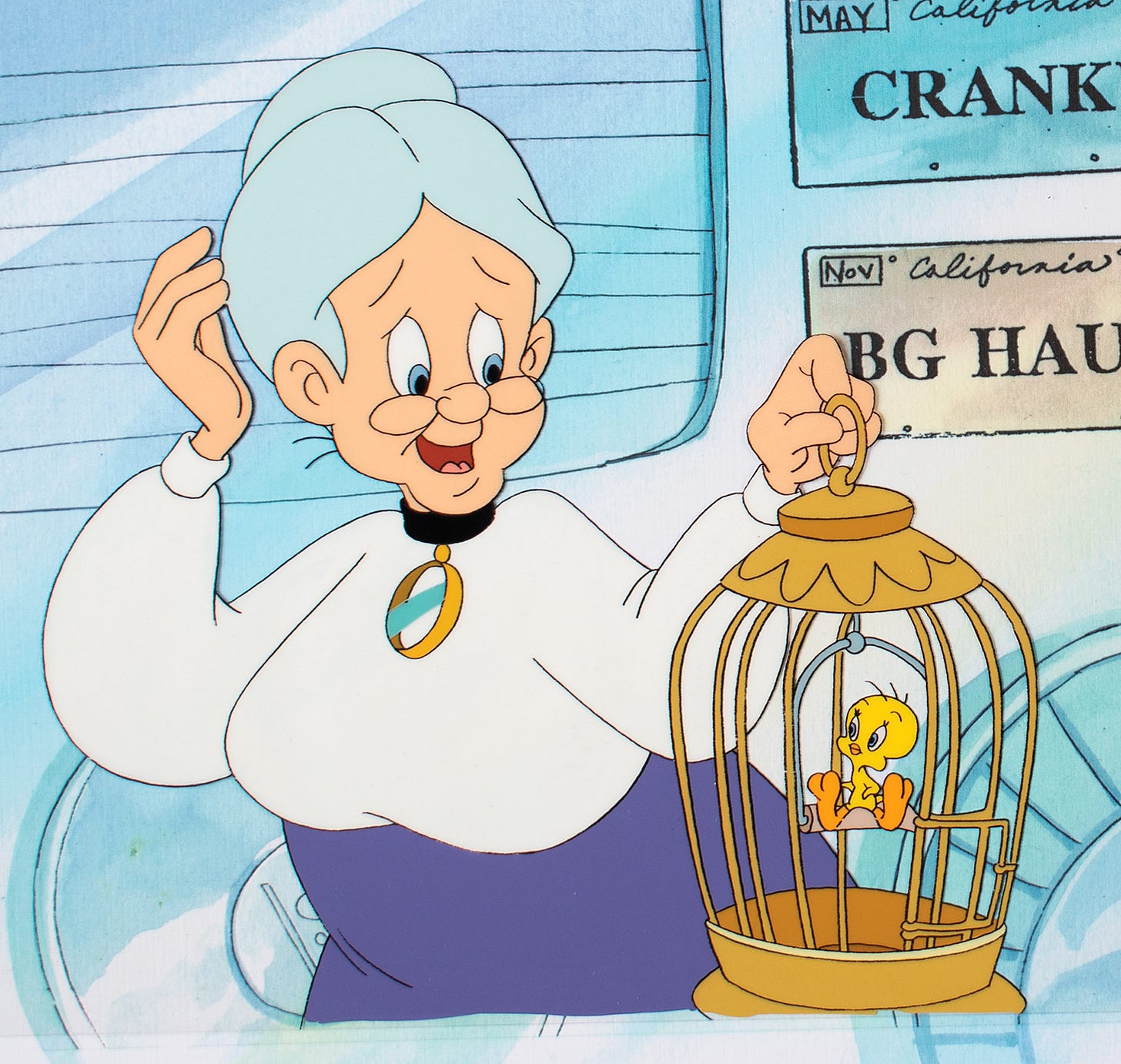
After 54 years of marriage, Betty was a pro at deflection. She reminded me of Emma Webster, Tweety Bird’s Granny, who seemed to manage the ongoing war between Sylvester the Cat, Tweety Bird, and Hector the Bulldog with nonplussed charm and delight. Nothing ever dampened her spirit.

Unless you crossed her. And then she could whip out a cast iron skillet from thin air, hold it up like a stop sign until, as she said in her cheeriest voice, you “changed your tune,” and then she’d go right back to dusting counters with the sweetest smile you ever did see, chirping her pleasantries if only to herself, if need be.

She seemed to be holding in her heart a secret interior story that she listened to rather than paying any nevermind to what was going on around her. I suppose, if she did, she’d just crumble and she knew that was simply not going to happen. Could not possibly happen. Not in this life.


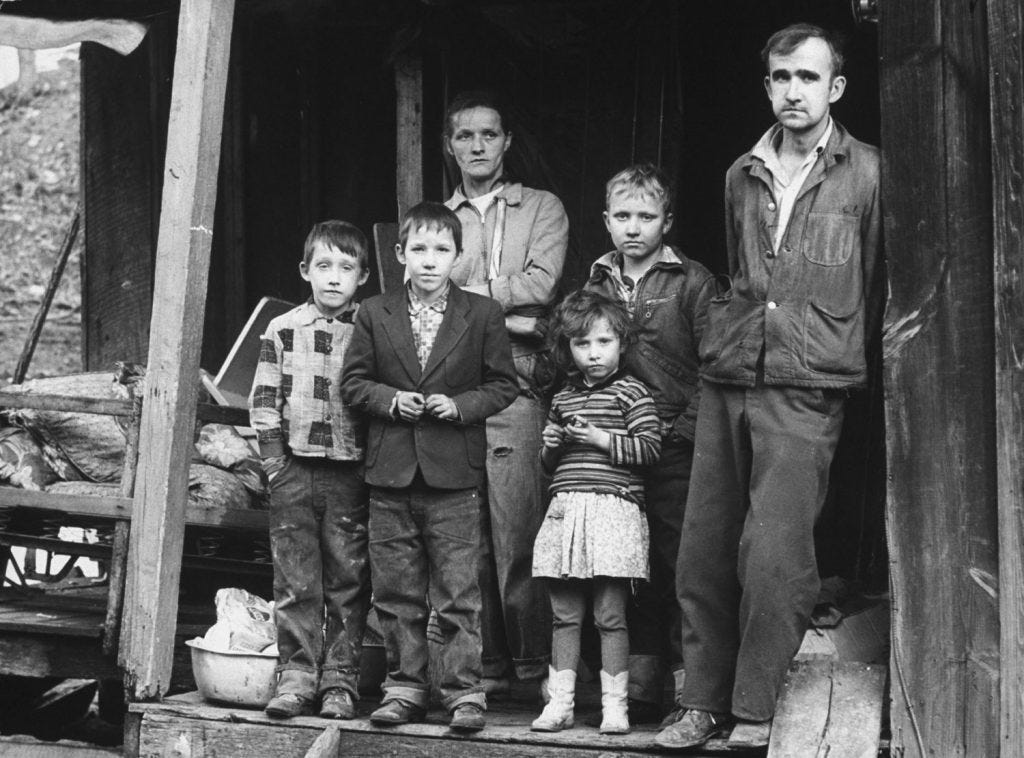
Betty and Jack were from “dirt poor” but “land tough” Appalachian stock. The genetics of Scotch-Irish, German, and English people who had fled the hardships and poverty of Europe, combined with the Native American tribal communities who had lived there for centuries, gave them not only the resilience and tough exterior they needed but an internal emotional and spiritual strength that helped them shape their own Appalachian culture through language, music, religion, and agriculture. And, food. More on that in a minute.

”Their people” - both Jack and Betty’s - had settled in Northwestern Pennsylvania where they worked the farms and then migrated to the East to work the coal mines or down to the steel mills in Pittsburgh or the textiles, shipbuilding, and iron production of Philadelphia. Like our biblical ancestors who wandered around wherever there was water and grass for their flock, they moved anywhere there were jobs. 

Jack and Betty had faired pretty well. Jack “lucked out,” Betty said and had gotten a good-paying job in the steel industry. Betty was able to stay home and raise their three girls, although she did work part-time in the school cafeteria when the girls got older. She carefully saved her small salary as the downpayment for their manufactured home in a trailer park outside the city limits.

Eventually, as the girls graduated high school (an accomplishment neither Jack nor Betty had been able to achieve) and left home, they sold their home in PA and moved to another manufactured home in Sussex County, Delaware, where the property taxes were low and the cost of living was more affordable.

The girls were all married and had kids of their own. They had good educations and good jobs and had married well. They had good cars and nice homes and enjoyed wonderful family vacations, living a modest middle-class life that was well beyond even the wildest dreams of their parents.

Jack and Betty were very proud of their family. You’d never know it by Jack, though. He seemed to have been in a perpetual bad mood for most of his life. One day was particularly bad. Betty and I had been talking about a documentary she had seen on television the night before about the slavery of “the Indians and the Blacks,” she said, “in Appalachia. Can you believe that? Slaves? In Appalachia?”

”Why,” she said, “I had no idea. I mean, we were all dirt poor. I didn’t have my own pair of shoes until I was 14 years old. Mama did her best but life was hard. Slaves? How could there be slaves? Who had the money to own them?” she asked in the purest innocent ignorance.

That’s when Jack exploded. “Oh, you feel bad for the Blacks and the Indians, do you? What about the White slaves? Huh? What about us? Do you feel bad for White slaves?”

Betty looked bewildered. “Joseph Arlo Smith, what are you talking about?” she asked.

That’s when Jack told the story that had been eating at his insides since the time he was seven years old and his mother died and his father sent him down to a neighbor’s farm to work his field.

“I was only seven years old but I worked like a grown man, plowing, planting, weeding, harvesting. I slept in the barn on the hay, just like the other work animals, with just a thin blanket to cover me. I ate the leftovers from the farmer’s table. I ate in the barn, just like the other work animals. I remembered some of the letters they taught me in school and I tried to read some, from the newspapers in the trash. I didn’t see my family except for Christmas and Easter Day.”
Jack started to have a bit of difficulty breathing. “Jack! Jack! Now, don’t get yourself all upset. Let me get your rescue inhaler.” Betty said. Jack shook his head. “No! Don’t give me that. I need you to listen to me, Betty. I’ve never told you this part before. You need to know this. You need to listen to this. Ain’t no one heard this before.”

”I always thought Daddy had sent me there because he couldn’t care for us, what with Mama gone. One day, the farmer came in and told me to get my stuff and leave. He couldn’t afford me anymore. And I thought ‘Couldn’t afford me’? What in the heck was he talking about?”

”So I walked home and Daddy was waiting for me in the truck. Drove me right down to another farm on the other side of the county but this time, he said I wouldn’t be coming home anymore. Not for Christmas. Not for Easter. This was going to be my new home and I’d better be good and I’d better work hard and behave.”

”I was 12 years old. I saw the man give my father some money. And that’s when I figured it out. I only had a little bit of education. I could read some, but I was pretty good at reading the writing on the wall. My father had sold me. He had been collecting my salary from the other farmer. This one had just bought me outright.”

”Do you know what that means, woman? White slavery! That’s what it was. White slavery. By my very own father! So, don’t go talking to me about the poor Blacks this and the poor Indians that! What about the poor Whites? We was sold into slavery, too. What about us, huh?”

There was no discussion this time. Betty got up and got his rescue inhaler. “Here now, puff on this, Jack, and calm yourself down.”

Jack took some puffs and then, wiping the tears from his eyes he looked up at her and said, his voice raspy and his breath labored, “And, you wondered all those years why I am the way I am. You always asked me why I couldn’t be more affectionate, especially to the girls. You asked why I never held your hand. You asked why I always had to be in such a bad mood all the time. You wondered why I wouldn’t go to church with you, even on Christmas and Easter, why I didn’t want the chaplain here to come visit.”

”Well, now you know. How can you show love when love’s never been shown to you? Why go to church when God never came to me, not one time in the field when my back was breaking? Not one time of the many times I cried myself to sleep at night, out in the barn, sleeping on the hay, with only the animals to hear me?”

”So, when I was 15 years old, I got up early one morning and walked down to the stream to wash myself. When I came up out of the water it came to me. I could just walk away. I could just walk and keep on walking. And so, I put on my clothes and I did just that and I never looked back.”

”But somehow, I found you, Betty. I want you to know that you are the one miracle I ever prayed for. You were more than any miracle I could have asked for. You gave me three beautiful girls. We have a good life. But, this . . . stuff . . . being so many years a white slave . . . well, it’s just been a cancer eating me up all these years. It’s killing me, Betty. Squeezing the air right out my lungs.”

”So, I had to get this off my chest. I didn’t mean to. But, you know, with all this stuff about the Blacks and the Indians . . . . and with the chaplain here, and all . . .I couldn’t hold it in no more . . . Forgive me, Betty. That’s what I mean to say. Forgive me, Betty. Understand, please. I do love you, Betty. You’re the best thing that’s ever happened to me in my whole life. I don’t want to lose you.”

Jack could hardly breathe. His lips were turning blue. He was holding on so hard to the armrest of his chair that his knuckles were white. Betty was comforting him as she set up his nebulizer. Wiping the sweat from his brow. Gently stroking his hair, wet with sweat, back from his face.

“There, now. Easy, now. Rest now, Jack.”

After a few minutes, Jack was breathing easier. He tilted his head back on the headrest of his recliner as Betty lifted the metal arm on the side of the chair which lifted his legs. “You stay right here, Jack, and I’ll fix you something. Okay?”

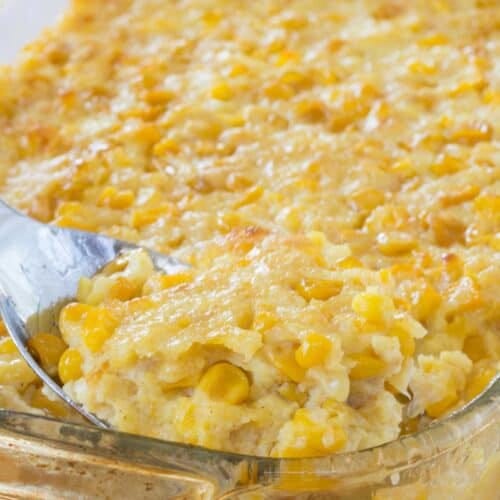
Jack nodded. Betty looked at me and said, “I’m going to need your help in the kitchen. You, my dear, are going to help me make Appalachian Sweet Corn Pudding.”

I followed her into the kitchen as she spoke, her voice lower than normal so as not to disturb Jack, but with that same, sweet, kind, gentle lilt that seemed not to have been disturbed at all by what we had just heard.

As we busied ourselves opening cans of corn and creamed corn and getting the eggs and milk from the fridge and the cornstarch and sugar from the pantry, Betty chatted merrily in her usual chirpy cadence.

I think I was more stunned than I realized. Jack’s story had shaken me to my core. The story and the raw honesty and emotional pain of it all were finally hitting me.

Just as I opened my mouth, Betty turned to me and said, “We are making Appalachian Sweet Corn Pudding because that’s the one thing Jack remembered his mother made and it’s the last thing she made before she died. I knew it was special to him for that reason, but I . . . I . . . I had no idea . . . . .”

And, with that, she collapsed into my arms and cried and heaved and sobbed. I whispered softly, “Of course you didn’t know. How would you know? He never told you. I’ve got you, Betty. You go ahead and cry. I’ve got you.”

She cried and cried some more and then, just as suddenly as she started, she stopped, took a deep breath, dried her eyes with a tissue she had retrieved from her pocket, and then shoved it back in, hard. She took another deep breath, and said, “So, we’re going to make my grandmother’s Appalachian Sweet Corn Pudding. Because it will make Jack feel better. It will make Jack know that he is loved. And, because it will help you know something about my people, and why we may be poor but we are strong and good and kind.”

”You’ll help me make this,” she said, in the kindest but firmest directive I think I’ve ever been given. “I’ll give you my recipe. You’ll go and see Mrs. Jones down the street and visit with her while the corn pudding cooks. And then, you’ll come back and have a dish with us. And, you’ll know what love tastes like.”
In this morning’s Epistle, St. Paul writes to the beloved people of Phillipi in Northern Greece from his jail cell in Rome - although some scholars say Ephesus or Caesarea - somewhere between 60-62 BCE.

He says something that has always caught me as a most beautiful way to talk about the power of The Resurrection. “But our citizenship is in heaven,” he says, adding, “He (Jesus) will transform the body of our humiliation that it may be conformed to the body of his glory . . . ".

I think I understood those words much better after I had tasted the first spoon of Betty’s Appalachian Sweet Corn Pudding. Cynics will say that it was probably the sugar but I felt instantly transported to my status as a citizen in heaven.

I also understood why Jack had been so transformed every time Betty made him some sweet corn pudding. For just a few moments, all the years of his humiliation were washed away as the memories of his mother’s love flooded every corner of his being.

“Salvation is of the Lord,” we are taught to say, meaning that salvation is a gift from God, not earned through human effort. In the Black church, you’ll often hear folks repeat the words of Nehemiah, “The joy of the Lord is my strength," meaning that finding strength and resilience in faith and joy in God's presence is crucial for navigating life's challenges.

Sometimes, the gift of salvation comes from unexpected sources. The joy of the Lord can be found in surprising places. I don’t know this for sure, but I suspect Jack and Betty were saved, in some small part, by the joy of the memories of love that were cooked into the Appalachian Sweet Corn Pudding.

I know I am, every time I eat a spoonful. Here, try some and see for yourself. It’s delicious as a side dish - I often make it at Thanksgiving - but it’s fine all by itself. When no one is looking I even eat spoonfuls of it - cold - right out of the dish in the refrigerator.

It’s my passport that tells me that, while I’m here on this earth, I’m just a resident alien. My Baptismal Certificate is my Green Card. My citizenship is in heaven.

I’m a citizen of heaven. I have tasted love.

Betty’s Appalachian Sweet Corn Pudding

3 eggs

½ cup melted margarine

½ cup white sugar

1 (16-ounce) can whole kernel corn, drained

2 (15-ounce) cans cream-style corn

2 teaspoons cornstarch

½ cup milk

1 teaspoon vanilla extract

Directions:
Preheat oven to 350 degrees F (175 degrees C). Grease a 9x13 baking dish; set aside.

Beat eggs until fluffy in a large bowl. Stirring constantly, pour in melted margarine. Stir in sugar, whole-kernel corn, and cream-style corn until well combined. Dissolve the cornstarch in the milk; combine with the corn mixture. Stir in vanilla. Pour the mixture into the prepared baking dish.

Bake in the preheated oven until the pudding is puffed and golden, and a knife inserted into the center comes out clean. It will take about 1 1/2 hours.


NOTE: Telling Secrets is a reader-supported publication. To receive new posts and support my work, consider becoming a free or paid subscriber. https://elizabethkaeton.substack.com You can also find me on BlueSky The Rev Dr. Elizabeth Kaeton @ekaeton.bsky.social

Tuesday, December 27, 2022

Buche de Noel


Buche de Noel is my favorite of all time dessert for Christmas Day - or any time during Christmastide. 

First, it's chocolate. Chocolate Swiss Roll (Sponge Cake). Whipped chocolate Ganache frosting. And, chocolate "bark" to make it look like a log.

It is filled with whipped cream so, between the sponge cake, the whipped cream filling and the whipped Ganache frosting, it's also pretty light.

But, I did mention the chocolate, right? 

Still, with all that cream, it might be wise to serve it with a side of Lipitor. 

I'm printing my recipe here because I've been telling folks that the recipe is from The Pioneer Woman. Turns out, the frosting is hers but she doesn't whip it - she drips it over the cake like a "Little Debbie". Which you can totally do, but I think this looks much better. 

The sponge cake is actually her recipe for a Chocolate Swiss Roll, which I prefer. The instructions sound a little intimidating but if you just take a deep breath and act as if you've done this 100 times, you'll be amazed at how well it turns out. 

The bark is from yet another source, which also gives a recipe for Marzipan mushrooms, but that's a bit much, even for me. 

So, here's how I make the Buche de Noel. Except for the recipe for the roll, everything else in this recipe is enough for two logs because it feeds the crowd I usually have at dinner.  The roll only takes 5-6 minutes to bake, so you can turn around and make another as the first one is cooling.

Alas, there are fewer people round my table these days, but I still make two logs. I figure, if you're going to do this much work to make one, you might as well make two - one for Christmas and one for Christmastide when folks come by to visit or drop off a plate of cookies. It's wonderful to be able to offer a slice of this cake with a lovely cup of tea or coffee.

I hope it brings you as much delight as it does for me and my family.

INGREDIENTS 

FOR THE CHOCOLATE SPONGE CAKE - makes one roll.

Butter for greasing
1/4 cup unsweetened cocoa powder, plus more for sprinkling
1/3 cup all-purpose flour
1/4 teaspoon salt
4 large eggs
1/2 cup granulated sugar
4 tablespoons butter, melted (salted or unsalted)

FOR THE CREAM FILLING - enough for two logs

1 cup heavy whipping cream
1/4 cup sugar
1 teaspoon vanilla extract

FOR THE CHOCOLATE GANACHE - enough for two logs

12  ounces (weight) chocolate (chips or chopped),I use semi-sweet but the tradition is to use bittersweet. Your call
1 1/2 cup heavy cream
1 teaspoon vanilla extract

FOR THE BARK - enough for two logs

6-8 ounces chocolate chips or chopped
4 Marischino cherries
Italian parsley or rosemary or basil stalks.
Optional:  Confectioner sugar to sprinkle on top.
 
INSTRUCTIONS

Preheat oven to 425. Place a piece of parchment paper or a silicone mat on a 17x12 sheet pan, and rub butter on it to grease.
 
Combine the cocoa powder, flour and salt and pass this mixture through a flour sifter or fine mesh strainer into a medium bowl.

Bring an inch of water to a simmer in a medium saucepan. Combine the eggs and sugar in a heatproof glass bowl, then place over the simmering water (make sure the water doesn't touch the bowl). 

Using a hand mixer, beat the eggs and sugar together over medium speed for about 2 minutes, until the eggs are thick, pale yellow and warm to the touch. If you have a thermometer, you want the eggs to be about 120F. If you don't have a thermometer, just touch the mixture with your finger every once in a while until it feels like hot tap water. *Note: Do not be intimidated by this. It sounds a whole lot worse than it really is. Deep breaths.

Remove the egg bowl from the heat and continue beating at medium high speed for another 3 minutes, until it's thick and airy and has reached the "ribbon stage". That means that when you drag and drizzle a spoonful of the liquid, it shouldn't settle back into the liquid for a good 5-10 seconds. 
 
Mix in the melted butter. 

Add the dry ingredients to the mixture, and gently fold it into the eggs with a spatula, working quickly. Spread the batter onto the buttered parchment or silicone mat, leaving an inch from the edges. Bake the cake for 5-6 minutes, until springy to the touch. 

Place a piece of parchment paper on a flat surface and sprinkle lightly with cocoa powder. Flip the cake onto the parchment, then remove the parchment or silicone mat that the cake baked on. Gently roll the cake up into a log in the parchment paper while it's still warm. This is like muscle memory for the cake and it will roll easier again later. 

TO MAKE THE FILLING
 
Combine the heavy cream, sugar and vanilla extract in a large bowl and whip with a hand mixer to stiff peaks, about 5 minutes on medium speed.

Unroll the cooled cake, then spread the cream all over, leave a 1-inch boarder around all edges. Roll the cake up gently (leaving the parchment paper behind), leaving generous room for the whipped cream, then place on a wire rack. If necessary, you may use a bit of the cream to "seal" the seam of the roll. Trim off the ends of the log so that the ends are clean. (This is a lovely treat for all your hard work.)

TO MAKE THE CHOCOLATE GANACHE
 
Pour the chocolate chips or chopped chocolate into a heat proof glass bowl. You may use the microwave or heat the heavy cream on the stove to just before boiling. Watch it carefully - DO NOT LET IT BOIL. Pour the hot cream over the chocolate and continue to stir until the chocolate is completely melted and thoroughly incorporated with the cream. Stir in the vanilla extract. Cover with plastic or aluminum foil and put into the refrigerator for a few hours until it is very thick. 
 
Once the mixture is ready, beat it with a hand mixer until it whips up light and fluffy. Note: I always make two logs at a time, so this frosts two logs. You can always use it to frost cookies or brownies or cake. Or, you can cut this recipe in half.

TO FROST THE LOG
 
Place the log(s) on a serving plate/platter. Evenly spread a thick layer of the frosting on the top, sides and ends of the log. Don't skimp.

TO MAKE THE BARK
 
Melt 8 ounces chocolate bits or chopped chocolate in a double boiler. Spread on a baking pan lined with parchment paper to 1/8 inch thick. Put into freezer or refrigerator until it is set. Roll paper to break into pieces. Place on the frosted logs so that it looks like bark. 

GARNISH
 
Roll marichino cherries in sugar an allow to dry a bit so that the sugar looks like "ice". Garnish log with them (I use two at each end) with sprigs of Italian parsley or rosemary or basil. Keep in fridge, covered with plastic wrap, until ready to serve. 
 
OPTIONAL: Just before you serve, you may garnish with a dusting of confectioner sugar to make it look like a dusting of fresh snow.
 

Tuesday, February 08, 2022

Blessed are the cheesemakers


When I was a kid, my grandmother made Queijo Fresco - Azorean Fresh Cheese all the time. We would have a slice of it on a hunk of the fresh Portuguese bread she had made - crunchy crust on the outside, buttery soft on the inside. She would put a pimento on top of the cheese, drizzle EVOO (Extra Virgin Olive Oil) on it and finish it all off with a little sprinkle of salt and pepper. 
 
And that, my friends, was a mid-morning or mid-afternoon snack of champions.
 
Her "cheese molds" were cans of cat food or beans or vegetables that she "rescued" from a neighbor's trash. She'd boil them in water on the stove, then she's punch holes in the sides and bottom for the whey to drip through. She'd use her old, threadbare dishtowels as the cheesecloth. 
 
So now, two generations later, I have fancy-schmancy cheese molds of various shapes and sizes, and I buy "super fine" cheesecloth but I do believe I have captured the taste and consistency of my grandmother's cheese. It's a farmer's cheese but it's more the consistency of a mozzarella. 
 
The key, I'm convinced, is in the squeeze.  You really have to separate the curds from the whey. Curds are the by-product of coagulated milk. They happen naturally when milk sours. The whey is the liquid that is left over. 
 
Whey is jam-packed with protein, good bacteria (AKA "probiotics") and calcium. It also contains zero fat and aids in digestion. Some sports jocks use it to rehydrate after a strenuous workout.

My grandmother never threw anything out - the woman used old cans as molds for her cheese and old newspaper and calendars for toilet paper (hand to Jesus!) - so you know she never threw out the whey. She used it in some of her recipes for puddings or breads instead of water or milk. I've heard some people use it in smoothies.

I'll tell you what, though: You don't want to drink that stuff on its own. It is, as they say, an acquired taste. 

She made large vats of the stuff. I've cut down her recipe to make two medium blocks of cheese. It's not difficult to make and there are only three ingredients: milk, salt and rennet powder. It's just the process that's time consuming. 

I couldn't find rennet powder anywhere around where I live - not in stores or health food places. I couldn't even find it online. I did find rennet tablets which I pulverized in my mortar and pestle to a powder and it worked just fine. 
 
I also got the cheese molds online but, you know, if you want to make your own with old cans of cat food, beans or veggies, just make sure you make lots of holes in the side and bottom. You'll be amazed at how much whey there is in milk. 

I have not made this with anything but whole milk. I am going to try 2% and see how that works. I'll let you know.

So, here's how you make two medium molds of cheese which makes 10-12 servings

Queijo Fresco - Azorean Fresh Cheese

1 gallon whole milk
1.5 tablespoons salt
1 teaspoon rennet powder (about 4 tablets, crushed and pulverized)
 
Preheat oven to 250 degrees F. As soon as preheated, turn off the oven and keep the door closed. 

Pour milk into a Large stockpot and add salt. Warm milk on the stove top on medium heat until lukewarm, stirring constantly with a wooden spoon. Once milk is lukewarm, immediately remove from heat. Be sure not to overheat or allow to boil. 

In a small dish, add approximately 1/3 cup of warmed milk and rennet powder. Stir until rennet powder is completely dissolved and then pour back into the stockpot. Stir well to incorporate dissolved rennet evenly throughout. 

Cover stockpot containing warmed milk and place into the oven. Be sure the oven is no longer on, but is warm after having been preheated. Leave milk in the oven until it coagulates and has the appearance of yogurt - approximately 1-2 hours. 

Once milk has coagulated, remove from oven. Cut through the milk with a knife, making horizontal and vertical cuts throughout, into a crisscross pattern. Leave uncovered for approximately 20 minutes to allow the whey (liquid) to separate from the milk curds. 

Place a cheesecloth or very thin dishcloth in a large colander/strainer on top of large bowl /pan and set in the sink. Pour or spoon coagulated milk into colander and allow to drain for approximately 20 minutes. After much of the whey has drained, grab ends of the cheesecloth, bringing the ends together and squeezing into a ball to drain more liquid from the milk curds.

When you think you have squeezed enough, squeeze again. It's easier at this point to separate most of the whey from the curds. Take advantage of it. 

Place drained milk curds in a cheese mold on a flat plate. Set a clean cheesecloth / dishcloth on top of cheese in the mold and press firmly with your hands to squeeze out more of the whey. To drain the liquid out of the plate, carefully hold the cheese mold and tilt the plate into the sink. 
 
Repeat the process of pressing cheese with your hands several times to get most of liquid out of cheese. Exactly how much liquid you want to squeeze out is a matter of preference, depending on whether  you like a more or less watery cheese. 

As for me and my house, we prefer this cheese the consistency of mozarella. But, you do you.

When the majority of liquid has been removed from the cheese, sprinkle a little salt on top and around the sides and then place the cheese mold in the refrigerator overnight. Discard any additional liquid that drains out onto the plate. 

To serve, remove cheese from the mold and carefully place on a serving dish. Serving possibilities are limited only by your taste and imagination.
 
I like to set the cheese onto a cheese board and then surround it with possibilities:
 
EVOO (Extra Virgin Olive Oil)
Salt and pepper
Pimento
Italian seasoning 
Syrian bharat seasoning
Red pepper jelly
Honey (I love lavender honey best)

I like to include plain crackers, a crusty bread (French, Italian, or Portuguese), baked pita chips, garlic bagel chips. You might also like to serve it on vegetables like slices of zucchini or cucumber or fruit like apples or pears. 

BTW, I also use this as a pizza topping instead of mozzarella.
 
Note: I understand some people like to add seasonings like fresh, copped basil or thyme in with the curds as they pack the mold. I've not tried it, but you might. If you do, let me know how it works. Personally, I like the simplicity and versatility of it. But, you do you.

Monday, August 30, 2021

Savory, Sweet Crab Cheesecake


Savory, Sweet Crab Cheesecake


The first time I had crab cheesecake was at GaidosRestaurant in Galveston, TX, which has a beautiful view of the Gulf Coast. It was amazing – the view and the meal.

This is not that recipe.

It is one I cobbled together from several recipes and it is as close to that amazing crab cheesecake as I can make it without the actual Gaidos recipe in front of me. It’s an experiment and, based on the feedback I’ve gotten, it’s pretty darn good.


I will say this at the beginning and I’ll repeat it several times: It’s really, really important to make this crab cheesecake the day before you need it because it needs to stay in the refrigerator for 24 hours before it is served. The taste will be fine. If you don’t refrigerate it well, the consistency will be like a quiche. You want the consistency to be like cheesecake. Refrigerating it for 24 hours (or, at the very least, 4) will guarantee that.


This can be used as an appetizer, or part of a cheese platter, or as the main course with a side salad, with or without tomatoes, with a light dressing.


Prep: 20 – 30 minutes for prep

Oven temp: 325 F.

Cook time: 1 hour and 10 minutes to cook.

Equipment: One small and one large bowl, a 9-inch spring form pan, large whisk, a few spatulas, and a large sheet pan.


Ingredients:


For the filling

3 T EVOO (Extra virgin olive oil)

1 ½ cups finely diced sweet* peppers of various colors

½ cup finely diced sweet Vidalia onion

1 pinch salt

Garlic (I used a whole entire bulb), crushed or diced

4 large eggs

¼ cup all-purpose flour

1 ½ tsp. kosher salt, or to taste

½ tsp. freshly ground black pepper, or to taste

1 pinch cayenne pepper, or to taste

(I also added 2 T Old Bay Seasoning)

1 T white sugar

1 cup crème fraiche (or sour cream), but crème fraiche adds a lovely nutty taste)

3 (8-oz) packages cream cheese, at room temp. (Note: temp is very important)

½ cup grated Parmigiano-Reggiano cheese

3 T chopped parsley

1 pound lump crabmeat.


For the Herb Cracker Crust

4 ¼ ounces plain crackers, finely crushed by hand

¼ tsp. Italian seasoning

4 T (half a stick) melted butter


Directions

Preheat the oven to 325 F (165 Celsius).

Generously butter a 9-inch spring form pan


Start the filling: Heat olive oil in a pan over medium-high heat. Sauté peppers and onions with a large pinch of salt until onions just start to turn translucent, about 5 minutes. Stir in garlic and cook for 2 more minutes. Turn off heat and allow to cool to room temperature.


While the pepper mixture is cooling, prepare the crust: In a small bowl, combine crushed cracker crumbs, dried Italian herbs, and melted butter in a mixing bowl. Stir until the crumbs are coated.

Note: I crushed the crackers with my hands; not to worry if they don’t look like breadcrumbs or finely crushed graham cracker crumbs for a regular cheesecake. However, you may use Italian seasoned breadcrumbs in place of the crackers.


Transfer the buttered crumbs into the prepared (heavily buttered) spring form pan and press down into an even layer. Set aside until needed.


Continue the filling: Combine eggs, flour, kosher, salt, black pepper, cayenne pepper, Old Bay seasoning, and sugar in a large mixing bowl and whisk until smooth. Add the crème fraiche (or sour cream), cream cheese, and the Parmigiano-Reggiano cheese, and mix until smooth. Stir in the parsley and cooled pepper mixture until evenly combined. Gently fold in the crab meat until well dispersed.

Note: Please make sure the cream cheese is at room temperature. If not, be prepared to be stirring this sucker for the next hour. No joke.


Transfer cheese mixture into the prepared spring form pan. Tap the pan gently to settle the contents and place on a baking sheet. The pan will be quite full.


Bake 60-75 minutes in the lower center of the preheated oven until the top is golden brown, the center seems loose, but a skewer poked into the center comes out clean. Let cool in the pan 30 minutes. Run a knife around the edges and carefully remove the ring.


Cheesecake should be thoroughly chilled in the refrigerator before serving, at least 4 hours but best if 24 hours. This cheesecake can be served at room temperature but it will not have the classic smooth, firm cheesecake texture, and will be more like a very light cheese quiche – which is fine, I suppose, but it's a completely different meal.


Note: You can use hot peppers instead of sweet or a combination of both. I used water crackers for this but any cracker but a sweet cracker will do. Or, you may use Italian seasoned breadcrumbs.


I much prefer crème fraiche for its nutty flavor but sour crème works just as well.


It’s really important to finely dice the peppers, onion and garlic. You want the peppers tiny and colorful.


So, I’m told that this can be made without crab but used with crumbled cooked pork and/or bacon and eliminating the Old Bay seasoning and substituting, instead, sherry, but I can’t attest to it.


I’m also told this is delicious with chopped shrimp in place of the crab, with either Old Bay or sherry, but I can’t attest to it.  


Some recipes I saw recommended serving this with cocktail sauce. I think it’s totally unnecessary.


You can also make this vegetarian, using just vegetables and eliminating any shellfish or meat.


Enjoy!

Thursday, December 15, 2016

Angel wings, Camel Drool and other Portuguese Christmas Treats

Christmas came early for me this year.

Just the other day, I was searching my cookbooks for a recipe and there it was. Tucked way in the back of the ancient Betty Crocker Cookbook which my mother gave me in 1970 was an envelope so full of papers it could barely close.

I opened the envelope and there it was! Something I had been looking for these last five years.

All of the recipes for my grandmother's Christmas treats.

The little kid that still lives in my heart let out a most joyful yelp.  I didn't know I could still make that kind of happy noise. Indeed, just hearing it, combined with my find, brought tears to my eyes.

As I opened the envelope, all of the treats and tastes and sounds that filled my childhood Christmas came tumbling out.

There I was, six, maybe seven years old. Standing at the stove as my grandmother fried up the Coscoroes - the Angle Wings - two or three or four at a time, lifting the delicate fried dough out of the oil and letting them drain on newspaper (no paper towels in mia VaVoa's kitchen) then sprinkled with a mixture of cinnamon sugar.

In the oven the Cavacas - Portuguese popovers - were baking - light, airy confections, drizzled with icing with just a hint of orange rind and a few drops of orange juice. At least, that's how my grandmother made them.

And, in the pressure cooker - didn't EVERY household in the 50s have a pressure cooker? - was a can of sweetened condensed milk, slowly boiling into the can, transforming itself into caramel. It would be used, along with egg yolks and fluffy egg whites, to make the yummy, sweet, sorta-pudding-kinda- mouse confection known as Baba de Camelo - Camel Drool.

My mother hated that my grandmother called it that, but that's exactly what she called it, so we kids did, too. My mother consented for us to call it "Baba".

Only "Baba". We had to leave off the "de Camelo". She reasoned that babies drooled. So did old men when they saw beautiful women. And drooling was the highest compliment you could pay a cook who had prepared an amazing holiday repast.

So, "Baba" was okay. Say "Baba de Camelo" and you'd see the back side of my mother's hand slap you right upside the head. And then, stars.

My grandmother had a wonderful story with each of the treats on the table. We heard the story as she was making the confections in her kitchen and then again on Christmas night. Except on Christmas night, she would select one of us to tell the story. We thought she was testing us. I have come to believe it was her way of making sure we'd know the story so well, we'd tell it to our children and our children's children.

Cavacas in the foreground - Chocolates in the back.
She would begin with the Cavacas - the Portuguese popovers. My grandmother would say, "Who knows why we eat these beautiful, light buns?"

We'd all shoot our hands up in the air, hoping she'd call on us for this one. It was the easiest.

She would always choose one of the littlest ones to answer. "After the angel Gabriel left Mary," one of the kids would say, in that sing-songy way little kids always have, "suddenly, there appeared in Mary's belly" . . . . ."

. . . . at which point someone would always stop and say, "Wait! Wait!"

"Oh, yeah," the child would blush, I almost forgot." She'd shoot a look at my grandmother who smiled lovingly.

"After the angel Gabriel left Mary - AFTER Mary said 'YES' to the angel - suddenly there appeared in Mary's belly (and, we'd all join her in saying) . . . a . .. .  little . . . round . . . . . BUMP."

"That was the sweet BABY JESUS in there!" she'd squeal, "A sweet bun in the oven! Filled with the breath of God!"

And we would all applaud, and then look around for whichever aunt was pregnant that year. And, there was always an aunt somewhere who was pregnant that year. She'd be hovering over by the kitchen door, an uncle draped over her, one hand on a beer bottle, one hand on her belly, looking so proud he could burst.

Now, understand, please, that this expression, "bun in the oven" is not from the Portuguese culture. I'm not sure but I suspect this was my grandmother's cultural adaptation to her new American home. I don't know what they called it in their little village in Portugal, but I'm sure there was some Victorian euphemism for pregnancy.

God forbid one should be so bold and brash as to use the word "pregnant" to describe such a delicate condition. After all, even scripture never uses the word, "pregnant". It says, "with child". 

My grandmother would then hush the squealing by announcing, in her Church Voice, "Hail, Mary!" And, we'd all join her solemnly reciting the prayer we learned even before the "Our Father."
"Hail Mary, full of grace! The Lord is with thee. Blessed art thou amongst women, and blessed is the fruit of thy womb, Jesus (Always a slight pause and heads solemnly bowed here.) Holy Mary, mother of God, pray for us sinners, now and at the hour of our death. Amen."
Except, we'd all say the prayer in Portuguese, because that's how our grandmother taught it to us. It would be said in that sing-songy kinda way all kids have when they are reciting something.
Avé Maria, cheia de graça, o Senhor é convosco. Bendita sois vós entre as mulheres bendito é o fruto do vosso ventre, Jesus. Santa Maria, mãe de Deus, rogai por nós pecadores, agora e na hora da nossa morte. Amen
I can still hear our high, sweet voices, lilting above the voices of adult men and women who had gathered 'round the dessert table to join the ritual.

Then, we'd move down the table, onto the Coscoroes.  That was my favorite story.

Turns out, when the Baby Jesus was born, there was great rejoicing in heaven. A special choir of the newest angels was selected to accompany the Angel Gabriel to sign to Mary and Joseph and the Baby Jesus.

But, when they arrived at the manger, the angels were simply aghast that the newborn Prince of Peace was wrapped in swaddling clothes and his bed was a manger of straw.

So, they decided to make a proper bed of their feathers from their angel wings for Jesus. They also used their wings to cover his swaddling clothes with a blanket woven from their wing feathers.

The angel Gabriel was quite upset when he saw this and scolded the angels for what they had done.

"This child," he said, "while one of us, is also very human. That's the whole point of this project from God. Jesus has come to know everything about being human - their thoughts, their feelings, their suffering, their joy - so that they may know the unconditional love of God."

But, the angel Gabriel also had great compassion on the Choir of Angels, so he sprinkled some white, sugary angel dust on the bed and blankets. At that moment,  the angels and Mary and Joseph could see them, but to everyone else, they were invisible.

All the shepherds saw - and the Wise Men when they arrived - was straw and swaddling clothes.

My grandmother said many miracles happened that night that have not been told. This, she said, was just one of them.

Coscroes are very light, fried dough, sprinkled with cinnamon and sugar. They melt in your mouth and are, well, simply heavenly.

The Baba de Camelo always held the last spot on the table - only because it was the story for Little Christmas - the Epiphany - when the Wise Men came on their camels to bring presents to the Baby Jesus. So, of course, they drooled.  Of course.

The Baba would make a reappearance at the dessert table at Little Christmas, complete with the story of the Wise Men. I don't remember them having names when my grandmother or someone from the family told the story. I didn't learn that until I went to school.

The thing is that we didn't exchange gifts at Christmas. Not in my grandmother's house, any way. We did that at Little Christmas. My grandmother wanted to keep the focus of Christmas on Jesus. We exchanged gifts on the day when the Wise Men brought presents to Jesus.

When my children started getting older and starting their own families, I restarted this tradition. My Christmas gift to them is to be and do whatever they need to do on Christmas Day. But, on Little Christmas, we all get together - the whole family. It's our favorite family day. The only thing that has stopped us in the past is the weather, but we wouldn't miss it for the world.

As a kid, the Coscores and Cavacas, also made a reappearance at my grandmother's Little Christmas celebration, along with a huge platter of Pasteis de Nata - Portuguese Custard Tarts. They are little mouthfuls of divine egg custard nestled in light filo dough. I could pop a half dozen in my mouth without breaking a sweat. Heavenly stuff. Trust me on this.

I'm going to leave you with my grandmother's recipes, including her little notes and cooking tips.

I can not even begin to tell you how much it means to me to have these recipes back in my recipe stack.  I mean, they were always right there. I just found them again.

Sort of like the "original blessing" in the garden was there but we misplaced the recipe for awhile. So, Jesus had to come to show us the way back to Paradise.

Feliz Natal!

Pasteis de nata

Ingredients

For the Pasteis de Nata dough
  • 2 cups minus 2 tablespoons all-purpose flour, plus more for the work surface
  • 1/4 teaspoon sea salt
  • 3/4 cup plus two tablespoons water
  • 16 tablespoons unsalted butter, room temperature, stirred until smooth
  •  
  • For the custard
  • 3 tablespoons all-purpose flour
  • 1 1/4 cups milk, divided
  • 1 1/3 cups granulated sugar
  • 1 cinnamon stick
  • 2/3 cup water
  • 1/2 teaspoon vanilla extract
  • 6 large egg yolks, whisked
  • For the garnish
  • Confectioners’ sugar
  • Cinnamon

Directions

Make the Pastéis de Nata dough 

In a stand mixer fitted with a dough hook, mix the flour, salt, and water until a soft, pillowy dough forms that pulls away from the side of the bowl, about 30-60 seconds.

Generously flour a work surface and pat the dough into a 6-inch square using a pastry scraper. Flour the dough, cover with plastic wrap, and let it rest at room temperature for 15 minutes.

Roll the dough into an 18-inch square. As you work, use the scraper to lift the dough to make sure the underside isn’t sticking to your work surface. 

Brush the excess flour off the top of the dough, trim any uneven edges, and, using a small offset spatula, dot and then spread the left 2/3 portion of the dough with a little less than 1/3 of the butter being careful to leave a 1 inch plain border around the edge of the dough.

Neatly fold the unbuttered right 1/3 of the dough (using the pastry scraper to loosen it if it sticks) over the rest of the dough. Brush off any excess flour, then fold over the left 1/3 of the dough. Starting from the top, pat down the dough with your hand to release any air bubbles, and then pinch the edges of the dough to seal. Brush off any excess flour.

Turn the dough 90° to the left so the fold is facing you. Lift the dough and flour the work surface. Once again roll it out to an 18-inch square, then dot the left 2/3 of the dough with 1/3 of the butter and smear it over the dough. Fold the dough as directed in steps 4 and 5.

For the last rolling, turn the dough 90° to the left and roll out the dough to an 18-by-21-inch rectangle, with the shorter side facing you. Spread the remaining butter over the entire surface of the dough.

Using the spatula as an aid, lift the edge of dough closest to you and roll the dough away from you into a tight log, brushing the excess flour from the underside as you go. Trim the ends and cut the log in half. Wrap each piece in plastic wrap and chill for 2 hours or preferably overnight. (The pastry can be frozen for up to 3 months.)

(Yes, of course, you can use philo dough, cut into small rectangles and fitted into a nonstick 12-cup mini-muffin pan 2-by-5/8-inch size. Caution: my grandmother might rise up from her grave and give you such a smack upside the head. But, you will do what you will do. )
Make the custard

In a medium bowl, whisk the flour and 1/4 cup milk until smooth.

Bring the sugar, cinnamon, and water to a boil in a small saucepan and cook until an instant-read thermometer registers 220°F .(It will look like syrup.) Do not stir.

Meanwhile, in another small saucepan, scald the remaining 1 cup milk. Whisk the hot milk into the flour mixture.

Remove the cinnamon stick and then pour the sugar syrup in a thin stream into the hot milk-and-flour mixture, whisking briskly. Add the vanilla and stir for a minute until very warm but not hot. Whisk in the yolks, strain the mixture into a bowl, cover with plastic wrap, and set aside. The custard will be thin; that is as it should be. (You can refrigerate the custard for up to 3 days.)

Assemble and bake the pastries

Heat the oven to 450°F . Remove a pastry log from the refrigerator and roll it back and forth on a lightly floured surface until it’s about an inch in diameter and 16 inches long. Cut it into scant 3/4-inch pieces. Place 1 piece pastry dough, cut side down, in each well of a nonstick 12-cup mini-muffin pan (2-by-5/8-inch size). Allow the dough pieces to soften several minutes until pliable.

Have a small cup of water nearby. Dip your thumbs in the water, then straight down into the middle of the dough spiral. Flatten it against the bottom of the cup to a thickness of about 1/16 inch, then smooth the dough up the sides and create a raised lip about 1/8 inch above the pan. The pastry sides should be thinner than the bottom.

Fill each cup 3/4 full with the slightly warm custard. Bake the pasteis until the edges of the dough are frilled and brown, about 8 to 9 minutes.

Remove from the oven and allow the pasteis to cool a few minutes in the pan, then transfer to a rack and cool until just warm. Sprinkle the pasteis generously with confectioners’ sugar, then cinnamon and serve. Repeat with the remaining pastry and custard. These are best consumed the day they’re made. That won't be a problem. Trust me on this.

Baba de Camelo (Caramel Mousse) "Camel's Drool"


1 can of sweetened condensed milk
6 eggs

Place the can in a pressure cooker, cover completely with water and cook for one hour. Be sure to remove the label from the can before placing it in the water.  (Note: I do not have a pressure cooker so I just use a large pot and cover the can completely with water. I cook it, covered, for 2 hours)

After the proper cooking time, remove the pot from the heat and carefully remove the can from the pot. Allow the can to cool.

While the can is cooling, separate the egg yolks from the egg whites and whisk the egg yolks. When the condensed milk has cooled, blend well with egg yolks, either with a whisk or mixer.

Separately, beat the egg whites with a mixer until stiff peaks form.

Carefully and slowly, fold the egg whites into the condensed milk/egg yolk mixture until all ingredients are well blended.

Pour the mixture into a large bowl or individual serving bowls.

Before serving, garnish with your choice of chopped almonds, chopped walnuts, sliced strawberries or even crumbled sweet Madelines or sugar cookies or, if you want to get fancy-schmancy, Piroulines

Cavacas (Portuguese Popovers)

This recipe makes 24 but it can easily be cut in half. You'll have 24 if you use regular muffin pans. If you use a proper popover pan, you'll have 12. If you've only got one popover pan, like I do, I would make this in two batches. It's really important that you use the batter immediately.

Ingredients

2 cups flour
1 cup oil - my grandmother always used olive oil but you can use vegetable oil
1/2 cup whole milk (or whatever you use - I wouldn't use skim)
8 large eggs at room temperature.

Sugar Glaze

2 cups Confectioner's Sugar
Zest of 1/2 orange
2 T of milk - more or less depending on the thickness you like

Directions

Preheat oven to 350 degrees and grease regular size muffin tins or popover tin.

Using an electric mixer, beat all ingredients for 20 minutes without stopping. (Yes, my grandmother stood there for 20 minutes. I strongly recommend using a stand mixer set on level 6.)

Once the ingredients have been mixed for 20 minutes, immediately fill the muffin or popover tins half full. No more than that. Trust me on this.

Bake on the middle rack for about 45 minutes; if you want the Cavacas to be on the dry side, bake for an hour. They will turn a golden brown and "popover" the pan.

While they are still warm, dip the sugar glaze or drizzle glaze over them. You can sprinkle them with green and red sugar or, if you prefer, some orange zest.

Coscoroes - Angel Wings (Fried Pastry)

Ingredients

5 -6 cups of flour
4 eggs
zest of one orange
juice of one orange
4 T melted butter
4 T sugar
2 oz whiskey (not to worry, the alcohol bakes off)
cinnamon
sugar
pinch of salt
oil for frying.

Directions:

Beat the sugar, eggs and butter. Add the pinch of salt, orange rind, orange juice whiskey and the flour and continue beating until the batter is smooth. Cover the bowl and set aside for one hour.

After one hour, pour the batter onto a very floured counter. Kneed the dough with enough flour until the batter is no longer sticky. (Note: this could take a while and use more flour than you think.)

Roll out the dough into 3x5 inch rectangles, about 1/4 inch thick. Make cuts lengthwise in the center of the rectangles.

Fry in hot oil until golden brown (I use a large cast iron skillet, filled about 3/4 full with vegetable oil. this allows me to do 2-4 at a time, depending on how large I make the angel wings)

Place on paper towels to absorb any grease (my grandmother used newspaper or sheets of an old calendar - never paper towels. Then again, she used newspaper and sheets of old calendar for toilet paper, too. Waste not, want not.)

Blend sugar with cinnamon in a bowl and coat each Coscoroes.

A final note: 

My grandmother would make a pot of hot, strong, black tea and pour each of us a cup into which we would add several teaspoons of sugar and lots of milk. Then, we'd sit down at the kitchen table, near the pot bellied stove, and much on a few angel wings as she'd tell me a story. Like, her life in her village outside and to the north of Lisbon and her six older brothers. Or, the day her mother died. Or, her trip on the boat alone from Portugal to America. Or, some of the memories of her childhood.

Making these Portuguese treats brings each one of her stories back, and I feel connected to her and a part of my identity.

These recipes are really part of my "incarnation".  May they become symbols of incarnational, unconditional love for you.

Merry Christmas!

Saturday, August 27, 2016

Moroccan Apricot Chicken Stew


I love cooking for my family and friends.

No, really. It's not a "hobby". It's what I do. It's part of who I am. I seriously love it.

I love being in the kitchen and thinking about each one of the people coming over for the evening and the joy they have brought into my life.

I love to imagine their reaction to sitting down and sharing a meal together. I sometimes make adjustments to the recipe accordingly.

I call up the person who gave me the recipe - most often, my grandmother - and offer thanks and praise for the gift of her life and the gifts she has given me. 

I pour the love I have for each of my dinner guests into the food, laughing at some memories, weeping at others, talking with them - the unfinished conversations, the ones I know we still need to have - receiving the blessing of gratitude for all the memories we share and pouring that blessing back into the food.

In my mind, the food is an adjunct to - a way to support and build up - the relationships. It's the relationships that are primary. The food is a reflection of the quality of the relationships, a way to sustain the relationship, a vehicle to promote the relationship.

If, after the meal and dessert, people are sitting about, sipping coffee and sharing stories with each other on an even deeper level, well, I know that the meal has been successful.

I think I love that moment in the evening best.  There's a stillness in the air. A sense of contentment.  A deeper level to the questions and responses.  I can hear it all the way from the kitchen as I'm getting the dishes ready to go into the dishwasher.

Which is why I love recipes that can be mostly done before hand and allow me to be present to my family an friends, with the exception of a dash into the kitchen now and again to check on things.

In that way, for me, cooking and meal planning are ritual and the meal is liturgy. 

With a large dinner gathering (for me, anything over 6), the slow cooker or crock pot is a blessing. I can sometimes even get things started the night before, put the "crock" in the refrigerator over night and then start everything up on low first thing in the morning.

Here's one of my favorites for a gathering of family and friends. The seasonings blend nicely giving a slightly exotic flavor to a standard "chicken" dish.

Here's what you'll need:

12 chicken thighs (about 4 ½ pounds) or breast or tenders or mixture of thigh and breast.
            Your preference, bone-in, skin-on or skinless and boneless
Salt and ground black pepper
2 teaspoons vegetable (or coconut) oil
2 medium onions, chopped fine
6-12 medium garlic gloves, minced or pressed through a garlic press, to taste
1-2 cinnamon sticks
½ teaspoon ground cardamom
1 ½ teaspoons hot paprika (or 1 ¼ regular paprika and ¼ cayenne pepper)
8 ounces dried apricot (about 1 cup) cut in half
3 cups chicken broth
1 (15.5 ounce) can chickpeas, drained and rinsed.
3 tablespoons all-purpose flour

Optional:
¼ cup minced fresh cilantro leaves 2 tablespoons lemon juice 1 lemon, cut in wedges.

   Dry chicken thoroughly with paper towels, then season generously with salt and pepper. Heat the oil in a 12 inch skillet over medium high heat until just smoking. Carefully lay 6 of the chicken thighs/breasts into the skillet, "skin side" down, cook until golden, about 6 minutes. Flip the chicken over and continue to cook until the second side is golden, about 3 minutes.  Transfer the chicken to a slow cooker. Using paper towels, remove and discard the browned chicken skin (if you have used skin on). Pour off all but 2 teaspoons of the fat left in the skillet and return to the medium high heat until just smoking. Brown the remaining chicken, transfer it to the slow cooker, and discard the skin.
  
   Pour off all but 2 teaspoons of the fat left in the skillet and return to medium heat until shimmering. Add the onions, garlic and the salt; cook, scraping the browned bits off the bottom of the skillet, until the onions are fragrant, about 30 seconds. Add the apricots and 2 ½ cups of the chicken broth, scraping up any browned bits from the bottom. Add the cardamom, cinnamon sticks, and paprika. Turned the heat to high and bring to a boil. Transfer the mixture to the slow cooker.
   
   Cover and cook on low until the chicken is almost tender, about 3-4 hours. Quickly stir in the chickpeas, replace the cover, and cook until the chicken is tender but not falling apart, about 1 hour longer.

   Transfer the chicken to a carving board and tent with foil (or a large bowl with cover) to keep warm. Discard the cinnamon stick. Set the slow cooker to high. Whisk the flour with ½ cup of chicken broth until smooth and then stir it into the slow cooker. Continue to cook on high until the sauce is thickened.

NOTE: Depending on your slow cooker, you may want to use a separate sauce pan for this instead of in your slow cooker. Once the sauce is thickened, you can return everything to the slow cooker, layering meat and sauce.

   OPTIONAL: stir in the cilantro and lemon juice. Season with salt and pepper to taste. Return the chicken to the slow cooker and allow to heat through before serving. 

   OPTIONAL: serve with lemon wedges.
  
    SUGGESTION: Serve with (or over) Arborio rice or couscous and a light salad like romaine lettuce, pears, avocado and pistachio or a vegetable of your choice.  Serves 6. Add more chicken and adjust seasonings for more servings. (About ½ - ¾ pound meat per serving, depending on who's coming.)